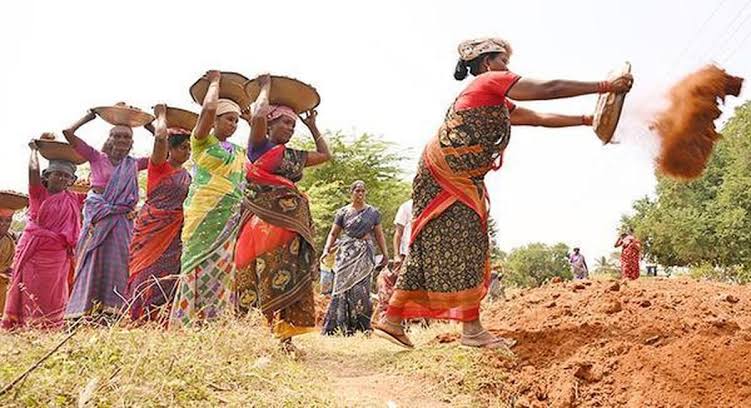
For close to two decades, rural employment programmes have been central to India’s social security architecture. Since its enactment in 2005, the Mahatma Gandhi National Rural Employment Guarantee Act (MGNREGA) has provided income security to rural households, expanded women’s participation in the workforce, and contributed to the creation of essential community assets. As rural India undergoes rapid economic, technological, and environmental change, there is now an urgent need to further strengthen this framework to respond to emerging challenges and opportunities.
The Viksit Bharat–Guarantee for Rozgar and Ajeevika Mission (Gramin) Act, 2025 reflects this evolution. By reforming the rural employment guarantee framework, the Act recognizes that sustained rural prosperity must be anchored not only in employment generation, but also in the conservation of natural resources, resilience to climate risks, and preservation of livelihoods. This integrated approach is relevant at a time when rural communities are increasingly exposed to climate variability, extreme weather events, and resource stress.
Why G RAM G Act Stands Out
A defining feature of the G RAM G Act is its focus on aligning wage employment with four priority domains: water security, core rural infrastructure, livelihood-related infrastructure, and works for the mitigation of extreme weather events. This marks an important reinforcement of the environmental and resilient dimensions of rural employment policy.
Water-related works, soil and land conservation, drainage systems, and climate-responsive infrastructure play a critical role in enhancing agricultural productivity while reducing vulnerability to floods, droughts, and land degradation. When such assets are planned and implemented effectively, they generate multiple benefits—short-term employment, improved natural resource management, and long-term livelihood security. The Act’s emphasis on these domains leads to a recognition that employment programmes can simultaneously serve as instruments of social protection and climate adaptation.
Resilience at the Local Level
The Act’s planning ecosystem—centred on Viksit Gram Panchayat Plans and the aggregation of assets into a Viksit Bharat National Rural Infrastructure Stack—supports a coherent and future-ready approach to rural development. Decentralised planning allows Panchayats to identify local priorities, while integration with national platforms ensures alignment with broader infrastructure and development objectives.
From an implementation perspective, this framework gives an opportunity to improve the quality, durability, and relevance of assets created under the employment guarantee. With adequate technical support and capacity-building, Panchayati Raj Institutions can be instrumental in ensuring that public works contribute meaningfully to resource conservation and disaster risk reduction. The transparency mechanisms, digital monitoring tools, and social audits envisaged under the Act further reinforce accountability and community participation.
TERI on Social Protection and Resilience
As a research institution committed to sustainable development, TERI has worked extensively on understanding how social protection mechanisms can be strengthened to build resilience among rural communities. Our research has highlighted that employment programmes, when combined with environmental planning and risk-informed design, can significantly enhance adaptive capacities at both household and community levels.
TERI has provided analytical inputs to government processes aimed at reviving and strengthening policy frameworks to incorporate climate resilience, ecosystem restoration, and livelihood sustainability. This includes supporting the integration of resilience considerations into programme design and identifying indicators that reflect long-term environmental and social outcomes, alongside employment generation.
Furthermore, TERI has explored financial models and planning approaches that can help optimize public investment in rural areas—strengthening community assets, reducing long-term vulnerability, and enhancing the efficiency of resource use. Such research-based inputs are intended to complement government initiatives and support evidence-driven policymaking.
Preserving Livelihoods
The G RAM G Act’s approach foregrounds the importance of conserving natural resources as a foundation for sustaining rural livelihoods. Investments in water security, connectivity, storage, and climate-resilient infrastructure directly support agriculture, allied activities, and non-farm livelihoods. At the same time, provisions such as state-notified pauses in public works during peak agricultural seasons help ensure that employment generation under the Act remains complementary to farming activities.
The continuation of a statutory employment guarantee, along with provisions for unemployment allowance where work is not provided, reinforces the Act’s social protection objectives. Predictable planning and funding, combined with strengthened administrative capacity, can further enhance the effectiveness and responsiveness of the programme.
Towards ‘Viksit Bharat 2047’
As India advances towards the vision of Viksit Bharat 2047, rural employment programmes will play an increasingly strategic role in delivering inclusive growth. Their success will be measured not only by the number of workdays generated, but by their contribution to resilient livelihoods, sustainable infrastructure, and the conservation of critical natural resources.
In this context, the Viksit Bharat–G RAM G Act, 2025 promises a robust policy framework to achieve these outcomes. By embedding environmental priorities, strengthening resilience to climate risks, and reinforcing decentralized planning, the Act positions rural employment as a cornerstone of sustainable development. With continued collaboration between government, research institutions, states, and local communities, this reform can help ensure that rural employment contributes meaningfully to both present needs and future resilience—supporting livelihoods today while safeguarding the resources on which tomorrow’s prosperity depends.
Courtesy PIB, Srinagar
(The Author is the Director General, The Energy and Resources Institute)