

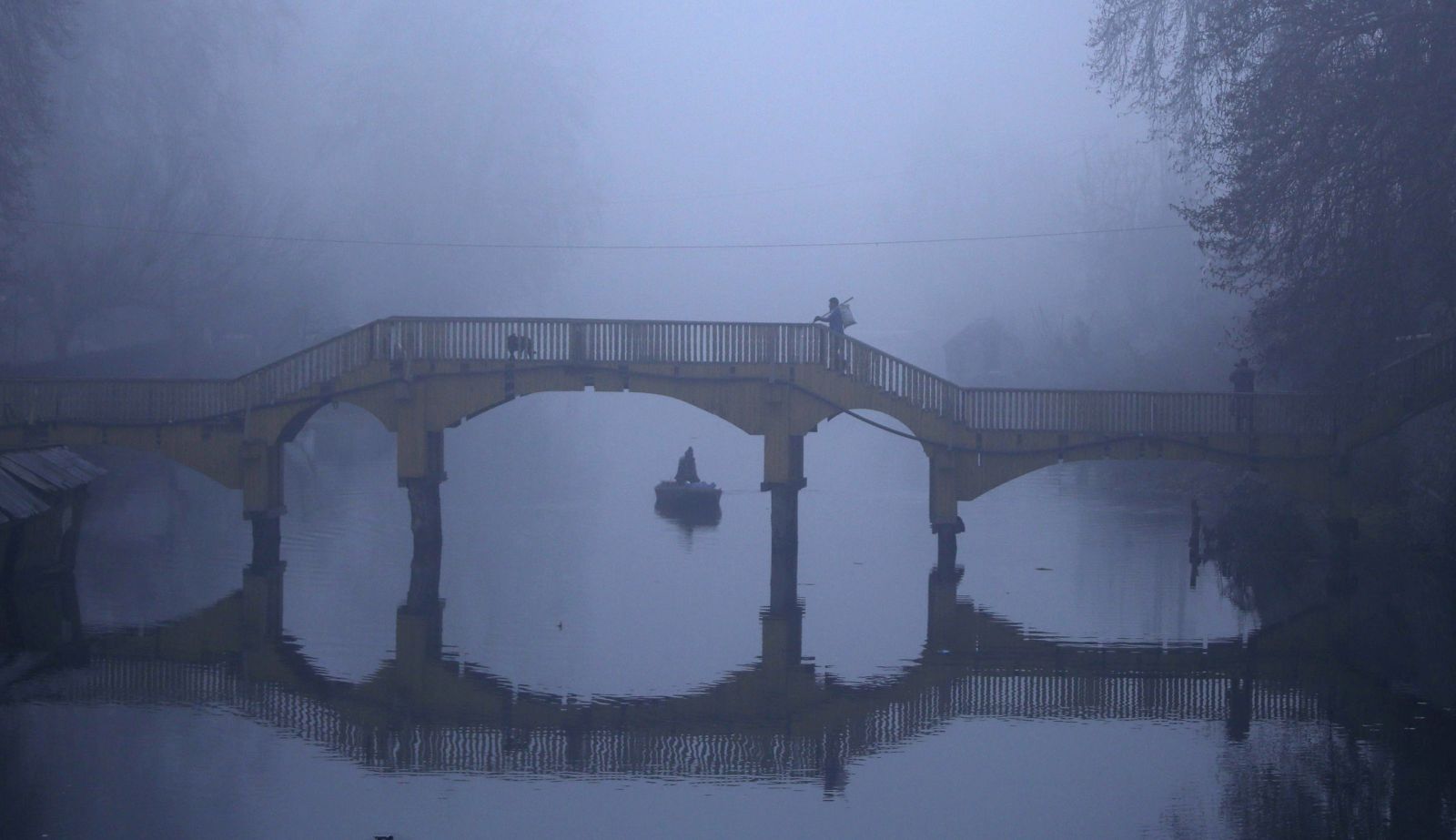
On most winter mornings in Srinagar, the air tells its own story even before official AQI numbers do. Eyes sting, throats feel heavy, and a grey haze settles quietly over the city. We argue over causes—vehicles, hammams, construction—but the truth is less dramatic and more uncomfortable: Srinagar’s air pollution is the result of collective neglect, amplified by geography and season.
Globally and locally, vehicular pollution remains the single largest contributor to urban air pollution. Srinagar has witnessed an unchecked rise in private vehicles over the last two decades. Narrow roads, chronic traffic congestion, ageing diesel vehicles, poor emission maintenance, and long idling hours together release enormous quantities of fine particulate matter (PM2.5), nitrogen oxides, and carbon monoxide. These pollutants are small enough to penetrate deep into human lungs and bloodstream, causing respiratory and cardiovascular diseases.
Anyone standing at a busy junction during office hours does not need a research paper to understand this reality. The pollution is visible, audible, and suffocating. Daytime AQI peaks in Srinagar consistently align with traffic density. This is not coincidence—it is chemistry.
However, to stop the discussion here would be dishonest. Winter in Srinagar introduces a second, powerful layer of pollution: domestic heating. Hammams, bukharis, and traditional heating systems burn firewood, coal, and other low-grade fuels from late afternoon till night. Individually, a single chimney may appear harmless. Collectively, hundreds of chimneys release thick smoke into residential neighbourhoods every evening.
This is why many residents observe a strange pattern: traffic reduces at night, yet air quality worsens. The reason lies not only in emissions, but in meteorology. Srinagar sits in a bowl-shaped valley. During winter, temperature inversion traps cold air near the ground, preventing pollutants from dispersing. What rises during the evening simply does not escape. Instead, it lingers—hovering over homes, schools, and hospitals.
Thus, the question should never be framed as vehicles versus hammams. Pollution does not work on moral arguments; it works on accumulation. Vehicular emissions load the atmosphere throughout the day, while domestic heating adds a heavy pulse in the evening. Geography ensures neither gets an easy exit.
Another underestimated contributor is road dust and construction activity. Poorly maintained roads, exposed soil, unregulated construction, and constant vehicular movement resuspend dust into the air, contributing significantly to PM10 levels. Add to this the irresponsible burning of waste—plastic, garden residue, and mixed garbage—and the toxic cocktail thickens.
There is also a regional dimension. Under certain meteorological conditions, pollution from outside the valley—dust and biomass burning from northern plains—adds to the background load. While local emissions remain the dominant factor, this regional inflow worsens already fragile air quality.
What makes the situation particularly worrying is institutional inertia. Monitoring stations are few. Emission enforcement is weak. Public transport remains underdeveloped. Cleaner domestic heating alternatives exist but are neither affordable nor incentivised. Environmental awareness is often reduced to slogans, not behaviour.
The health implications are severe. Children breathe faster and inhale more pollutants relative to body weight. Elderly citizens and those with asthma or heart disease suffer silently. Air pollution does not announce itself dramatically; it chips away at health, day after day.
Solutions exist, but they demand honesty and shared responsibility. Vehicular pollution must be tackled through stricter emission checks, better public transport, pedestrian-friendly planning, and discouraging unnecessary private vehicle use. Winter heating needs innovation—cleaner fuels, improved combustion efficiency, and practical policy support rather than moral policing. Construction dust and waste burning require firm civic enforcement.
Above all, Srinagar needs to accept that clean air is not only the government’s responsibility. It is shaped by how we drive, how we heat our homes, how we dispose of waste, and how much inconvenience we are willing to tolerate for long-term survival.
The air over Srinagar is not hostile by nature. It is reacting to what we feed it. If we continue to look for a single villain while ignoring cumulative damage, the haze will thicken—and so will the silence around its victims.
The author is a school principal and education advocate based in Kashmir. ikkzikbal@gmail.com.


