• About us
  • Contact us
  • Our team
  • Terms of Service
Wednesday, April 15, 2026
Kashmir Images - Latest News Update
Epaper
  • TOP NEWS
  • CITY & TOWNS
  • LOCAL
  • BUSINESS
  • NATION
  • WORLD
  • SPORTS
  • OPINION
    • EDITORIAL
    • ON HERITAGE
    • CREATIVE BEATS
    • INTERALIA
    • WIDE ANGLE
    • OTHER VIEW
    • ART SPACE
  • Photo Gallery
  • CARTOON
  • EPAPER
No Result
View All Result
Kashmir Images - Latest News Update
No Result
View All Result
Home OPINION

Art, Censorship, and the Power of Critical Thinking

Aijaz Qaisar Azad by Aijaz Qaisar Azad
November 9, 2025
in OPINION
A A
0
Art, Censorship, and the Power of Critical Thinking
FacebookTwitterWhatsapp

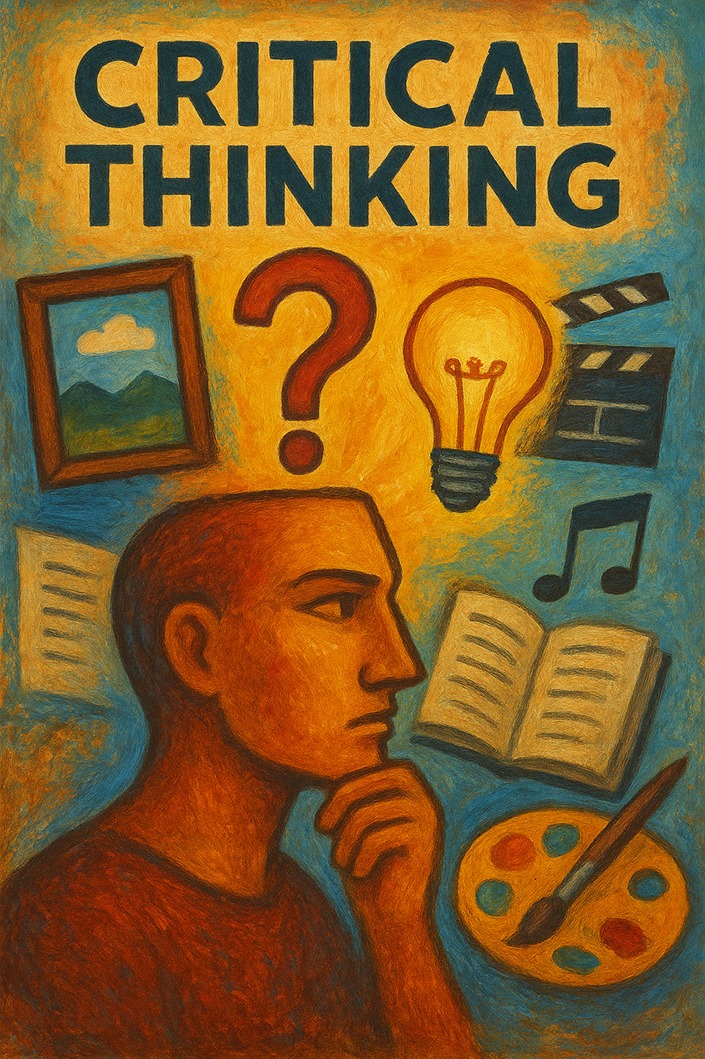
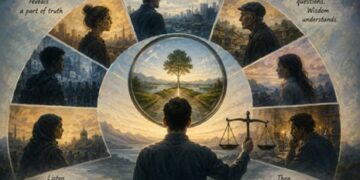
Critical thinking is an essential part of human growth. It allows people to question, reflect, and develop new ideas. Art plays a vital role in this process. Through paintings, books, films, music, and other forms of creative expression, artists often explore complex or uncomfortable subjects. These works encourage viewers and readers to confront different perspectives, challenge their own beliefs, and think more deeply about the world around them.

Art is more than just beauty or entertainment; it is a reflection of society. Every painting, poem, or film captures a moment in time, recording human emotions, struggles, and stories. Art connects with people in different ways. Some learn best through visuals, others through words or sound. Artists serve as voices for those who cannot speak for themselves, offering new ways of seeing and understanding the world.

More News

Securing the Digital Lifelines of Global Connectivity

Baramulla: Transitioning from Historical Gateway to Sustainable Urban Hub

Why Kashmir’s Ghanta Ghar Defeats Its Tourism Pitch

Load More

However, throughout history, art has often faced censorship. Governments, religious institutions, and other authorities have banned, destroyed, or silenced works they found offensive, dangerous, or politically challenging. One example is Pablo Picasso’s Guernica (1937), a powerful anti-war painting that was kept out of Spain until after the death of dictator Francisco Franco. Another is The Raft of the Medusa (1819) by Théodore Géricault, which caused scandal in France because it exposed a tragedy the government wanted to hide. These works, and countless others, remind us that censorship is not just about silencing artists, it is about silencing ideas.

When art is censored, society loses the chance to think critically. Silencing a piece of art also silences the questions it raises and the conversations it might inspire. Instead of banning controversial works, a healthier approach would be to engage with them, to debate, critique, and respond thoughtfully. Discussion and disagreement encourage understanding. They help societies face uncomfortable truths rather than hiding them. In doing so, we build a culture that values inquiry and growth over fear and control.

At the same time, freedom of expression must be balanced with responsibility. Some argue that certain forms of art can harm society by spreading hate, inciting violence, or promoting dangerous ideologies. In such cases, banning or restricting such works might seem justified to protect social values and public safety. Yet, this raises an important question: who decides what is “harmful”? History shows that those in power often use censorship to protect their own interests, not the public good.

Supporters of free expression believe that viewers should have the right to interpret and judge art for themselves, rather than leaving that power in the hands of authorities who may act out of bias or self-interest. A free and open society must trust its citizens to think critically, question responsibly, and engage with art thoughtfully.

Art and critical thinking go hand in hand. One cannot grow without the other. When we protect artistic freedom, we protect the very foundation of human progress, the ability to think, question, and imagine a better world.

  • The author is a painter himself. To view some of his works, visit: www.artmajeur.com/aijaz
Previous Post

THE BEST THINGS IN LIFE ARE FREE

Next Post

VHP questions admission process at Mata Vaishno Devi medical institute, seeks LG’s intervention

Aijaz Qaisar Azad

Aijaz Qaisar Azad

Aijaz Qaisar Azad, the author, is a professional artist (painter) and has over 25 years of experience in managing global marketing communications for major semiconductor MNCs and can be reached at aijazqaisar@yahoo.com.

Related Posts

Securing the Digital Lifelines of Global Connectivity

Securing the Digital Lifelines of Global Connectivity
April 15, 2026

Beneath the vast waters of the Indo-Pacific lies a largely unseen but indispensable network powering the modern world. Subsea cables, often overlooked in...

Read moreDetails

Baramulla: Transitioning from Historical Gateway to Sustainable Urban Hub

Regional-bilateral significance of Nepal PM Dahal’s India visit
April 14, 2026

Nuzzled along the Jhelum River, Baramulla has long been known as the “Gateway to Kashmir.” At the moment, it is...

Read moreDetails

Why Kashmir’s Ghanta Ghar Defeats Its Tourism Pitch

April 13, 2026

The announcement of the Kashmir Travel Mart 2026 has been received with the usual optimism. Stakeholders will gather, presentations will...

Read moreDetails

Collateral Damage: The Unseen Cost of War

Collateral Damage: The Unseen Cost of War
April 12, 2026

For a long time, wars have been justified with the argument that collateral damage is unavoidable. Military strategists and political...

Read moreDetails

Mahatma Jyotirao Phule: A Light That Still Shows India the Way

Mahatma Jyotirao Phule: A Light That Still Shows India the Way
April 11, 2026

Today, 11th April, is a deeply special day for all of us. It is the birth anniversary of Mahatma Jyotirao...

Read moreDetails

HERITAGE AT RISK: THE CASE OF POONCH FORT 

HERITAGE AT RISK: THE CASE OF POONCH FORT 
April 10, 2026

In the heart of Poonch, where history lives not just in memory but in stone, stands a monument that once...

Read moreDetails
Next Post

VHP questions admission process at Mata Vaishno Devi medical institute, seeks LG's intervention

  • About us
  • Contact us
  • Our team
  • Terms of Service
E-Mailus: kashmirimages123@gmail.com

© 2025 Kashmir Images - Designed by GITS.

No Result
View All Result
  • TOP NEWS
  • CITY & TOWNS
  • LOCAL
  • BUSINESS
  • NATION
  • WORLD
  • SPORTS
  • OPINION
    • EDITORIAL
    • ON HERITAGE
    • CREATIVE BEATS
    • INTERALIA
    • WIDE ANGLE
    • OTHER VIEW
    • ART SPACE
  • Photo Gallery
  • CARTOON
  • EPAPER

© 2025 Kashmir Images - Designed by GITS.