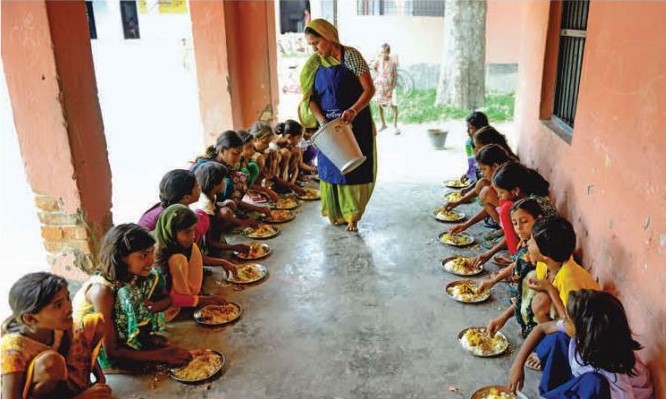
In 2018, under the visionary leadership of Hon’ble Prime Minister Shri Narendra Modi, Poshan Abhiyan was launched as a flagship scheme to transform Bharat’s nutritional landscape. With its emphasis on inclusive growth and social development, Poshan Abhiyan has laid the foundation for a well-nourished and empowered nation and has emerged as a key pillar in our journey towards Viksit Bharat@2047. In pursuit of this goal, the Ministry of Women and Child Development is resolved to build a New Bharat where every child is well-nourished, every mother is empowered, and every citizen can thrive.
Through Mission Saksham Anganwadi and Poshan 2.0, we aim to improve nutritional outcomes in children, adolescent girls, pregnant women and lactating mothers and to develop and promote practices that nurture health, wellness and immunity. The nucleus of the operation is a network of 14 lakh Anganwadi Centres through which the Ministry is supporting around 10 crore beneficiaries.
The Ministry is nourishing the future by supporting the health and nutrition of over 8 crore children across the nation. At the heart of this effort is the Supplementary Nutrition Programme, delivering wholesome Hot Cooked Meals (HCM) to children and Take-Home Rations (THR) to all beneficiaries, aiming to bridge the crucial gap between Recommended Dietary Allowance and the Average Daily Intake. By embracing diet diversity and championing local and traditional foods like Shri Anna- millets, jowar, bajra, ragi, etc.- we are endeavouring to ensure that every child receives the fuel they need to learn, grow, and thrive.
While we have made headway in creating a programme to address stunting and wasting amongst children, we are aiming to address another major nutrition indicator– overweight incidence and obesity. According to WHO, childhood obesity can have dire consequences for children as they enter adulthood, increasing the risk of non-communicable diseases like Type 2 Diabetes and hypertension.
A study by University of Southern California with the University of California Berkeley and McGill University, found that children facing sugar restrictions during their first 1,000 days, including in utero during pregnancy, showed lower risk of developing Type 2 diabetes and lower risk of hypertension as adults.
To address this, and to improve the overall quality of Supplementary Nutrition, the Ministry has issued an advisory to the States and UTs, keeping in line with recommendations from the WHO and National Institute of Nutrition (NIN).
According to the WHO, sugar intake should be reduced to 10% of the total daily energy intake for adults as well as children. The WHO also suggests a further reduction of free sugars to 5% of daily energy intake.
The National Institute of Nutrition (NIN) recommends no added sugar for children under the age of 2 years and recommends that sugar should be less than 5% of the daily energy intake for all age and gender groups, including pregnant women as part of a balanced diet.
Our Ministry has advised the States and Union Territories to restrict use of refined sugar, use jaggery where needed and even then, to restrict it to less than 5% of total intake. We have requested that salt usage may be minimized. We are also encouraging the reduction of sweet offerings as part of the Morning Snack and HCM.
We are encouraging the development of THR recipes that exclude added salt and sugar, and restrict use of foods high in fat, salt, and sugar (HFSS). We have urged that ingredients must comply with Food Safety and Standards Regulations 2011 and Food Safety and Standards (Food for Infant Nutrition) Regulations, 2020. By saying no to excess sugar, India is saying yes to a future free from obesity, and related diseases like hypertension and diabetes.
To promote traditional food, the Ministry offers Pushtahar, nutritious premixes made from seasonal, local ingredients and cereals like ragi, millets, and Bengal gram. Pushtahar is a healthier and more versatile alternative to store-bought mixes, providing local, seasonal flavours and wholesome nutrition.
Our Hon’ble Prime Minister stated, “by making small changes in our food habits, we can make our future stronger, fitter and disease-free.” In this Amrit Kaal, our children should have access to nutritious food and adequate calories. More importantly, the food they have should not only be adequate, but wholesome, contributing to their holistic growth and development.
Courtesy Press Information Bureau, Srinagar
The writer is Union Minister of Women and Child Development