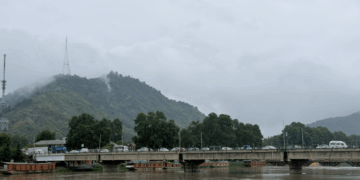

Floods are not new to Kashmir. The Jhelum has been both our lifeline and our destroyer, carrying silt and stories with equal force. More than a century ago, our forefathers realized the danger and carved a remarkable escape route for the river – the 42-kilometre Flood Spill Channel, stretching from Padshahi Bagh in Srinagar to Wular Lake. It was not just engineering; it was foresight. A safety valve for a valley that lives in the shadow of swollen rivers and sudden rains.
And yet, like much else in Kashmir, what began as vision has often been left to decay. The channel has silted up, its carrying capacity shrunk, and its embankments weakened. When the floods of 2014 struck, the channel tried its best but could not bear the burden nature imposed. The question is not whether this channel matters – the question is whether we are willing to maintain it as the lifeline it was meant to be.
For an answer, let us look not inward, but outward – to Windsor, Maidenhead, and Eton in the United Kingdom. Towns that sit on the banks of the Thames, where floods were once a dreaded visitor. In 2002, Britain built the Jubilee River, an 11.6 km man-made flood relief channel. Shorter than ours, younger than ours, but maintained with a discipline that makes it world-famous.
What Britain Did Differently
The Jubilee River is not just a ditch cut to drain water. It is a carefully managed flood defense system. The UK’s Environment Agency controls it through a dedicated management authority. Annual budgets are ring-fenced. Maintenance is not left to the memory of disasters but follows a fixed calendar – pre-monsoon dredging, post-flood inspections, weed clearance, embankment repairs. Every year, without fail.
Technology backs discipline. Automated water-level gauges send real-time data to flood control rooms. Local councils are partners; citizens know where to go for information and alerts. And the channel is not just about safety – it doubles as a wildlife corridor and a recreation zone. People walk its banks, cycle along its paths, and in doing so, keep it alive in the collective consciousness of the community. The channel is not invisible; it is part of daily life.
The result? Windsor and Eton are safer today than ever before. And the Jubilee River has become an example for the world: a functional, well-kept flood channel that proves engineering is only half the battle – governance is the other half.
What Kashmir Must Do
Now compare this with our own Flood Spill Channel. At 42 km, it is nearly four times the length of the Jubilee River. Built over a century ago, it is an engineering marvel of its time. But it has suffered from one disease: administrative neglect. Dredging is “thought about” only after a crisis, and the thought immediately forgotten as the crisis receeds. Embankments are patched when disaster looms. Monitoring is rudimentary; nearly absent. And worst of all, the people of Srinagar hardly ever see it as part of their lives – it has become a forgotten trench, left to weeds and encroachments.
The bitter truth is simple: the channel can still save us, but only if we allow it to.
Here are five lessons J&K can learn directly from Britain’s Jubilee River:
- Dedicated Authority – Create a Flood Spill Channel Management Board, independent in budget and responsibility. Let it have engineers, hydrologists, and urban planners whose only task is to keep this lifeline alive.
- Fixed Maintenance Calendar – Institutionalize dredging, weed clearance, and embankment repairs on a non-negotiable annual cycle. No ad hoc responses. No waiting for another 2014 to remind us of its worth.
- Smart Flood Monitoring – Install real-time gauges linked to mobile alerts and apps. Let Srinagar’s citizens know in advance when danger rises. Transparency builds trust.
- Community Integration – Turn the channel banks into green corridors, walking paths, and eco-zones. This will push out encroachments and bring people closer to the channel, just as Jubilee River has done for Windsor. Imagine broad cycling tracks running along either bank – giving young people a safe, scenic space to ride, elders a daily health routine, and families a new way to reclaim the channel as their own. Physically, it will strengthen bodies and cut stress-related illness. Emotionally, it will stitch people to the channel in pride and belonging, transforming a feared flood trench into a loved public asset.
- Sustainable Funding – Ring-fence a budget line. Flood safety is not charity; it is survival. Explore CSR contributions from hydropower, tourism, and infrastructure firms, but let the state own its responsibility first.
A Century-Old Vision, a Modern Test
Think about it: a hundred years ago, when technology was primitive and maps were hand-drawn, Kashmir’s rulers had the foresight to cut a 42 km relief channel. Today, with satellites, sensors, and budgets at our disposal, do we have the will to maintain it?
Climate change is not waiting for us. Rain patterns are shifting, glacial melts are swelling, and urban sprawl has eaten away natural flood cushions. In such times, the Flood Spill Channel is not an antique relic – it is our insurance policy. Britain insures Windsor with Jubilee River. Why can’t J&K insure Srinagar with its own spill channel?
This is the true bitter truth: what we already have is enough to save us, if only we treat it with the seriousness it deserves. If maintained with the same rigour as the Jubilee River – and reimagined with cycling tracks that serve both protection and people – our channel could stand not only as a protector of Srinagar but as a global example of heritage infrastructure adapted for modern resilience.
The choice is ours. Do we continue to let weeds and silt choke a century-old lifeline? Or do we show the world that Kashmir, too, knows how to respect its history and prepare for its future?