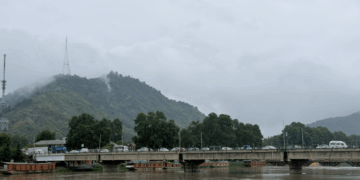

The once-magnificent Achabal Spring, a jewel of Anantnag, has now dried up – a haunting reminder to the impending water crisis in Kashmir. Once fed by pristine springs and rivulets, this lake has turned into a barren stretch of land, a stark reminder of what awaits the rest of the Valley’s water bodies if immediate action is not taken. While climate change has undoubtedly played a role, it is only part of the problem. The real culprit is reckless human behavior – careless encroachments, unregulated tourism, deforestation, and unchecked urban expansion. If this continues, Kashmiris will soon be fighting for every drop of water. The day is not far.
Reckless Exploitation of Water Bodies
Kashmir’s famed lakes, rivers, and springs have been mercilessly exploited over the years. Dal Lake, once a mesmerizing reflection of the Zabarwan mountains, is now choking with pollution and illegal construction. Wular Lake, Asia’s largest freshwater lake, has shrunk alarmingly due to silt accumulation, encroachments, and pollution. The story is the same for Manasbal, Anchar, and Khushalsar lakes.
Apathy towards these water bodies has been ingrained in public behavior. People have built houses, shops, and hotels along the fragile shores, narrowing the natural flow of water. In some cases, landfills have been established on lake beds, shrinking their expanse. The unchecked use of pesticides and chemical fertilizers in agriculture is further poisoning the water sources.
Moreover, unregulated tourism has exacerbated the problem. Houseboats in Dal Lake, once an attraction, are now a major source of pollution due to unchecked sewage dumping. The influx of tourists has led to an increase in waste accumulation, much of which finds its way into the water bodies. Despite regulations, enforcement remains weak, and violations continue unabated. Corruption!
Deforestation and Depleting Water Tables
Another major contributor to Kashmir’s water crisis is rampant deforestation. Forests act as natural water reservoirs, helping to sustain groundwater levels. However, large-scale deforestation for timber, construction, and illegal land grabbing has led to soil erosion and disrupted the natural water cycle. Without tree cover, rainwater flows away rapidly instead of seeping into the ground, leading to a decline in underground water levels.
The impact of depleting groundwater can already be felt across the Valley. In many areas, traditional freshwater springs have either dried up or turned into seasonal water sources. This has forced people to depend on borewells and tube wells, further depleting groundwater reserves. The once-reliable streams that irrigated fields and quenched thirsts are now trickles of their former selves.
Land Sharks and Unchecked Expansion
Since the abrogation of Article 370, Indian land sharks have been eyeing Kashmir with newfound interest. The Valley, once shielded by special land laws, is now vulnerable to predatory real estate interests. Corporates, businessmen, and hoteliers are making aggressive attempts to build hotels and commercial spaces in ecologically sensitive zones, particularly in areas where forests have covered and protected Kashmir for centuries. If this trend continues, Kashmir’s natural landscape will be lost to concrete jungles, worsening the already dire water crisis.
Climate change is just a convenient excuse. Bclimate change alone is a convenient excuse to avoid responsibility. The real damage has been caused by human recklessness and an absolute disregard for ecological balance. The administration, too, has failed in its duty to protect Kashmir’s water resources. Laws against encroachment exist but are rarely enforced. Wetland conservation projects remain on paper, and large-scale afforestation drives are virtually non-existent. Water management policies are outdated and reactive rather than proactive. Despite repeated warnings from environmentalists, concrete actions remain elusive.
What is the Elected Government Doing?
Amidst this environmental catastrophe, the National Conference (NC) has chosen to engage people in meaningless political banter instead of addressing real issues. Instead of advocating for stricter environmental policies or mobilizing people to fight against illegal land grabs, they remain trapped in political theatrics, shifting focus from Kashmir’s pressing ecological and economic concerns to outdated power struggles.
NC, proclaiming to be the messiahs of the Valley, should have been at the forefront of water conservation and environmental protection efforts. They should be pressuring authorities to enforce laws that protect water bodies and forests, mobilizing community-led conservation efforts, and resisting corporate encroachments. Yet, their energy is spent in political rhetoric and reactionary outbursts, ignoring the ecological ruin unfolding before them.
A Future of Water Wars
If the current trend continues, Kashmir will be in the grip of a severe water crisis within the next five years. The Valley, once abundant in natural water resources, could see conflicts arising over access to drinking water. Already, in several areas, particularly in south Kashmir, water scarcity during summer months has become a distressing reality.
It is not too late to act, but the window is closing fast. A combination of strict regulation, community involvement, and sustainable water management is needed to reverse the damage. Encroachments around lakes and rivers must be removed without political or social appeasement. Rainwater harvesting should be incentivized, and deforestation must be replaced with large-scale afforestation programs. Wetland conservation needs to be taken seriously, and polluters must face heavy penalties. Awareness campaigns should be launched to educate people about their role in saving Kashmir’s water bodies.
Most importantly, Kashmiris themselves must change their behavior. Water is not an infinite resource, and its reckless use will lead to disaster. Every individual must contribute – be it by reducing water wastage, avoiding polluting water bodies, or reporting illegal encroachments.