By: Tahir Qureshi
Sheikh Hasina, the former Prime Minister of Bangladesh and President of Awami League Party has quit as prime minister and left the country amid violent protests demanding her exit on Aug 5th 2024. She could have left gracefully but unfortunately she was ousted as chaos has engulfed the nation. Her political career started in 1991 when she became the leader of the opposition and Khaleda Zia was serving as prime minister of Bangladesh.
She came in power in the year 1996 and in the succeeding elections of 2001she was defeated by her arch rival Khaleda Zia. She again got the mandate of the people of Bangladesh and got a landslide victory by winning 230 seats in 2009 and since then she won four consecutive elections in the subsequent years and secured a fifth term as prime minister of the country after winning the controversial elections in January this year.
Ms Hasina served the country for over 20 years and becomes the longest serving prime minister in the history of Bangladesh. This time Ms Hasina was conscious that the biggest challenge she has to face is high inflation and unemployment in the country. Consequently she worked on it and sought support from partner countries like India and China as she wanted to expand employment opportunities in the country.
The crisis of unemployment in the country led the resentment on the part of the youth who were opposing the quota system in Govt jobs. The students expressed their anger and resentment for this unjust reservation system in the form of protest. Initially they observed a peaceful protest and make the government aware about their demand of withdrawing the quota system.
Sheikh Hasina’s stance on the existing quota system which allocates reservation to the descendents of freedom fighters becomes one of the many reasons of her downfall. She always favored the quota system introduced by her father and founder of the Nation Sheikh Mujibur Rahman which gives reservation to the freedom fighters and their descendents in Govt jobs.
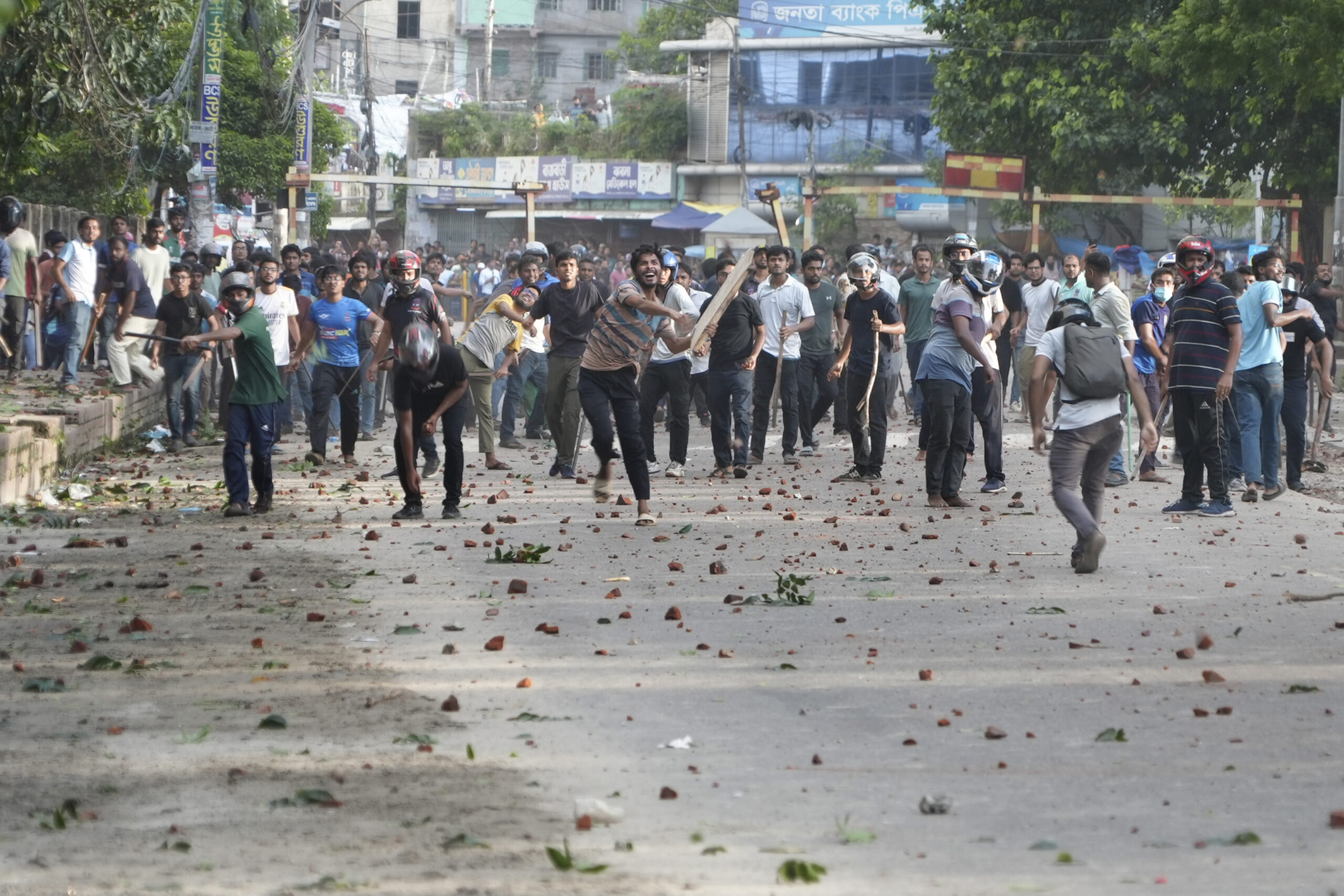
Her endorsement to the quota system in the country prompted the meritorious students of Bangladesh who rose against it and sought a reform in it. Consequently this peaceful protest turned into violence in the month of June this year when the Bangladesh High Court restored the quota system in the country which was temporarily abolished in the near past. This judicial intervention had re-established all quotas in the Bangladesh civil service and Govt jobs.
Since the court brought back the quota system Ms. Hasina ensured that the previous division of 30% reservation for descendants of freedom fighters would be reintroduced in the new quota system. The Protesters demanding to repeal the judgment of High Court which allocates 30% reservation for the family members of freedom fighters in Govt jobs. Initially the quota reform movement began peacefully and carried on under the orbit of law.
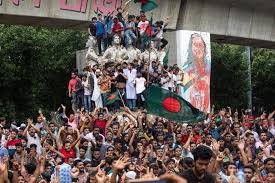
It was a later development in the movement which led violence and chaos across Bangladesh. The immediate cause of mounting this violence in Bangladesh was Ms Hasina’s addressing the protesters who opposed the quota for freedom fighters’ families as RAZAKARS or traitors who supported Pakistani military in the war of 1971. This statement by Ms. Hasina provoked the unprecedented violence, unrest and political instability in the country and grew resentment among the protesters. The anti-government protests resulted in the death of a total of 440 people. The demonstrators expressed their resentment after storming Ms Hasina’s official residence and other buildings associated with her party and family soon after her departure from the country on Monday. They vandalized the government buildings and even not spared the statue of Sheikh Mujibur Rahman, the founder of the nation.
Consequently this months of unrest and violence across Bangladesh culminated Shiekh Hasina’s 15 years rule. The question arises here that is it the quota reform movement which ended Ms. Hasina’s 15 years rule overnight or is there more to the Bangladesh crisis than meets the eye? Had it been confined to the quota system, Ms Hasina wouldn’t have been resigned and left the country in a hurry.
The fall of Ms. Hasina not just indicates the end of an era but the beginning of an uncertain and anarchic chapter for Bangladesh in coming days. Months’ long crisis in Bangladesh reached its climax on Aug 5th when anarchy overruled democracy in the country and the mighty prime minister was forced to oust the country. This tumulus situation in Bangladesh is not a good sign for the people as it leads anarchy in the country and restoration of law and order would be Hercules task in coming days.
Indeed 5th Aug would be counted as a black day in the history of Bangladesh as anarchists violently overthrew the democratic setup of the country. It suggested that the fall of Ms. Hasina is not the fall of an individual but it is the decline of democracy and rise of anarchy and lawlessness in the country. Who had expected this tragic end of Sheikh Hasina, the popular leader of the people and daughter of the founder of nation who ruled the country for five times?
Following Sheikh Hasina’s removal from power Bangladesh’s army chief General Waker-Uz-Zaman announced that an interim government would run the country of 170 million people, without providing details.
This announcement made by army chief signals some preplanned developments in the political sphere of the country. Even suspicions grow stronger when Tarique Rahman, the acting chairman of the main opposition party BNP (Bangladesh Nationalist Party) expressed his satisfaction on Ms Hasina’s removal as “Hasina’s resignation proves the power of the people”. It indicates that quota system was only a pretension and the real script for the subversion of Ms Hasina’s government had already been written.
Hours after Ms Hasina’s resignation, President Mohammed Shahabuddin ordered the release of jailed former Prime Minister Khaleda Zia which signifies that there is something more than meets the eye. Ms Hasina’s political opponents constantly express their satisfaction over her resignation and fleeing to India and some are expecting that Noble Peace Prize laureate of the country Muhammad Yunus would head an interim government.
Mr Yunus who is currently in Paris, has kept an eye in all the recent political developments in back home. He called Ms Hasina’s resignation the country’s “second liberation day”. The recent political developments in Bangladesh suggest that some external forces were also involved in this conspiracy of overturning the rule of Sheikh Hasina. This political turmoil and unrest in the country has shaken the common man’s belief on democracy. Even Ms Hasina would have never expected that she would meet such a tragic end and the streets of her beloved country would be flocked with her foes.
The writer is Assistant Professor in J&K Higher Education Department. Email: tahirqureshi00@gmail.com