Water is a wonder liquid that makes the core of a living organism. Up to 60% of the adult human body is water. Its percentage in animals is around 60% and constitutes 90% of plants. Its role can be accurately mentioned in a one-liner that ‘water is the driving force of all nature’. It is hard to imagine life without it. It is essential for the survival of all organisms. W.H Auden rightly says; Thousands have lived without love, not one without water.
Water finds mention in the Holy Quran as well. The Arabic word for water ‘ma’aa’ appears about sixty-three times in Al-Quran in which superior and sacred qualities such as Origin of everything (21:30) life-giving, (16:65), and purifying resource (8:11) have been ascribed to it. The importance, usage, and principles of water conservation are also contained in Islam’s teachings indicating the significance of this ‘life’s matter and matrix’.
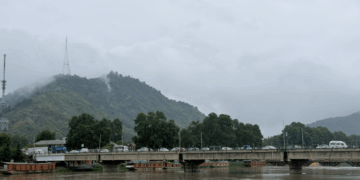
Nature has been generous to Kashmir for making it the land of rivers and lakes. It is characterized by numerous rivers, streams, and lakes like The Wular, the Dal, the Anchar, the Mansbal etc. Apart from the scenic beauty of the valley, the quality of water has also added to its fame all over the world. However, the situation has dramatically changed. The water bodies are no longer enthralling and presently paint a dismal picture. Sadly enough, we have rendered them not only charmless but also polluted. Reports of the deteriorating condition of lakes especially Dal and Wullar often grab the headlines but truth be told, many other large and small water bodies of the valley are also in bad shape. Some have died due to public and government apathy and negligence. According to a study, more than 50% of water bodies in Srinagar and its suburbs have been lost during the past century. And if we consider all other districts, the percentage can be even more. The reasons behind their poor state are encroachment, dumping of waste into them, and uncontrolled weed growth.
Encroachment has ruined most of our rivers. Illegal structures have been constructed on rivers and this practice is going on. The untreated sewage produced in these buildings mainly runs off into rivers, leading to pollution. The encroachment is not the concern in urban areas only; even in rural areas, it is one of the major problems. Some people in urban areas have turned riverbanks into agricultural land on which they have grown plants and trees. Use of manures and fertilizers by them usually finds way into rivers. Most importantly, it has significantly reduced the size of rivers and their drainage capacity, which is the obvious cause of floods. Badly, the encroachment on the riverbank is becoming rampant right under the nose of concerned authorities and activists.
Another major cause of the disappearance and deterioration of water bodies is the dumping of garbage into them. Without giving a thought to what they are doing, some people empty their trash bins into water bodies in broad daylight. They have turned streams, rivers, and lakes into dumping sites and have made them resting places of waste. Neither do they feel a prick of conscience nor does it concern others around them. Today, across the valley, we can find many rivers having more garbage than water. If left at mercy of God, in the near future, those will vanish completely as if they never existed.
The unrestrained growth of weeds also poses threat to water bodies. The weeds have engulfed many of our water bodies. Weeds have the potential not only to affect the water quality and the aesthetic beauty of lakes but it can prove detrimental in several ways. Excessive growth of aquatic weeds can hamper the circulation of water, which is important as it carries away the lake’s nutrients and prevents the growth of harmful water ferns. The presence of excessive weeds blocks sunlight to the lake’s flora and fauna thereby causing their decay. Besides deposition of weeds along with other sediment and debris can cause the filling in of bodies of water and hence their death.
All the causes mentioned above are anthropogenic. It may seem that the growth of weeds is a natural process but in reality, it is also related to human activities. Although abundant growth of aquatic weeds has many natural reasons, but nutrient enrichment, which is main cause of weed growth is induced by agricultural runoff and is possible through human involvement.
Many environmentalists, activists, and NGOs are devoting their time to this purpose, yet a lot more needs to be done. More and more people, particularly youngsters need to be motivated to join hands for the cause. Youth should come forward to volunteer in monitoring, cleaning of local water resources, and stopping others from contaminating the water. They can be instrumental in creating public awareness about the matter and aware polluters of their actions. The proper coordination between authorities and the public is imperative for safeguarding water bodies. At most places, environmental conservation efforts failed either because of lack of coordination among people or between people and authorities. All of us need to be sincere about our duty and work conjointly. Specifically, prevention of encroachment is entirely responsibility of government and it must take significant measures to ensure ‘no encroachment’. Similarly, dredging and deepening of water body, using biological and chemical methods of controlling waterweed growth demands government’s active role.
People of the valley must not forget that our religion Islam has laid down foundations of water conservation and management by ordaining people that earth’s water resources are finite. In verse, 23:18 of the Quran Allah says ‘And we send down rain from the sky in a measured amount, and we cause it to soak in the soil, and we certainly can ‘take it away’. Thus, we need to understand the preciousness of water and take necessary initiatives, starting at an individual level to maintain and conserve water bodies. For devaluing the blessing of nature – water, if it is taken away from us, life will come to an end.
The writer can be reached at mohdzeeshan605@gmail.com