By: Roshni Shanker
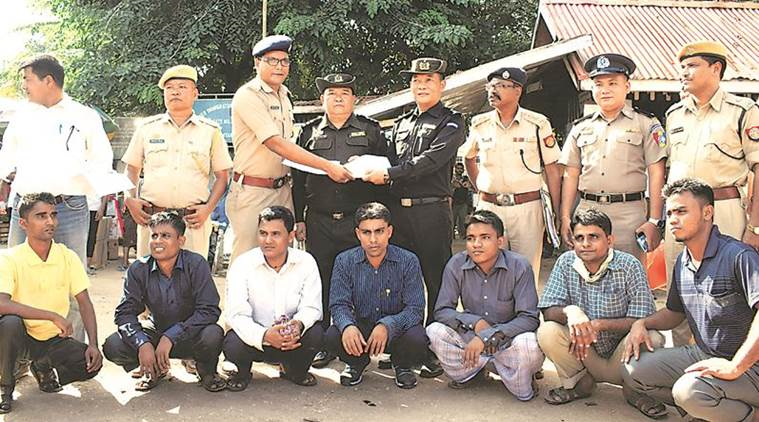
At the annual session of the executive committee of the UNHCR held in Geneva, India stated, “We are a responsible state with a functional democracy and rule of law.” On the same day, October 3, seven Rohingya men were being taken to the Indo-Myanmar border for a scheduled deportation. Ironically, they had no access to legal counsel, courts or the UNHCR, which is mandated by the government to conduct refugee status determination of Myanmar nationals.
The men had entered Assam in 2012 without documentation and were prosecuted for illegal entry under the Foreigners Act. At that time, the Rohingya were already fleeing Myanmar. After completing their three month-sentence, the men were moved to “administrative detention” in Silchar where they languished. State officials claim that in 2016 the men expressed the desire to return to their families. In mid-September, the local media reported that pursuant to negotiations with Myanmar, India would be deporting the men on October 4. The decision to deport was surprising given that a case challenging the government’s move to carry out en masse deportation of Rohingya refugees is still pending before the Supreme Court.
As the last resort, an intervention application was filed before the SC on September 29 seeking a stay order. Despite the stated urgency, the SC listed the matter for a hearing only on October 4. The government argued that the detainees had consented to return and that the Myanmar Embassy had confirmed that the men were “citizens”. When counsel for the petitioners pointed out that the detainees were “refugees” as they were at the risk of persecution, the matter was dismissed by the Bench noting that they were “illegal immigrants”.
In NHRC v. State of Arunachal, the Court extended protection under Article 14 and 21 to refugees. Further, various high courts have upheld the customary international law principle of non-refoulement in deportation cases and have referred the detainees to UNHCR. In view of these principles, the deportation of Rohingya refugees is in contravention of India’s obligations both under the Constitution and international law.
With regard to the argument that the men were “illegal immigrants”, it should be noted that, given the circumstances that cause them to flee, refugees often cross borders without prior planning or valid documentation. If anything, this should reinforce their status as “refugees”. In the present case, given the overwhelming evidence to show that the Rohingya deported to Myanmar are at risk of being tortured, indefinitely detained and even killed, the deportation potentially violates Article 21, and India’s international obligations.
The argument that the men are “citizens” and therefore not in need of protection is without legal basis. Refugees frequently, though not always, are citizens of the state they are fleeing from. What is also troubling is that the affidavit submitted in court by the government states that the men have been accepted as “citizens” by Myanmar. The root of the plight of the Rohingya is the denial of citizenship. In Myanmar, they are being issued the controversial National Verification Card which does not recognise their religion or ethnicity — and definitely does not confer citizenship.
In the absence of a domestic law for refugee protection, it has been up to the judiciary to extend minimum constitutional protection to refugees. By allowing this deportation, the SC has set a new precedent that is contrary to India’s core constitutional tenets. However, it is important to not overstate the implications of this order, which ultimately was based on the notion that the men had consented to return. In cases where there is no consent, this cannot apply as a precedent.
Courtesy Indian Express