BY: Shah Alam Khan
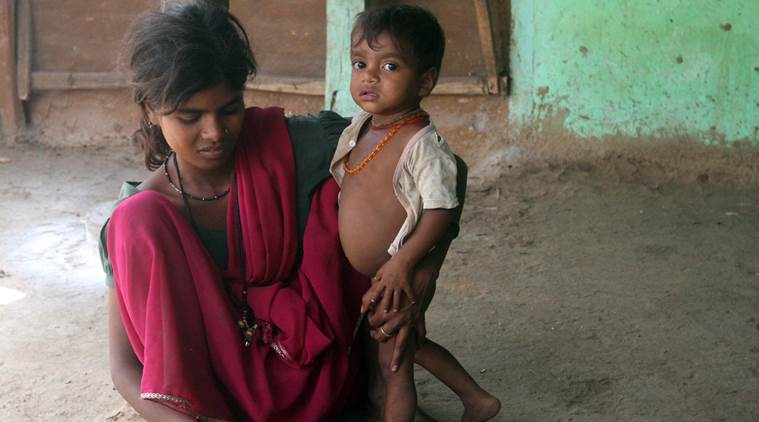
A report in The Indian Express (‘Health to poverty: Tribals scrape bottom of barrel’, IE, September 15) drew our attention to the findings of an Expert Committee on Tribal Health appointed five years ago by the Ministries of Health and Family Welfare and Tribal Development. The report revealed that tribal communities lag behind the general population on most health parameters. This should not surprise us. Health is an under-discussed matter, both for the country’s political class and a significant section of its civil society. Discussions on health-related problems of tribals, minorities and Dalits are even rarer, both in the corridors of power and within the educated social class of the country.
It is well-known that health is an interplay of a number of social, political, cultural, environmental and genetic factors. It is important, then, to identify the missing links in this sad story of tribal health in India. According to the 2011 census, Scheduled Tribes form 8.6 per cent of the country’s populations. Many of these tribes live in the most inaccessible geographical regions of the country. In fact, in a study, published in The Lancet in May, India ranked 145 among 195 countries in terms of healthcare accessibility — behind Bangladesh and Bhutan.
Access to healthcare depends on a number of factors of which female literacy is an important determinant — it is instrumental in shaping a group’s healthcare seeking behaviour. According to the 2011 Census, the female literacy of Scheduled Tribes is 56.5 per cent; this is almost 10 per cent below the national rate and is one reason for tribal groups doing poorly on health parameters. Financial insecurity is another major cause of the ill-health of tribal people. It is no accident that a majority of hunger deaths reported in the country in the past five years happened to be of members of Scheduled Tribes.
The poor health of an ethnic group is very often a result of the exclusion of that group from a country’s national imagination. Unfortunately, such exclusion is not unique to India. The infant mortality rate of native North Americans and Alaskan natives, both underprivileged groups in the US, is 60 per cent higher than that of the Caucasians. According to 2012 figures, more than 6 per cent people from these groups suffer tuberculosis — compared to 0.8 per cent for the US’s white population. A poll conducted by the Robert Wood Johnson Foundation and Harvard T H Chan School of Public Health revealed that about a quarter of Native Americans experienced discrimination when consulting a doctor or a health clinic. Aboriginal and Torres Strait Islander people in Australia are also known to have poorer health compared to other Australians. Exclusion and marginalisation of a group leads to poverty, which in turn makes people from such groups vulnerable to diseases. This holds true for India’s Scheduled Tribes as well. Ending the marginalisation of tribal communities should then be at the heart of all government and civil society efforts to improve the health of people from tribal communities.
Universal healthcare is much more than providing infrastructure or alleviating specific health disorders through national programmes. It requires correction of a number of social parameters that govern health. Besides government apathy, problems specific to some tribal groups contribute to their poor health statistics. A 2004 study in Jhagram block of West Bengal’s Medinipur district, for example, showed that 63.6 per cent Santhal (a Scheduled Tribe) mothers were aware of family planning measures, as compared to 87 per cent non-Santhal women. Moreover, some Scheduled Tribe communities are known to be vulnerable to specific diseases — people of Odisha’s Gond tribe, for example, are susceptible to sickle cell disease.
Improving the health of Scheduled Tribes requires a multi-pronged approach. However, honest attempts at inclusion — politically, administratively and socially — should be behind all such endeavours. Measures to tackle group specific health issues and capacity building of a group would go a long way in promoting their health.
Courtesy Indian Express