“MANY of us think that it is rather disgraceful and does no credit to India that this matter should have dragged on so long”, India’s deputy prime minister Vallabhbhai Patel told Owen Dixon, the UN mediator on Kashmir, on July 30, 1950. Now nearly 70 years later, the disgrace has increased; the misery of the people plummeted unimaginable depths; and brutal repression has mounted steeply.
Patel did not cite Pakistan as a culprit. He had Nehru in mind as the culprit. Frustrated by his obduracy, Patel sent his trusted aide V.P. Menon to tell the US ambassador to India of his anxiety to settle the dispute.
Nehru’s plan was outlined in a secret note he wrote to Sheikh Abdullah from Sonamarg on Aug 25, 1952. It was to end the dispute unilaterally. He had ruled out a plebiscite in 1948, he revealed; the public pledges notwithstanding.
What of the people of Kashmir? “Though highly gifted in many ways — in intelligence, in artisanship, etc — (they) are … soft and addicted to easy living.” To assure Sheikh sahib, Nehru added “There is another aspect which we have stressed, and which is important. This is the wishes of the people of Kashmir. If the people of Kashmir clearly and definitely wish to part company from India, there the matter ends.”
He added, “So ruling out the plebiscite we have to accept the present leadership of Kashmir and the Kashmir Constituent Assembly there as representing the will of the people of Kashmir … under no circumstances can we remain here against expressed will of the people.” In 1950 Nehru himself had barred that body from deciding the matter.
Alarmed, Sheikh sahib took the matter to his party the National Conference. The consensus in its eight-member committee was in favour of the Dixon Plan for a regional plebiscite. Nehru was informed of it. On July 31, 1953, he wrote out instructions for his private secretary M.O. Mathai to imprison the Sheikh after ousting him as premier. The army’s role was indicated. That was on Aug 8, 1952. This explains why the Kashmir dispute is not solved.
Since 1989, the people of Kashmir have shown their resolve “to part company from India”. It was “expressed” and “clearly and definitely” too. They are now demanding that India’s pledge be fulfilled.
To prevent the world from knowing all this, on June 22, 2018, the government of India barred foreign journalists from travelling inter alia to Kashmir without “prior permission/special permit.” The highly regarded Annie Gowen, India bureau chief of The Washington Post applied on June 22. She was in Srinagar for a day on July 31 to attend a friend’s wedding. It was unlikely that she shut her eyes while moving around Srinagar. She has alerted Human Rights Watch, Reporters Without Borders, The Reporters Committee for Freedom of the Press, and Columbia Journalism Review. Iron curtains are notoriously porous.
In 2018 India cannot accept secession. But it refuses to adopt any policy for conciliation. It prefers repression laced with slogans. Atal Behari Vajpayee’s slogan “insaniyat, jamhooriyat, kashmiriyat” is lauded. He brusquely rejected his ally Farooq Abdullah’s demand for restoration of autonomy, on June 26, 2000, and wrecked the Agra summit in July 2001.
But a US-UK Joint Statement on March 27, 2003, prescribed steps for India and Pakistan to take; from a ceasefire to a Saarc Summit in Pakistan. Both sides agreed. It was after this that on April 18, 2003 Vajpayee spoke of ‘insaniyat’ in Srinagar adding ‘jamhooriyat’ and ‘kashmiriyat’ on April 23 in parliament.
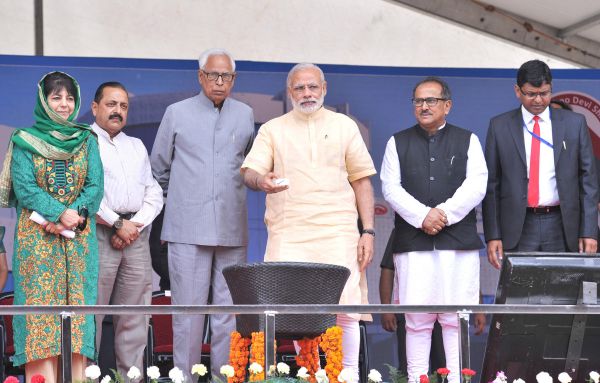
Modi picked up the refrain on Independence Day 2018. “With these three basic elements we want to develop Jammu & Kashmir … We want balanced development” in Kashmir, Jammu & Ladakh. “We do not want to move on the road of goli (bullets) and gali (abuses). We want to move ahead with love and affection”. It is cruel to serve slogans to the people as a substitute for conciliation.
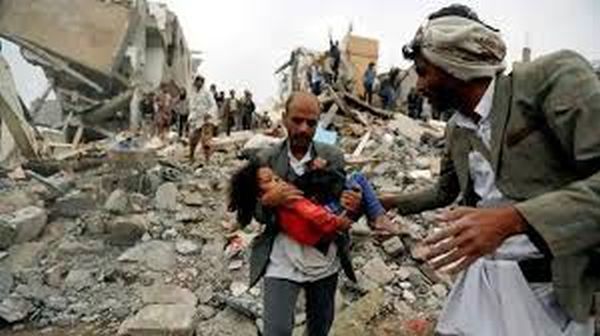
Hardly a day passes in Kashmir when one of its youth does not fall to bullets from the forces. Kashmir needs a viable policy. A dialogue is futile unless there is a will to negotiate a common ground by all the three parties — India, Pakistan and the people of Kashmir. For a start he can instruct the attorney general to tell the Supreme Court that the Union stands by Article 35A of the Constitution which confers special rights on the people in respect of lands and jobs. The entire valley is up in arms over moves to have it declared void. Will Modi put his money where his mouth is? Fundamentally has he any proposal whatever for conciliation?
Courtesy Dawn