By: Rakesh Sood
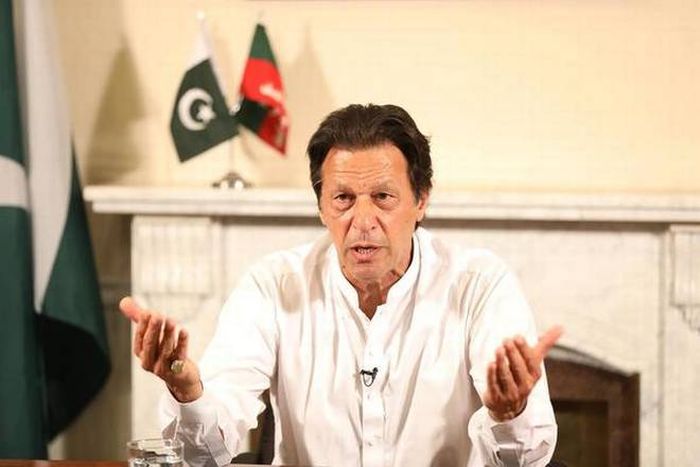
The elections in Pakistan have delivered the expected outcome — a victory for Imran Khan’s party, Pakistan Tehreek-e-Insaf (PTI), though with slightly greater numbers than was perhaps anticipated. Twenty-two years after he entered politics, Mr. Khan’s persistence has finally paid off as he gets ready to be sworn in as the new Prime Minister of Pakistan. However, he will remain dependent on coalition partners who will ensure that he keeps in line with what the umpire wants. Mr. Khan needs to understand that while on the cricket pitch, the winner is a playing team, in Pakistani politics, the Army is the umpire and calls the shots.
Managing the ‘hawa’
Every election is guided by a ‘hawa’ (a wave), and after so many elections, the Army has become adept at manipulating the ‘hawa’. In the 2002 elections, with Gen. Pervez Musharraf in charge, it was clear that neither the Pakistan Peoples Party (PPP) nor the Pakistan Muslim League-Nawaz, or PML(N), could be allowed to win (both were opposed to the military takeover in 1999). And so a new party, the Pakistan Muslim League (Q), or PML(Q), emerged to sweep the election. Incidentally, the PML(Q) has been reduced to 5 seats this time and will support Mr. Khan.
In the 2008 election, Benazir Bhutto’s assassination (in December 2007) created a sympathy wave for the PPP but an accommodating President (and her husband) Asif Ali Zardari ensured that the Army remained in control of key policy matters. Five years later, dissatisfaction with the PPP’s mis-governance propelled Nawaz Sharif to victory and he was sworn in as Prime Minister for the third time. Ironically, even though Mr. Sharif’s political career was nurtured under the benign gaze of Gen Zia-ul-Haq in the 1980s, his relations with the Army have invariably been strained every time he has been Prime Minister. The first time he became Prime Minister, in 1990, he ended up being dismissed by President Ghulam Ishaq Khan in 1993 over growing differences with Chief of Army Staff (COAS) Gen. Abdul Waheed Kakar; elected again in 1997, he was ousted in a coup by COAS Gen. Musharraf in 1999.
History repeated itself and this time too. His relations with the Army deteriorated from 2016 onwards with the ‘Dawn leaks’ about a meeting where the Army’s flawed Afghan policy was held responsible for Pakistan’s international isolation and worsening law and order situation at home. The Army was not amused and held the Prime Minister’s office responsible for the embarrassing disclosure. The Panama Papers came in useful to begin an inquiry into Mr. Sharif’s financial assets, eventually leading to a judgment on somewhat flimsy grounds, resulting in his resignation last year. A pliant judiciary further ensured his disqualification from politics, sentencing him to jail for 10 years (and his daughter and political heir Maryam Sharif to seven years), three weeks before the elections, making it clear that the PML(N) was out of favour.
A new king’s party
With the PPP still in disarray, the stars were aligned for Mr. Khan in 2018 and this perception has catapulted his party from 28 seats in 2013 to 115 (in a house of 272). No doubt he was helped by the ‘khalai makhlooq’ (extra-terrestrial beings) who engineered last-minute defections from the PML(N), but it contributed to the ‘hawa’ that has ensured his victory.
The 2018 election has contributed a new term, ‘electables’, to Pakistani election terminology. Used by Mr. Khan to describe those who have mastered ‘the science of winning elections, these are individuals who enjoy the loyalty of ‘biradaris’ in their constituencies (largely rural and semi-urban constituencies in Punjab) because of family ties and financial standing and have built an efficient patronage system. In 2002, they had abandoned the PML(N) and switched to the PML(Q), returning in 2008. This time, many joined the PTI while some chose to fight as independents rather than under the PML(N) banner. The reason was that the PTI was widely seen to be the king’s party this time with Mr. Khan being described in Punjab as the new ‘laadla’.
Contrary to most expectations, the religious parties have not fared well in terms of winning seats. Even though the Milli Muslim League — Lashkar-e-Taiba’s chief Hafiz Saeed’s political front — was not recognised by the Election Commission, it had fielded several candidates using the banner of the Allah-o-Akbar Tehreek, a little known entity founded in 2011. Another banned party, the Ahle Sunnat Wal Jamaat, led by Maulana Muhammad Ahmed Ludhianvi, and linked to the Lashkar-e-Jhangvi, had fielded over a hundred candidates under the banner of Rah-i-Haq.
A new Barelvi front, the Tehreek-i-Labbaik Pakistan, led by Khadim Hussain Rizvi, has emerged in recent years. It came into prominence in 2016 with its protests against the execution of Mumtaz Qadri, assassin of Punjab Governor Salman Taseer. Hardline Islamic parties have traditionally belonged to the Deobandi school or associated with the Salafis. A hardline Barelvi front is a new development but evidently failed to make much of a dent. However, these may have played the role of spoilers, something that will emerge once voting details become clearer.
A notable development is the near weakening of the Muttahida Qaumi Movement (MQM) in Sindh and the Awami National Party (ANP) in Khyber-Pakhtunkhwa (KP). The MQM’s hold has been in the urban areas of Sindh which account for 24 out of 61 seats in the province. Factionalism, a leadership vacuum with the old guard in exile and Army operations to break its nexus with organised racketeering brought down the MQM from 19 to merely six seats this time. The PTI did surprisingly well, picking up 14 seats while the PPP retained its hold in rural Sindh. The secular ANP has seen its leadership targeted by the hardliners in recent years and was able to win just one seat in KP.
A difficult challenge
Despite the adverse ‘hawa’, the PML(N) has managed a respectable tally of 64 seats (down from 126 in 2013), 60 of which have come from its stronghold Punjab, which has 141 seats out of 272. Moreover, in the Punjab Provincial Assembly, out of 295 seats, the PML(N) has lost its majority (in 2013, it had 239 seats compared to the PTI’s 30) but remains the single largest party with 129 seats and the PTI a close second with 123 seats. This has put a question mark on government formation in Punjab. In Sindh, the PPP is well placed to form the government, while in KP, the PTI has been re-elected to power. Balochistan remains fragmented with the religious parties’ grouping, the MMA (Muttahida Majlis-e-Amal), and the Balochistan Awami Party holding the key.
During his heyday as the cricket captain who won the World Cup in 1992, Imran Khan was known as persistent and autocratic but also able to motivate his team. His election victory shows that he remains an icon for the below-35 voter, reflecting the changing demographics of Pakistan. But charisma can fade quickly too.
In his politics, Mr. Khan has been erratic — vowing to fight corruption, seeking to embrace the Taliban, adopting a nationalist anti-U.S. stance, criticising the Army for its dealings with the U.S. while staying on its right side, cultivating a pious image together with a personal lifestyle that is in sharp contrast. Given that the Senate will remain in the hands of the PML(N) and the PPP at least for the next two years, he will face difficulties in terms of his legislative agenda. His dependence on coalition partners will force him to keep his autocratic tendencies under check. Meanwhile, Pakistan’s policies towards its neighbours and major powers will continue to be crafted by the Army. Mr. Khan may well find that this time around, he is captain but only in name.
Rakesh Sood is a former Ambassador to Afghanistan and currently Distinguished Fellow at Observer Research Foundation. E-mail: rakeshsood2001@yahoo.com
Courtesy The Hindu