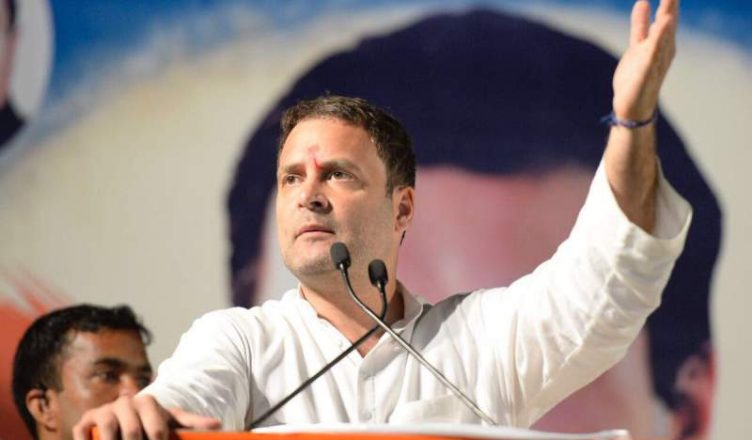
MONDAY marked the 27th anniversary of Rajiv Gandhi’s assassination, a sombre day for India and for the family. Rahul Gandhi recalled how his father cautioned against hate because it becomes a prison for those that carry it in the heart. It’s a useful thought to embrace for a people riven by irrational and hateful ideas about each other.
For the record, the young Gandhi carries in him an enviable cultural blend of Hindu, Parsi and Christian traditions but for some ill-advised reason he plays up one and seems to disown the other two. There is a useful Christian aphorism too that he may have heard from his mother. Heeded, it could help him chart a worthy course for himself and for the country he seeks to lead.
‘The Mote and the Beam’ is a parable of Jesus that was given in the Sermon on the Mount. It is in the ‘Gospel of Matthew’, chapter seven, verses one to five. The discourse is short, and starts off by warning followers of the dangers of judging others, saying that they would also be judged by the same standard.
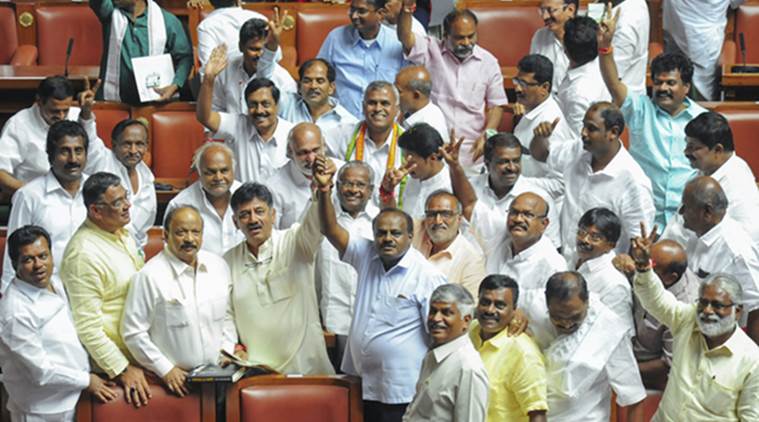
A day after Rahul Gandhi exulted he would happily be prime minister if someone offered him the job, his party lost the elections in Karnataka. There is an encouraging outrage over the way the BJP plotted to steal the inconclusive election with the help of state institutions it has stacked with its cadre.
History, however, conducts its own balancing acts. As was the case with the BJP’s self-appointed chief minister in Karnataka, Atal Behari Vajpayee and Nitish Kumar come to mind as kindred spirits who faced the ignominy of quick exits. Their claim to power also fell way short of the mandatory headcount. Rahul Gandhi’s father was an exception for taking an unusually fair call for India’s democracy. After commanding an as yet unparalleled majority in parliament, his party lost the next election. Despite Congress emerging as the single largest party in the 1989 race, Rajiv Gandhi preferred to sit in the opposition. Fair play was not to be the way of his Congress party successors though.
Narasimha Rao criminally assaulted parliament as few others have done by assembling a thin majority with bribery. The pliable deputies were subsequently jailed but Rao was heaped with accolades by the corporate media (who else!) for ushering in the country’s pro-business policies. Rahul Gandhi would do well to bear in mind that the economic policies of Rao and Manmohan Singh were founded on a lowly crime. If the 13-day Vajpayee government signed a notorious energy deal with Enron, the Rao-Singh duo created grounds for India’s tryst with cronyism minus the mandate. Only a very good understanding of that political event can extract any useful lessons for Karnataka.
If there was talk of horse-trading of MLAs in BJP-held Karnataka, there was an auction of MPs in Congress-ruled parliament in Delhi. It would be foolhardy to discard caution in a hung assembly where mischief often lies in wait to ambush the best intentions. The BJP had the money and the desperate need to take power in the southern state, which it did.
It’s true that absolute power corrupts absolutely, but a wafer-thin majority for any government could also be an occasion to worry, for that’s when its insecure constituents become even more vulnerable to the lure of lucre. It is widely alleged that Rajiv Gandhi went down because of the Bofors scandal. To my mind, the opposite is true. While he was the original author of a free-market economy, his entire focus at the 1985 centenary meeting of the Congress party in Bombay was against crony capitalism. He vehemently opposed “the moneybags riding the backs of Congress workers”. The moneybags retaliated by unleashing their media units to get even with him. They tarnished him with the Bofors dirt while scrupulously protecting the actual conspirators in the scam, including some of Rajiv’s closest friends.
It’s reassuring to see Rahul Gandhi naming names of some of the leading crony tycoons who derive their strength from Modi, whether it was with regard to an unfair defence deal or a dubious land grant or ill-gotten financial benefits.
Using irrational fear to garner votes to hand over the mandate to a bunch of businessmen is a ploy Rahul may be all too familiar with. It was no coincidence that the Babri mosque was razed with the advent of the country’s pro-business moment. Ahead of the 2014 polls, again it was the elite group that endorsed Narendra Modi as their prime ministerial candidate. Their decision to reject Congress as an option also thwarted any challenge to Modi from within the BJP. Modi’s choice was effectively a business proposition with the pretence of a political cover credited to some folks in Nagpur with exaggerated self-importance.
The economic vision for India is essentially a mercantile one. There’s no need for scientific education, inspired creativity or the quest for excellence if all that the so-called visionaries want is to extract minerals from stolen land, vend imported mobile phones and bribe politicians to secure their bandwidths. If Ayodhya blended with India’s mercantile purpose, Muzaffarnagar ricocheted around the country and, more critically, in Uttar Pradesh to secure the loot in 2014. Fascism, after all, is driven by an economic purpose that cannot be served by a robust democracy.
Instead of gloating about how they forced the BJP to eat crow in Bengaluru, which is no small achievement, Rahul Gandhi and his newfound regional ally in Karnataka should consolidate a secular and clean pro-people agenda. The election should have taught Rahul Gandhi another important lesson for the battle ahead. Becoming prime minister is not as vital as putting together a coalition of dedicated and self-effacing leaders.
As a handy Parsi parable reminds us: ‘Mehel joi ne jhoopri na toro!’ Do not destroy your hut after seeing a palace.
Courtesy Dawn