By: Javaid Trali
Defence minister Nirmala Sitharaman’s recent statement on Kashmir – “the army’s position is, it has to be firm on terrorism” – shows how the minister and other politicians feel the issue of Jammu and Kashmir (J&K) can be solved only through military methods.
But, the fact is, military strategies are only a temporary measure – these don’t serve the real purpose in the long run. This is something one of the most iconic leaders of Sitharaman’s own party – former PM Atal Bihari Vajpayee – understood. And applied.
Announcing a unilateral ceasefire in Kashmir during the Ramzan of 2000, the towering Vajpayee had said, “I hope that our gesture will be fully appreciated… all violence in the state and infiltration across the Line of Control and the International Border will cease and peace will prevail.”
In August 2000, Vajpayee had visited Srinagar, making a phenomenal pledge of solving the Kashmir issue “within the ambit of humanity”. The Prime Minister with the famed “heart of a poet” reaffirmed: “Mine was a sincere appeal for cooperation to bring to an end the long trail of violence, which has claimed so many precious lives and inflicted untold misery on all sections of the state’s population – Muslims, Hindus, Buddhists and Sikhs alike.”
This reiteration of his compassionate view and the subsequent announcement of the unilateral ceasefire announcement were the boldest and wisest Confidence Building Measures (CBMs) the country offered the beleaguered people of Kashmir. It was indeed unfortunate that the same was not reciprocated in kind by Pakistan.
In India, the political leadership of the time, as well as ordinary people, hailed Vajpayee’s decision. There was a general consensus that any provocation, from visible or hidden hands, to sabotage the historic peace measure should not be allowed to succeed.
The thought was put to a powerful test barely 24 hours after the declarations, when Pakistan-backed militants shot dead six Sikh truck drivers in Kashmir. Vajpayee sahab, however, stood firm in his belief that the ceasefire decision brought forth the hope of peace in Kashmir. The ordinary residents of the hapless state looked forward with optimism to the dividends this decision would offer.
Abdul Gani Lone, the only sane voice in the Hurriyat at that time, did try to convince Pakistan and militant leaders about the dividends of a possible truce vis-à-vis Kashmir and Indo-Pak relations – but hawks played spoilsport.
Yet, the ceasefire offer was a moral victory won by Vajpayee for his country.
Today, the political parties of Jammu and Kashmir have again raised a unanimous request for a ceasefire during the holy time of Ramzan, starting on May 16. This is a very vital demand, for, in times of such war, a truce is the only option to save ordinary people. I will be as unambiguous as possible – the guns of either side should fall silent. That is what Kashmir badly needs. The GoI should offer peace, and militants (needless to say, that means Pakistan) should respond positively.
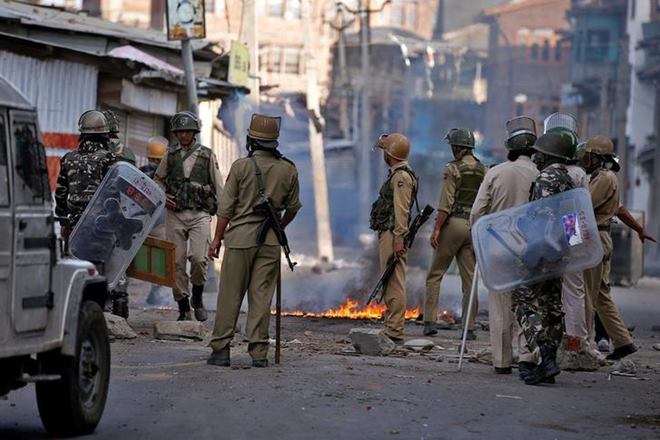
The macabre cycle of bloodletting and destruction, occurring over the past thirty years, must end now. No matter how much we try to appear composed and in control of things, the fact is, we all feel frustrated and hopeless in Kashmir. Roaring guns add to this despondency – the people need to be shown a way forward, through empathy and love.
The first step has to be taken by the government of India.
It should listen to this unanimous call from the political parties of the state, which asks to exhibit sympathy and love through a unilateral ceasefire ahead of the holy month for Muslims and the holy journey for Hindus, the Amarnath Ji Yatra.
Kashmir’s chief minister, Mehbooba Mufti, who has been advocating dialogue despite aggravation and very difficult times, has to be understood – and encouraged. Her pleas for peace and reconciliation have to be supported, for only reconciliation offers hope. We have to offer hope, show compassion, also mourn the loss of lives in a time of some calmness. If we don’t do so, we are only widening the gulf and adding to the estrangement with our people. That growing space then gets filled by hate and revenge.
It is upto us to fill that space by coming closer now.
Who benefits from the present situation? The people? The government? The security apparatus? No – none of them. This situation only helps extremists, who use it to consolidate the already prevalent disenchantment.
We can’t afford to play into their hands. We have to use our better sense of judgment.
In present times, when the cycle of death and destruction seems unending, a ceasefire decision will be a potent gesture of compassion and a way forward.
The people who took up arms and stones, and those who pat their backs for their own aggrandizement, have been blind to reality – but should the political leadership, from Srinagar to Delhi, also shut our eyes to ground realities?
The fact is – the only beneficiaries of the people’s sufferings have been self-seeking conflict merchants. There is no doubt that the people feel let down and taken for granted; the loss of lives and the vagaries of an armed conflict have frustrated them. Additionally, they are subjects of emotional blackmail by political vultures.
Should we allow this abnormal situation to persist?
At this time, learned people like Sushant Sareen, writing recently in DailyO, and other security experts, may well argue against the idea of a unilateral ceasefire. Politicians may agree with that – but, political considerations aside, the country’s leadership and people should get united and own the interests of Kashmiris for the larger interests of the nation. This can be a great beginning. Why nix it before even trying?
It is the constitutional, legal and moral duty of a government to secure the lives and futures of its people. We cannot fight a war with people who have been continuously reposing faith in the country’s democratic set-up by participating in the electoral processes. The more we show stubbornness, the more serious are the problems we have to face. The time is to rethink – and reach out with trust and warmth.
The writer is media analyst in the Kashmir Chief Minister’s office, J&K. He hails from South Kashmir’s Tral area. He tweets at @Traluk
- Source: www.dailyo.in