By: Muhammad Amir Rana
A DELEGATION of Afghanistan’s Islamic scholars is expected to arrive in Islamabad in the coming weeks to support ongoing confidence-building measures between the two countries. The delegation will visit some major religious institutions in Pakistan and review how educational development is helping to bridge the trust gap that exists between the two neighbours.
This year, both countries had agreed to form the Afghanistan-Pakistan Action Plan for Peace and Solidarity (APAPPS). However, the element of religious diplomacy — which could also prove very effective — was not part of the plan.
The APAPPS has some built-in principles, including the following: taking action against “irreconcilable and fugitive elements” on both sides; denying territories to anti-state groups or individuals; creating a joint supervision, coordination, and confirmation mechanism through liaison officers for the realisation of agreed actions; avoiding land and air violations of each other’s territory; and avoiding the public blame game by using cooperation mechanisms to respond to mutual contentions and concerns. To achieve these goals, six working groups were formed, including on politico-diplomatic issues, economic ties, refugees, military engagements and intelligence sharing and review mechanisms.
However, efforts to initiate and utilise religious diplomatic channels between the two countries are not new. Afghanistan, in particular, has been trying to activate such channels for some years now. The Afghan government has also been anticipating a religious decree, or fatwa, against the Afghan Taliban by Pakistan’s religious scholars, at least since last October when Gen Qamar Bajwa visited Kabul. The Afghan media had then claimed that Pakistan’s army chief had promised to manage this fatwa.
Issuing a fatwa against the Afghan Taliban on the grounds that Afghanistan is an Islamic democratic republic like Pakistan and that armed resistance is legally forbidden against Muslim rulers is a huge challenge for Pakistani ulema, who have always supported the Taliban resistance movement in Afghanistan. They know that the real strength of the Afghan Taliban rests with a ‘religious’ narrative of the struggle against the ‘foreign occupation’ of Afghanistan.
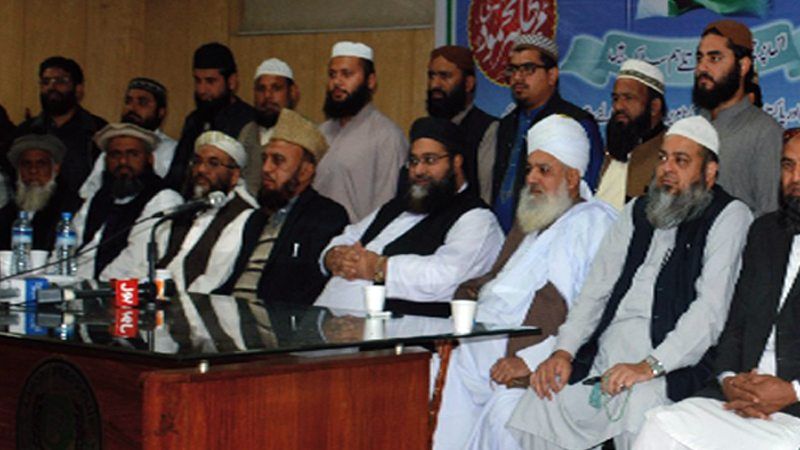
Pakistan’s ulema did not issue such a fatwa even against Pakistani militant organisations in clear terms until recently, when early this year about 1,800 ulema from all Muslim schools of thought issued a unanimous decree, the Paigham-i-Pakistan, condemning extremism and terrorism in the country. This first-time categorical religious decree defined jihad as being the purview of the state and disallowed the use of force to compel obedience to Islamic laws.
On the other hand, the fatwa disappointed Kabul as it did not condemn the Taliban resistance movement in Afghanistan. To put pressure on Pakistan, Kabul used its diplomatic channels with other Muslim countries to get a similar Afghanistan-specific religious decree. Indonesia and Saudi Arabia agreed to initiate a broader religious diplomatic process to develop a consensus among religious scholars of different Muslim countries.
In Jakarta, the Afghanistan delegation failed to seek a categorical fatwa against the Afghan Taliban. However, the scholars from Pakistan and Indonesia merely issued a joint declaration at the end of the meeting, urging the Taliban to accept the Afghan government’s offer for peace and reconciliation. According to media reports, the declaration had accommodated the Afghanistan point of view as well, while mentioning that war and violence have no place in Islam and emphasising that Islam is a religion of peace.
Obviously, the Taliban were not happy with the development and perceived it as a coordinated effort by the US and Kabul to delegitimise their movement. When Saudi Arabia attempted to do the same, the Afghan Taliban requested, in some instances even warned, Pakistan’s ulema to not participate in such conferences. Their threat worked and from Pakistan only the chairman of the Council of Islamic Ideology, Dr Qibla Ayaz, represented the country in the Riyadh process. There were rumours at that time that the Taliban were also invited by hosts to participate in Riyadh process and present their case on the condition that they shut down their Doha office. However, the Taliban turned down the offer. The same office is now reportedly engaged in direct talks with the US.
On the other hand, a high-profile delegation of Afghan ulema led by the members of the High Peace Council attended the international ulema conference in Riyadh and succeeded in getting the declaration that the Afghan government is an Islamic government, its people are Muslims and their killing is prohibited. However, the declaration did not categorically mention the Taliban.
Meanwhile, Kabul has continued influencing Pakistan for managing such a fatwa through multiple diplomatic channels. Apparently, the awaited Pakistani visit of the Afghan ulema is not part of the efforts to seek a fatwa against the Afghan Taliban — nor will they talk about the Taliban during their visits to different religious institutions in Islamabad.
They will present the case, that like Pakistan, Afghanistan has a constitution that has included all the Islamic clauses, rights and legal instruments that Pakistan’s constitution has. Such a comparative analysis of both constitutions would be interesting as the Pakistani ulema’s collective fatwa against terrorism talks about the sacredness of the constitution, among other things. It will be a huge challenge for the ulema in this country to justify two different opinions on militants’ response to two constitutions comprising almost similar religious provisions. The only traditional argument that they could employ to justify the Afghan Taliban’s ‘resistance’ movement would be drawn from the presence of the foreign troops on the soil of Afghanistan.
For Afghanistan, the visit of the Afghan ulema may contribute to developing anti-Taliban sentiments amongst the masses in Pakistan and build pressure on religious scholars here to come up with a clear stance on the Taliban movement in Afghanistan. For Pakistan, the move can help to boost confidence between the two countries and reduce the international pressure that is exerted on account of Afghanistan.
Courtesy Dawn