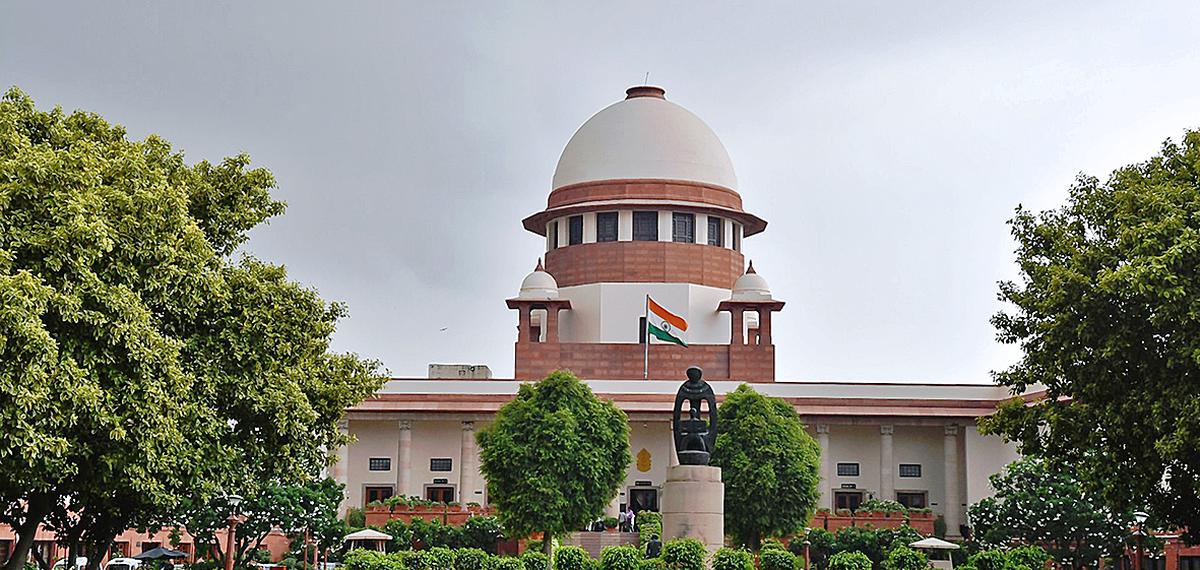
New Delhi: The Supreme Court on Tuesday quashed all FIRs registered against students who participated in the Cockroach Janta Party-led protests across the country between July 20 and 25 and said the cases should not affect their future. Following the order, the group called off its September 5 march in the national capital.
A bench headed by Chief Justice of India Surya Kant also directed the Centre to provide within three months compensation to families of students who ended their lives over the NEET paper leak.
Welcoming the apex court’s decision, Union Health Minister J P Nadda said the welfare and progress of the country’s youth remained the government’s utmost priority and asserted that all FIRs lodged against those who took part in the protests will be withdrawn, and no stringent action will be taken against any of them.
The court, after closing the criminal proceedings against the protesters at the Centre’s request, said, “Keeping in view the future prospects of the young protesters, we invoke our powers under Article 142 of the Constitution to do complete justice.”
Article 142 empowers the apex court to pass any orders to do complete justice.
The bench said its invocation of Article 142 was subject to both sides abiding by the understanding reached before it.
The order came after Solicitor General Tushar Mehta said that the Centre and the states of Maharashtra, Assam, Bihar and West Bengal sought quashing of the FIRs linked to the protests.
Acceding to the Centre’s request, the apex court, however, permitted Delhi Police to register fresh FIRs against 2,873 individuals with serious criminal antecedents who were present in the Jantar Mantar protest.
The bench, also comprising Justices Joymalya Bagchi and V Mohana, took note of the submissions of Solicitor General Mehta and widened the ambit of its order.
“If there is any other FIR registered with regard to same protest between July 20 to July 25 in any of the states or UTs, which are not before this court, they shall not be pursued and will be treated as closed,” it said.
Dealing with the award of compensation to the families of those who committed suicide, the court directed the Centre to formulate a nationwide policy on the issue and pay the money within three months to the aggrieved families.
CJP co-convener Saurav Das appeared before the bench and read out a statement on behalf of the group.
“The CJP deems it appropriate to withdraw the call for the march on September 5 and looks forward to compliance with today’s order,” Das said.
The CJP had called for a protest march in Delhi on September 5, Teachers’ Day. It had accused the Centre of failing to honour the promises made on July 25 to persuade the group to withdraw its 36-day agitation against irregularities in exams and the NEET paper leak.
Talking to reporters here shortly after the quashing of the FIRs, Nadda said that on July 25, he and his colleague Jitendra Singh held talks with the representatives of students protesting at the Jantar Mantar and assured them that the cases registered against them would be withdrawn and no stringent action would be taken in the matter.
“The welfare and progress of the country’s youth remains the government’s utmost priority,” Nadda told reporters here.
He also welcomed the CJP decision to call off the September 5 march.
CJP founder Abhijeet Dipke termed the court decision “absolute justice”, saying the group’s demands had been met.
“We have got absolute justice. The protest became successful today in true means,” he said, adding that the government must ensure that no student loses life due to failure of the system.
Congress’ social media department head Supriya Shrinate, while welcoming the relief to protesters, raised questions over the alleged use of pellet guns during the agitation and demanded accountability for students who were injured.
“The larger question is not the FIR but who fired pellet guns? Did Amit Shah know that pellet guns were going to be fired at students? If he knew about it then he has unleashed violence on our students, if he didn’t then it shows how incompetent he is and in both the cases he dosn’t deserve to be the home minister,” Shrinate told PTI Videos.
Advocate Vrinda Grover, who represented the CJP, described the order as “historic” and significant, saying it recognised the importance of the right to protest and seek accountability in a democracy.
“This is a historic and significant order. The freedom to protest, the freedom to seek accountability, and the right to put protest as being central to a democracy have been upheld by the court. The court said the youth are the future and these cases don’t need to hinder their future growth,” Grover said.
The CJP-led march on July 20 in Delhi saw clashes between protesters and security personnel, who used lathis and teargas shells to disperse crowds attempting to move towards Parliament.
The student-led protests, which spread to several cities, were centred around the resignation of the then Union Education Minister Dharmendra Pradhan.
The agitation, which began at Jantar Mantar on June 20, was called off on July 25 after Pradhan resigned and the government accepted the CJP’s other demands.