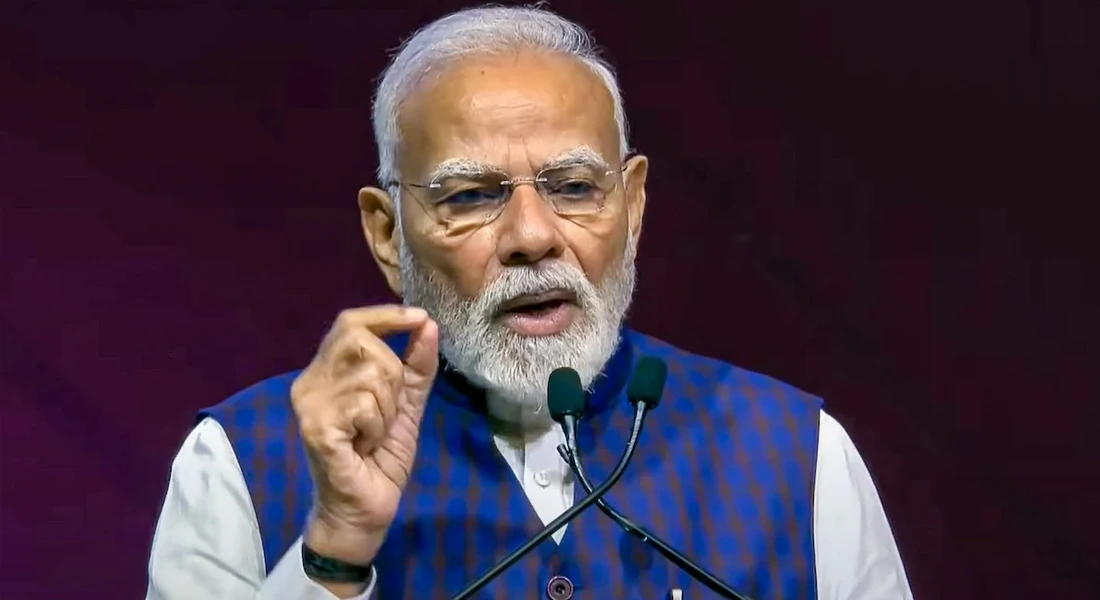
Srinagar: Prime Minister Narendra Modi has highlighted the sanitation and waste management arrangements put in place during the Shri Amarnath Ji Yatra 2026, citing the initiative in the latest edition of his monthly radio programme Mann Ki Baat.
The mention came days after the annual pilgrimage concluded on August 28 and focused on the sanitation infrastructure and waste management system implemented along the Yatra routes and camps.
According to officials, the Directorate of Rural Sanitation under the Department of Rural Development and Panchayati Raj established a sanitation and waste management framework across the Baltal and Pahalgam routes, including base camps and other key locations, to cater to the large influx of pilgrims while addressing environmental and public health concerns.
More than 8,000 sanitation facilities and related infrastructure, including prefabricated toilets, bathing units and permanent bases, were installed during the pilgrimage, officials said. Dedicated sanitation workers were deployed along the routes and at camps to maintain cleanliness, manage public spaces and ensure upkeep of sanitation facilities.
Officials said a scientific solid waste management system was also put in place to handle waste generated during the Yatra. The mechanism covered segregation, collection, transportation, processing and disposal of waste from camps and pilgrimage routes.
Under a “Zero Waste to Landfill” approach, a total of 414.46 metric tonnes of waste was collected and scientifically processed during the pilgrimage, according to the department.
The intervention assumed significance given the environmentally sensitive Himalayan terrain through which the Yatra passes. Officials said the measures were aimed at reducing the ecological impact of the pilgrimage while maintaining hygiene and sanitation standards.
Awareness campaigns were also conducted to encourage pilgrims to use designated sanitation facilities and adopt responsible waste disposal practices. The department said technology-based monitoring and field-level supervision were used to oversee sanitation services and waste management operations during the Yatra.
Director General, Rural Sanitation, J&K, Anoo Malhotra said the arrangements demonstrated how infrastructure, manpower, technology and public participation could be combined to improve sanitation and environmental management during large-scale religious events.
The Shri Amarnath Ji Yatra is one of the country’s largest annual pilgrimages, drawing lakhs of devotees to the cave shrine in south Kashmir each year.