
There is perhaps no political instrument more powerful than faith. Governments can offer jobs, welfare and security, while political parties can promise development and prosperity. But faith offers something politics often cannot manufacture: moral certainty. Tell people that a policy is economically necessary and they may question it. Tell them it is politically necessary and they may oppose it. But convince them it is God’s will, and questioning it can suddenly become a moral offence.
Across history and continents, rulers have discovered the power of linking political authority with the sacred. Kings ruled by divine right, empires portrayed themselves as defenders of religious civilisation, and modern political movements have wrapped nationalism in religious identity. The political formula is simple: if you can make your politics sacred, you can make your opponents look profane.
Why does it work? Because human beings do not live by reason alone. We seek belonging, certainty, meaning and an explanation for suffering. Religion can provide all of these with extraordinary emotional force. Politics understands this. A politician who says, “Vote for me because I have a better economic policy” asks citizens to examine evidence. A politician who says, “I represent your people, your culture and your faith” is asking for something deeper: identity-based loyalty.
Once political identity is fused with religious identity, an election is no longer simply a contest between competing policies. It can become a struggle between the supposedly righteous and the supposedly corrupt, between those who defend the faith and those accused of threatening it. Political loyalty becomes moral loyalty, and disagreement can begin to look like betrayal.
Yet faith can also play the opposite role. At its best, religion can impose limits on political power by reminding rulers that they are not the ultimate authority. Religious traditions have inspired movements for justice, defended the vulnerable and challenged governments. Faith can therefore give politics a conscience.
The danger begins when power captures that conscience.
When governments claim to be guardians of religious truth, or political parties present themselves as representatives of a faith, religion becomes part of the machinery of political competition. Complex religious traditions can be reduced to simple political categories: us and them, believers and unbelievers, patriots and traitors, good and evil. Religion becomes a badge, a voting bloc and eventually a weapon against opponents.
This is politically useful because complicated problems have complicated answers. Unemployment, inequality, corruption and inflation require difficult explanations. Blaming outsiders, minorities or people supposedly responsible for moral decline is much easier. The political narrative becomes emotionally satisfying: we would be fine if only they were not here.
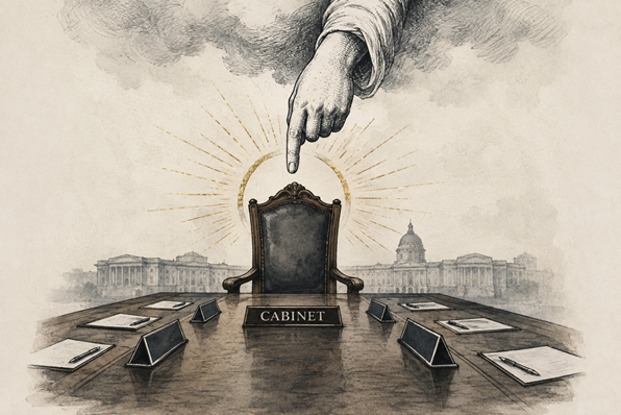
The greatest danger comes when a government claims not merely to represent citizens, but to represent their faith. A person who opposes a tax policy is a political opponent. But someone who opposes a policy presented as God’s will can suddenly be portrayed as an opponent of God. The government acquires a form of moral immunity, because challenging political authority begins to look like challenging religious authority.
That is dangerous for democracy. Democracy depends on the possibility that governments can be wrong. Leaders can fail, policies can be challenged, voters can change their minds and elections can remove those in power. But when political decisions are presented as divinely ordained, disagreement becomes much harder. The political opponent can be transformed into an enemy of tradition, the community or even God.
There is also an uncomfortable truth about believers: religion works politically because people genuinely believe. Millions of believers are not simply manipulated; they sincerely want their faith to inform public life. They have every right to bring those convictions into politics. But respect for religious belief cannot mean surrendering the right to question political power.
A citizen should be free to say, “My faith shapes my political beliefs.” No government should be allowed to say, “Because I represent the faith, you are not allowed to challenge me.” The first is religious freedom. The second is political domination.
The real danger, therefore, is not religious people participating in politics, nor religious values influencing public policy. The danger begins when political leaders claim exclusive ownership of religious truth and turn disagreement with them into disagreement with God.
Once that line disappears, something fundamental changes. Religion no longer stands outside power and asks whether power is moral. It becomes part of the machinery of power.
Perhaps that is why turning faith into a tool of governance has worked so often around the world. It does not merely ask people for obedience. It asks them to believe that obedience is virtue.
Governments change. Leaders fall. Parties disappear. But once political power convinces people that it speaks in the name of God, removing the government can begin to look like challenging God Himself.
And perhaps that is the most dangerous moment in any democracy: when the politician stops asking for your vote and starts claiming your faith.



