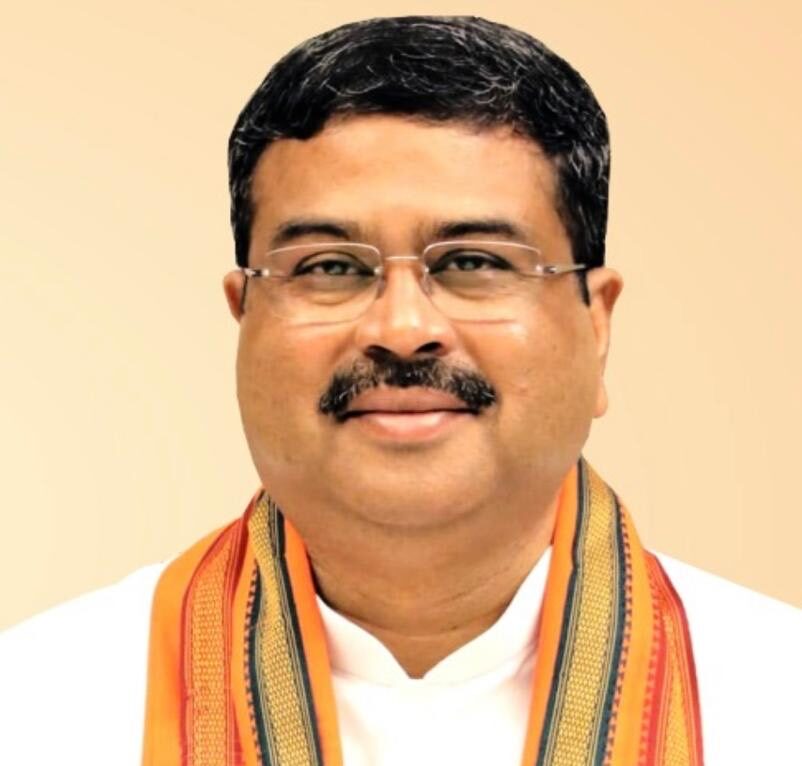
New Delhi: Union Education Minister Dharmendra Pradhan resigned on Saturday amid mounting pressure over the NEET paper leak controversy, with the Centre conceding the principal demand of the Cockroach Janata Party (CJP)-led agitation after weeks of protests that spread from the national capital to several parts of the country.
Pradhan announced his decision in a statement, saying the developments of the past 10 days had “saddened” him deeply and that the issue was “not a matter of personal prestige”.
Noting that he did not want “anti-national forces” to exploit the situation, Pradhan said he wanted to ensure that “the unity of the nation remains intact”, “the future of even a single student should not become entangled in legal complications” and that students devote their time to studies and building their careers.
“Keeping all these considerations in mind, I have sent my resignation to the Hon’ble Prime Minister,” he said.
Pradhan is the second union minister in Prime Minister Narendra Modi’s tenure to resign following a public controversy. The first was M J Akbar, who stepped down as minister of state for external affairs in 2018 after sexual harassment allegations surfaced against him during the #MeToo movement.
Pradhan’s resignation came a day after the Centre announced measures to address concerns over examination irregularities. These measures included a proposed law prescribing stringent punishment for paper leak involvement and establishing fast-track courts for speedy trials.
The protests were spearheaded by the CJP, a platform launched by former AAP functionary Abhijeet Dipke as a satirical online campaign in May before it turned into one of the most significant youth-led movements in recent times.
Hailing the resignation as a victory for democracy, Dipke announced at the Jantar Mantar protest site that the agitation would continue until its remaining demands were met. “This is democracy. He has resigned. We have two more demands. We won’t go like this,” he said.
Dipke demanded compensation of Rs 1 crore each for the families of students who allegedly died by suicide following the paper leak and action against police personnel involved in the July 20 crackdown on protesters during a march to Parliament that became a major turning point in the agitation, swelling the crowds at the protest site.
“Remember, do not mess with cockroach,” he said.
The government first opened negotiations with the CJP leadership on July 20 at Union Health Minister J P Nadda’s residence. It also held talks with activist Sonam Wangchuk, whose decision to join the CJP-led agitation on June 28 and undertake an indefinite fast with six AISA activists gave the movement fresh momentum and broadened its appeal. Wangchuk withdrew his fast on Thursday night.
A second round of discussions with CJP representatives was held at the Constitution Club on Friday after the Centre accepted the CJP’s demand that the meeting be shifted from a minister’s residence to a neutral venue.
Another round of talks was held there on Saturday over the remaining demands raised by the protesters.
Wangchuk’s forcible removal from Jantar Mantar by police to Safdarjung Hospital on July 18 had triggered widespread outrage.
Reacting to the resignation, Wangchuk called it “a victory of democracy, direct democracy… straight from the streets”. “It is a victory of peace, patience and perseverance,” he said, congratulating the CJP, Gen Z and citizens “for shedding fear and the fear of fear and rising up from every corner of the nation.”
The opposition also sought to claim credit for the development.
Congress general secretary (organisation) K C Venugopal described the resignation as “a victory of the people” and said the Congress, led by Rahul Gandhi, had been demanding Pradhan’s resignation since the paper leak surfaced.
“In a united fashion, the Opposition was spearheading this protest with a common demand for accountability,” he said.
The resignation marked a significant departure from the government’s initial dismissive response to the agitation. Pradhan himself had escalated the confrontation in June by describing the CJP as the “dehshatgardon ka B-team”, accusing it of acting on behalf of forces rejected by the people.
The CJP launched its indefinite protest at Jantar Mantar on June 20.