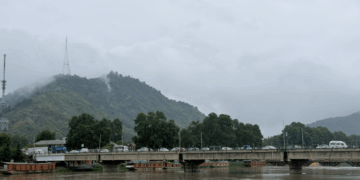

There was a time when Kashmir wasn’t just a location – it was a character. Songs floated over Dal Lake, shikaras carried stories, and every snow-clad slope was a cinematic metaphor. From Kashmir Ki Kali to Jab Jab Phool Khile, the Valley wasn’t marketed – it was desired.
Today, Kashmir is sold in tourism brochures… but avoided in production meetings. Why?
Because filmmaking is not about beauty. It is about predictability, logistics, cost, and control – four things Kashmir still struggles to offer.
Here are nine uncomfortable truths.
- Perception of Instability Still Overrides Reality
No matter how many statements are issued, one advisory from a foreign embassy or one viral clip of unrest undoes years of PR. A filmmaker does not ask, “Is Kashmir safe today?” He asks, “Can I guarantee safety for the next 45 days of shooting?”
That answer is still uncertain.
- Over-Securitization Kills Creative Freedom
A film set thrives on fluidity – retakes, night shoots, sudden location shifts. In Kashmir, every movement often needs clearance. Cameras attract attention. Crowds gather. Security tightens. Creativity suffocates in a permission ecosystem.
- Bureaucratic Bottlenecks and Unclear Single-Window Systems
Policies exist on paper. Reality exists in files. Approvals can involve multiple departments – tourism, police, local administration, sometimes even intelligence inputs.
Compare that with places like Dubai or Switzerland, where permissions are often processed within days. Time is money. Kashmir costs both.
- Lack of Professional Film Infrastructure
No major studios. Limited equipment rental. Scarcity of trained local crew at scale. Most production units must import everything – from generators to technicians. That inflates budgets dramatically. Why would a producer do that when Mumbai, Hyderabad, or even Eastern Europe offers plug-and-play ecosystems?
- Unpredictable Weather and Short Shooting Windows
Kashmir’s beauty is seasonal – and so are its risks. Snow can block access overnight. Rain can disrupt schedules. Harsh winters shrink workable months. A 30-day shoot can easily stretch into 60. No producer budgets for uncertainty.
- Weak Local Film Ecosystem and Talent Pool Integration
Unlike regions that have built strong local industries, Kashmir lacks a structured ecosystem of line producers, casting networks, location managers, and post-production facilities. Without this backbone, every project starts from scratch. That’s inefficiency at scale.
- Connectivity and Logistics Constraints
Limited flight slots, weather disruptions, and road unpredictability make transport of heavy film equipment a gamble. Miss one shipment, delay one crane, and the entire shoot collapses. Filmmaking is a precision operation. Kashmir runs on variables. And ridiculous rhetoric.
- Mismatch Between Narrative Branding and Ground Reality
The government pushes Kashmir as a tourism paradise. Filmmakers evaluate it as a production ecosystem. These are two very different lenses. Until Kashmir is sold not just as “beautiful” but as “efficient, reliable, and filmmaker-friendly,” the gap will remain.
- Political Messaging That Creates Subtle Investor Anxiety
Beyond logistics and infrastructure, there is a quieter factor filmmakers rarely articulate publicly – the psychological climate.
When elected representatives like Ruhullah Mehdi or Engineer Rashid use national platforms to deliver veiled or direct anti-India rhetoric, it doesn’t remain confined to parliamentary debates. It travels – through media, social platforms, and perception cycles.
A common tourist may feel discomfort. A filmmaker, however, feels risk.
Because filmmaking is not sentiment – it is investment. Crores are deployed, schedules are tight, reputations are at stake. Any signal – however subtle – that hints at ideological friction or uncertain local alignment raises a fundamental question:
“Will my project be welcomed… or quietly resisted?” That doubt alone is enough to shift a location. Ruhullah and Rashid could have been good ambassadors for Kashmir. They are the worst!
Dr Sanjay Parva, who has authored ten books, doesn’t write to please.
He writes because some truths, once seen, cannot be unseen.