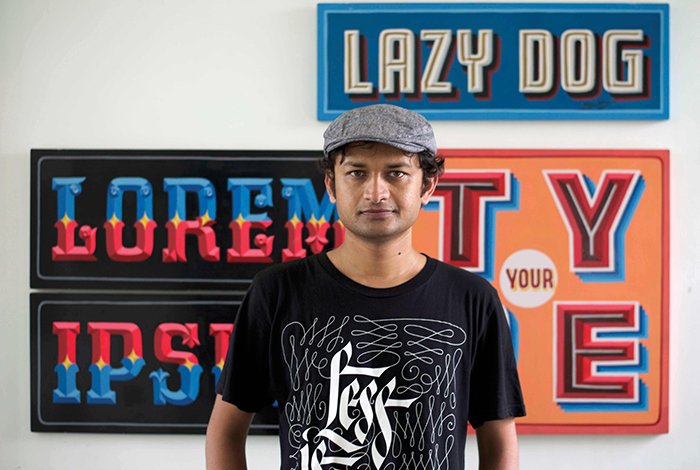
“Hanif Kureshi, better known on the streets as Daku, was one of the most influential figures in India’s contemporary street art movement.” Born in Palitana, his journey into art didn’t begin in studios or galleries, but in the everyday world of hand-painted signs and roadside painters that shaped his early understanding of visual culture.
As a child, Hanif Kureshi spent time around local painters who made license plates and shop signs by hand. Their work was raw, practical, and often overlooked, but it left a lasting impression on him. He became fascinated by lettering—the way each painter had a slightly different style, the way words could feel alive even when they were meant to be purely functional. That early connection stayed with him even when he went on to formally study art at Maharaja Sayajirao University of Baroda.
 Like many artists trying to find a stable career, he entered the world of advertising, working with agencies like Ogilvy & Mather and later Wieden+Kennedy. He rose to senior creative roles, but over time it became clear that the structure of agency work couldn’t fully satisfy his creative instincts. Around the late 2000s, he began working on the streets under the name “Daku.” What started as small, often anonymous interventions gradually turned into larger, more thoughtful pieces that engaged directly with public space.
In 2011, he started the HandpaintedType project, which became one of his most meaningful contributions. By then, traditional sign painters across India were rapidly losing work due to digital printing. Instead of simply documenting their craft, he chose to collaborate with them—recording their lettering styles, turning them into digital fonts, and creating a system where those artists could still earn from their skills. It was a rare approach that combined design, preservation, and social impact without feeling forced or overly idealistic.
A major shift came in 2013 when he co-founded the St+art India Foundation with people like Giulia Ambrogi and Rajeev Bahl. At the time, street art in India was still seen as something fringe or even illegal. Through curated projects and collaborations, the foundation helped change that perception, bringing artists into public spaces in a more open and accepted way.
One of their most visible projects, the Lodhi Art District, transformed an ordinary neighbourhood in Delhi into a large-scale open-air gallery. Walls that once went unnoticed became surfaces for storytelling, drawing both local residents and visitors into a new kind of engagement with art. Similar initiatives in cities like Mumbai, Chennai, and Coimbatore continued that momentum, gradually embedding street art into the urban fabric of India.
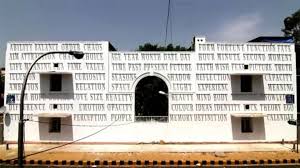
Kureshi’s own work stood apart because it didn’t rely only on visual impact—it relied on experience. His pieces often responded to their environment, changing with time, light, or perspective. One of his most well-known works, Time Changes Everything, used sunlight and carefully placed structures to cast shifting words onto a wall. The artwork wasn’t static; it revealed itself slowly throughout the day, reminding viewers that time itself was part of the composition.
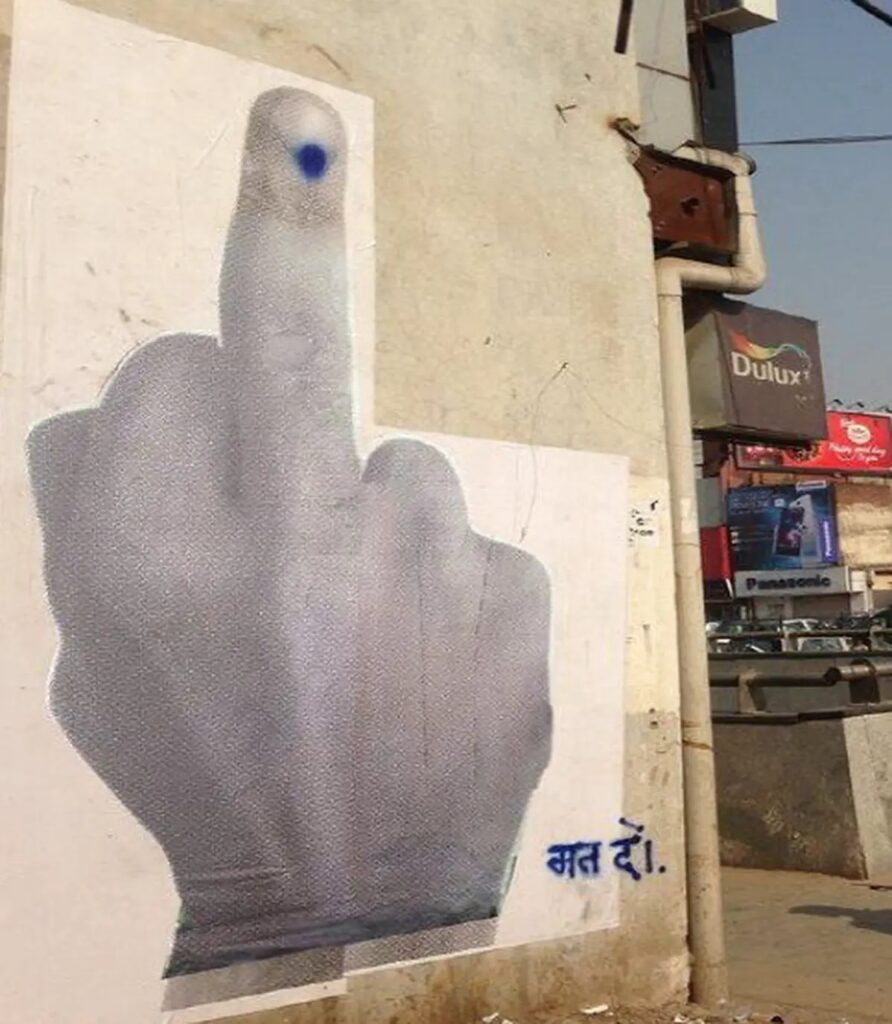 Although he was sometimes compared to Banksy, the comparison never fully captured what he was doing. His work was rooted in Indian streets, languages, and lived realities, rather than the traditions of Western graffiti. He wasn’t trying to imitate a global style—he was building something that felt local and immediate.
Over time, his work reached international platforms like the Venice Biennale and institutions such as Centre Pompidou. Even with that recognition, he remained closely tied to public spaces in India, continuing to create work that people could encounter in their daily lives rather than only in curated environments.
In 2024, after living with lung cancer for about a year, Hanif Kureshi passed away on 22 September in Goa at the age of 41. His absence left a noticeable gap in India’s art scene, but his influence continues to shape how people see and use public space. He didn’t just create murals—he changed how art exists in the city, making it more accessible, more thoughtful, and more connected to the world around it.