Mumbai: Experts in the nuclear field on Tuesday hailed India’s Prototype Fast Breeder Reactor (PFBR) attaining criticality, terming it a crucial step towards achieving energy security, and noted that very few countries have mastered this technology.
They also said that the next step should be to make the technology more “robust” and build more Fast Breeder Reactors.
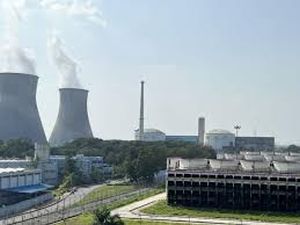
India’s 500 MW PFBR successfully attained first criticality (start of controlled fission chain reaction) on April 6. As per the Department of Atomic Energy (DAE), the technology development and design of PFBR was indigenously done by the Indira Gandhi Centre for Atomic Research, its R&D Centre.
Anil Kakodkar, former secretary of the DAE, told PTI on Tuesday that the “historic” development is very important from the point of view of India’s energy security. In view of India’s dependency on other countries for fossil fuels, the move assumes significance, especially at a time when the crisis in West Asia has impacted the supply of oil and natural gas, he said.
Unlike other nuclear reactors, the fast breeder reactor not only produces energy but also produces fuel, Kakodkar said. This is why it is called a ‘breeder reactor’, he added.
According to the DAE, the PFBR uses Uranium-Plutonium Mixed Oxide (MOX) fuel. The core of PFBR is surrounded by a blanket of Uranium-238. Fast neutrons convert fertile Uranium-238 into fissile Plutonium-239, enabling the reactor to produce more fuel than it consumes. The reactor is designed to eventually use Thorium-232 in the blanket. Through transmutation, Thorium-232 will be converted into Uranium-233, which will fuel the third stage of India’s nuclear power programme.
India has to mostly import uranium but the country has abundant reserves of thorium, noted Kakodkar.
K N Vyas, former secretary of the DAE, said the development was significant as the technology involved is very advanced. However, the reactor will not start producing electricity immediately and will undergo a variety of tests, he said.
Countries like France and the US were unable to scale up their breeder reactors, Vyas said.
Concurring with Vyas, Kakodkar said that after Russia, which is the only country to run two breeder reactors with a capacity of 600 MW and 800 MW, India is the only country to develop a reactor with a capacity of 500 MW. France and the US operate breeder reactors but not at this scale, he said.
Rajeshwari Rajagopalan, resident senior fellow at Australian Strategic Policy Institute, Canberra, said the development is impressive despite the huge delays.
“But also in the larger context, a key question is what impact this will have on India’s nuclear energy programme. We have already lost a decade and a half because of the Civil Liability Nuclear Damage Act which has now been corrected with the SHANTI Act but whether this will be sufficient for the private sector and foreign investors (to enter the sector) remains to be seen,” Rajagopalan told PTI.
According to the DAE, with the achievement of first criticality, India moves closer to realizing the full potential of its three-stage nuclear power programme. Fast breeder technology forms the vital bridge between the current fleet of pressurised heavy water reactors and the future deployment of thorium-based reactors, leveraging the country’s abundant thorium resources for long-term clean energy generation.
Kakodkar said that as in the case of pressurised heavy water reactors technology, which Indian scientists have mastered over decades and ramped up the construction of nuclear plants, the next step will be to make the Fast Breeder Reactor technology more robust and scale up the reactors.
In a written reply in the Rajya Sabha last month, Jitendra Singh, Minister of State in the Prime Minister’s Office, had said that the government had accorded approval to carry out pre-project activities for 2 x 500 MWe twin unit of FBR 1&2 project at Kalpakkam, Tamil Nadu. On attaining first criticality of PFBR, the government will be approached for financial sanction of FBR 1 and 2 projects, Singh had said.