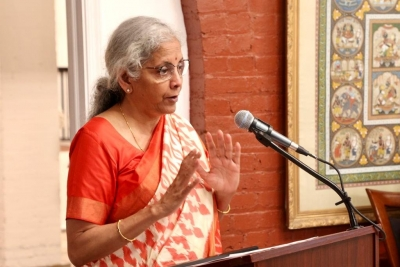
New Delhi: Finance Minister Nirmala Sitharaman on Monday said fiscal prudence has given the government enough room to push capex and support sectors impacted by the West Asia crisis.
Besides, she said the Reserve Bank can go in for further rate cut to deal with the emerging situation.
Highlighting the importance of a good public finance policy in challenging times, the Finance Minister said, it improves the counter-cyclical capacity , especially the ability to ‘lean against the wind’ in economic downturn.
Today, many countries with high debt and large deficits have no room to manoeuvre and they face a grim choice between austerity and instability, she said at an event organised by the National Institute of Public Finance and Policy (NIPFP) here.
On the contrary, she said, “India has fiscal space – room to maintain our capex programme, room for the RBI to cut rates, room to offer targeted support to affected sectors. This is the dividend of a decade of fiscal discipline. This is the strategic value of fiscal prudence that pays dividends across decades.”
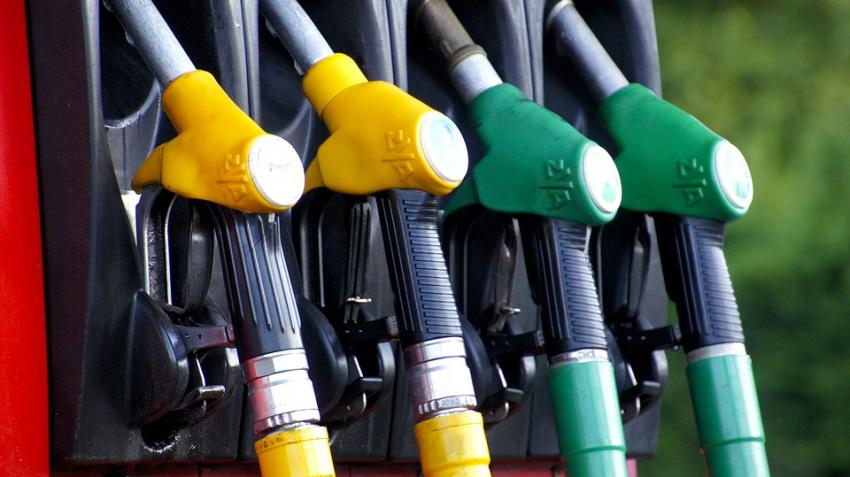
Therefore, she said, India has been able to reduce the excise duty on diesel and petrol; and specific exemptions were given on critical petrochemical products and SEZs to operate in Domestic Tariff Area.
The government had on March 26 slashed excise duty on petrol and diesel by Rs 10 a litre as it looked to shield consumers from the impact of rising global crude prices amid the ongoing war.
Global crude prices have risen by almost 50 per cent since the United States and Israel launched military strikes against Iran on February 28, triggering sweeping retaliation from Tehran.
The government also imposed an export duty of Rs 21.50 per litre on diesel and Rs 29.50 per litre on aviation turbine fuel (ATF). Excise duty on petrol has been slashed to Rs 3 a litre, while on diesel it is zero currently.
On April 2, India exempted import of critical petrochemical products from customs duty to ensure supply stability and provide relief to consumers of final products amid disruption in shipping routes due to the West Asia conflict.
Besides crude, India is major importer of fertiliser and natural gas.
Observing that the current year is even more challenging than the previous one, Sitharaman said, “the escalation of Middle East conflict has evolved from a regional security concern into a systemic tremor threatening the vital arteries of global energy, and hardening the lines of a new, multipolar world order.”
Recalling various global events that shadowed 2025, she said the year was monumental in more ways than policymakers initially thought.
“Trade fragmentation has introduced severe uncertainty into global supply chains. This led to sharp downward revisions in global growth forecasts, but the year ended more optimistically than previously perceived, particularly for India,” she said.
Talking about India debt-to-GDP ratio, the Finance Minister said, the country stands out as general government debt-to-GDP ratio (which includes States’ debt), at approximately 81 per cent, is the lowest among major economies after Germany.
More importantly, India is the only major economy where the IMF projects this ratio to fall significantly – to 75.8 per cent by 2030 – while the debt outlook for the advanced economies such as US, China, Germany, and others is projected to worsen, she said.
“Our external debt-to-GDP ratio stands at just 19.1 per cent (as of September 2025) – one of the lowest in the emerging market world. India’s foreign exchange reserves, at over USD 688 billion (as of March 31, 2026), provide import cover of approximately 11 months – a substantial buffer,” she said.
This is not an involuntary outcome, as many leaders wrongly believe, she said, adding, it is the product of deliberate, sustained, and sometimes politically difficult choices made over years of fiscal management.
It was made possible because of the agile policies and stable leadership of this government, with a singular focus on ensuring India achieves godspeed progress, she added.
Stressing that India has undergone a massive structural transformation of public finance over the past decade, she said, “we have credibly changed the course of the fiscal policy from consumption-led deficits (under UPA) to productive investment-led consolidation under the leadership of Prime Minister Narendra Modi.”
Prudent fiscal policy is not just about ‘austerity’ or cutting back expenditure, she said, it is also about spending the resources in an efficient and transparent manner.
This prudent management has strengthened India’s macroeconomic stability, resulting in credit rating upgrades from agencies such as Morningstar DBRS, S&P, and R&I in 2025, she added.
Recalling India’s ‘Fragile Five’ economy tag over a decade ago, she said, India is now the fastest-growing major economy in the world.
“We began with a fiscal deficit on an unsustainable trajectory. We have brought it to 4.4 per cent of GDP, en route toward 50 per cent debt-to-GDP by 2030-31. We began with a tax system built on suspicion. We have created one premised on trust,” she said.
The road to Viksit Bharat 2047 is long, and the challenges ahead – climate finance, subnational fiscal reform, debt management, the fiscal implications of demographic change, the public investment return challenge, technology-led disruptions – are formidable, she added.