NEW DELHI: In a major boost to freight transportation and essential commodity supply to the Kashmir Valley, the first full rake of foodgrain reached Anantnag on January 22, underscoring the reliability of Indian Railways’ all-weather connectivity to the region.
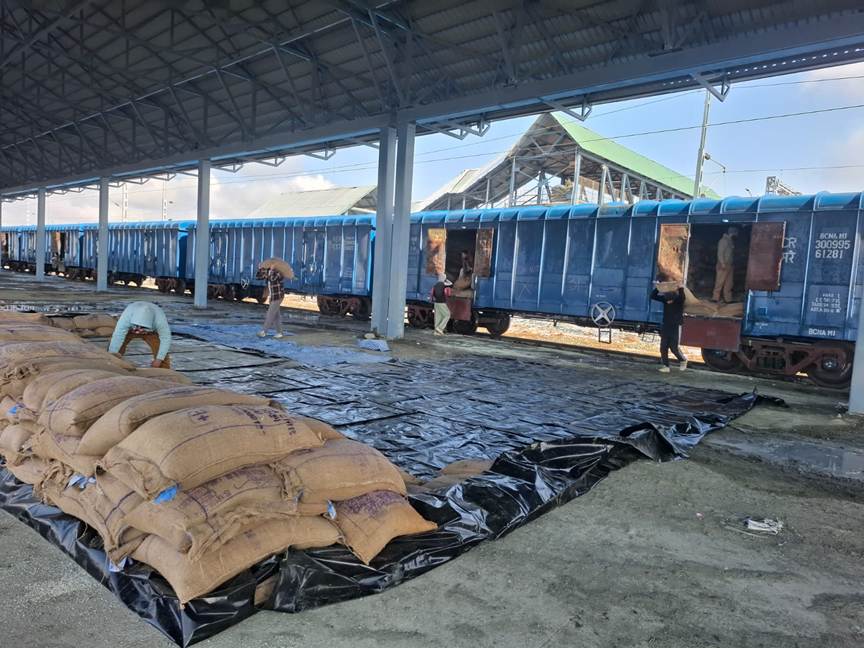
For the first time, a complete rake comprising 42 wagons carrying 2,768 metric tonnes of rice was transported by rail to the Anantnag goods shed. The milestone was achieved following sustained coordination between Indian Railways and the Food Corporation of India (FCI) with the objective of reducing logistics costs and ensuring uninterrupted supply of foodgrains to the Valley.
Earlier, rail movement of foodgrains to Kashmir was limited to mini rakes consisting of 21 wagons with a carrying capacity of 1,384 metric tonnes. In the latest operation, the full rake was loaded from the Sangrur rail terminal in Punjab on January 21 and successfully transported to Anantnag within 24 hours. Despite adverse weather conditions that had disrupted unloading activities a day earlier, the rake was handled efficiently, reinforcing the resilience of the rail-based supply chain.
Officials said the development marks a significant step towards strengthening the foodgrain distribution network in the Kashmir Valley. The shift from mini rakes and road-based transportation to full-capacity railway wagons is expected to substantially reduce freight and logistics costs, while ensuring faster, safer and more reliable movement of essential commodities.
The enhanced rail connectivity is also expected to help maintain adequate buffer stocks in the Valley, particularly during harsh winter months when road connectivity often faces disruptions due to snowfall and landslides. This, in turn, will improve the availability of foodgrains for local households during adverse weather conditions.
Reduced dependence on heavy truck movement along national highways is likely to bring additional benefits, including lower carbon emissions, reduced congestion and improved operational efficiency. Building on the successful rail movement of commodities such as apples, cement and fertilisers, the inclusion of foodgrains further strengthens rail-based logistics and supports sustained economic activity in the region.
The achievement highlights the transformative impact of the Udhampur–Srinagar–Baramulla Rail Link (USBRL), one of the most ambitious railway engineering projects undertaken in independent India. Even as the Valley continues to experience snowfall and challenging winter conditions, the improved rail connectivity is emerging as a dependable lifeline for trade and logistics, directly benefiting farmers, traders and consumers by ensuring steady access to essential goods.