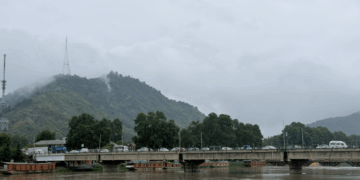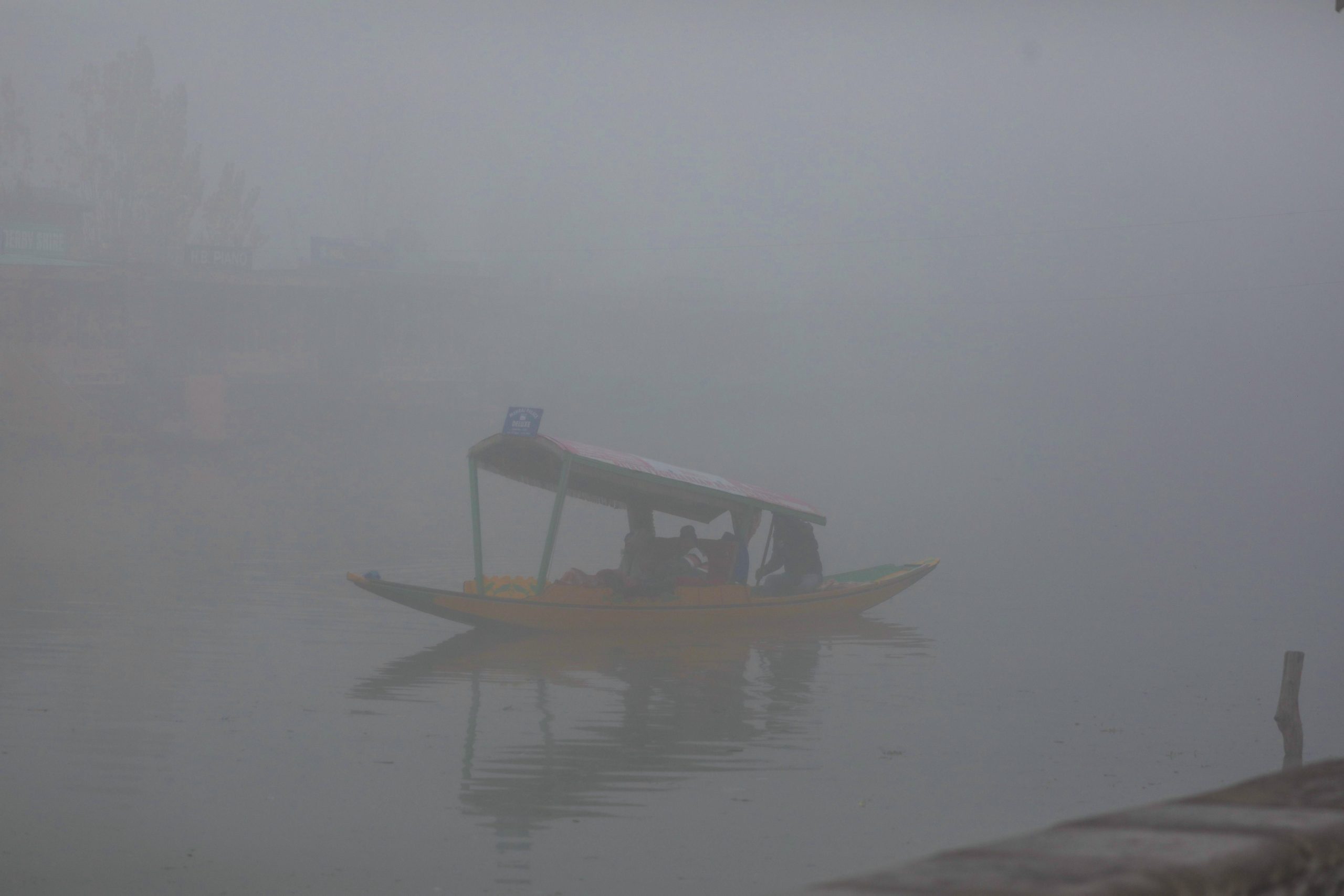
As I made my way back home today, the sun was slowly disappearing below the horizon, its vibrant red glow obscured by a thick veil of pollution. It was a sight that left me unsettled, a harsh reminder of the damage we humans have inflicted on our planet. The very symbol of purity and hope in Kashmir, the sun now seemed to be hiding from us, as if expressing its disappointment in our disregard for nature. And in that moment, I couldn’t help but feel a twinge of guilt, for it was a stark reminder that we are responsible for safeguarding the environment and all its wonders.
Philosophers argue that every generation holds the earth in trust not as owners, but as guardians. This concept, echoed in both Eastern and Western thought, suggests that harming nature is not just an ecological act but a moral failure toward those yet to be born.
Kashmir, once celebrated for its pristine environment, woke up again this week to alarming news: the Air Quality Index (AQI) in many parts of the Valley has neared 300, touching the ‘severe’ category. The very land that generations proudly described as “the home of two precious gifts, clean water and clean air” is now choking under layers of smog, pollution, and environmental neglect. From childhood, many Kashmiris grew up hearing elders say,
“Kashmir ki hawa aur paani sabse behtar hai.”
But today, both seem to be slipping out of our hands. What Happened to the Kashmir We Knew? The transformation did not happen overnight. Experts cite multiple reasons: rapid urbanization, uncontrolled traffic growth, biomass burning during winters, brick kiln emissions, and the degradation of forests. But beyond scientific explanations lies a troubling social reality, a collective shift in our ecological behaviour.
In a conference at SKICC, a senior environmentalist said:
“In 1950–1980, Dal Lake looked vast, clean, and alive at a time when literacy in Kashmir was almost zero. Today, as literacy has grown, the Dal has shrunk, choked, and decayed.”
His question was piercing: Who, then, is truly illiterate, the people of the past or us?
The same painful comparison now extends to the air we breathe. Despite rising education levels, awareness campaigns, and modern governance systems, the Valley’s air is deteriorating faster than ever. The once crisp winter mornings now taste metallic; visibility drops, and respiratory issues rise.
A Crisis We Can No Longer Ignore
Doctors across Kashmir report increasing cases of asthma, bronchitis, and chronic coughing, especially among children and the elderly. With AQI touching 300, the danger is no longer distant; it is immediate and serious. Environmental degradation is not just hurting Kashmir’s scenic beauty; it is threatening public health, tourism, agriculture, and the overall ecological balance of this fragile region.
Are We Custodians or Contributors to Decline?
Kashmir has always been blessed, but blessings require responsibility. We became more educated, but did we become more responsible? Did our literacy truly translate into environmental wisdom? A painful contradiction stands before us: When the Dal Lake was full and clean, literacy was low. Now literacy is higher, but the lake is shrinking, forests are thinning, the air is thickening, and the waters are polluted. If literacy does not change our behaviour, are we literate?
A Call for Urgent Action
To restore Kashmir’s ecological health, experts stress:
- Immediate regulation of brick kilns and industrial emissions
- Strict checks on construction and encroachment
- Reducing vehicular pollution and promoting public transportation
- Large-scale afforestation and wetland protection
- Public awareness campaigns targeting daily practices
- Scientific waste management, especially in urban areas
But beyond policy, what Kashmir truly needs is a cultural shift, a return to valuing nature the way previous generations did. The Valley’s Future Depends on Us. Kashmir can no longer rely on the belief that nature will heal itself. If the current trend continues, future generations may only hear stories of clear rivers, open skies, and clean Dal waters the same way we now nostalgically recall our own childhood.
The Valley is asking us a difficult question.
The air is asking us. The shrinking Dal is asking us.
Who is the illiterate who lived in harmony with nature, or those who, despite education, allowed it to decline? The answer will be written not in words, but in our actions.
Throughout history, philosophers have reminded humanity that true knowledge is not the accumulation of information, but the cultivation of wisdom. Socrates once argued that ignorance is not the absence of literacy but the failure to live a good and ethical life. If this is true, then Kashmir’s current ecological decline becomes a mirror held up to our collective conscience.
The author can be reached at essarbhat22@gmail.com