By: Zakia Soman
A recent survey by Thomson Reuters Foundation found that India is the most dangerous country for women. In this poll, India ranks below Afghanistan, Syria, Somalia and Saudi Arabia on the six issues surveyed. These were healthcare, access to economic resources and discrimination, customary practices, sexual violence, non-sexual violence and human trafficking. The government has rejected the findings. In reality, these are issues that every woman has faced directly or indirectly. Despite all the talk about development and superpower dreams, we continue to deny our girls and women their share at home, in the community, in society and in public life.
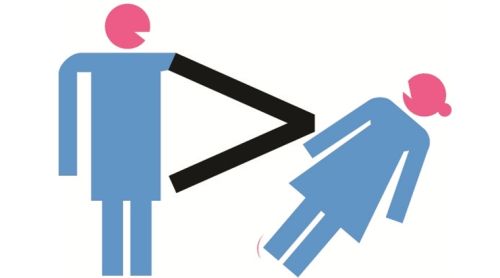
We must accept that we are a patriarchal society with intrinsic structures of discrimination against girls and women. Over the centuries, we have evolved elaborate systems governing all spheres of life which discriminate on account of gender. Despite social reform movements and legal provisions, patriarchy rules the roost in our society and polity. The journey of a female is marked by discrimination from birth to death. Besides, patriarchal mindsets and norms are blatantly coming to the fore with the rise of the political right.
Discrimination against girls begins even before birth. The Census of 2011 highlights the sex ratio at 940 with states like Haryana at a shocking 877 girls to 1000 boys. The PCPNDT law has made little impact on the preference for a male child in our society and girls continue to be killed in the womb. Although primary education enrolment figures have improved, dropout of girl children remains an issue. Male privilege norms ensure that families prefer to spend on boys’ education rather than on girls.
There is a high incidence of under-age girls being pushed into marriage owing to poverty, lack of income avenues and sometimes conservative mindsets. A large number of girls are caught up in the vicious cycle of no education, early marriage, early motherhood, domestic violence, drudgery of family and low paying work. The experience can be far worse for girls from Dalit, minority, tribal or poor backgrounds.
The state mechanism has failed to check the rising incidence of sexual violence in society. Our capital city has come to acquire a reputation on rape. There are regular instances of politically connected persons indulging in sexual violence which is condoned by the ruling class. The hypocrisy of the political class is evident in the way the women’s reservation bill has been kept pending for decades.
In recent years, there have been instances where elected representatives and religious leaders have openly espoused patriarchal and misogynist views. An elected representative in UP exhorted Hindu women to give birth to more number of children to counter the Muslim population growth. Another Hindutva leader in that state suggested that Muslim women can overcome the issue of triple talaq by becoming Hindu. Such utterances undermine the Muslim women’s movement for justice and strengthen the conservatives in the community.
There is a clear view in the present cabinet against a law on marital rape. This can be owing to the political ideology that considers marriage a sacred bond or “janam janam ka bandhan”. The close relationship with religious figures being cultivated by different state institutions cannot be good for women’s equality. The harassment of inter-faith couples must stop forthwith and society must respect the choices of women.
Our cities have become increasingly unsafe for women despite the Smart Cities campaign. Unsafe buses and trains have made the dream of education for girls that much more distant. Sexual violence during communal riots and violence against Dalit women goes largely unpunished. Various surveys suggest that work participation of women has gone down during the last decade in India. This is besides the discrimination in wages for women as well as sexual harassment at the workplace. Most employers are not aware of the law prohibiting harassment of women at workplaces. Women across economic backgrounds do not have autonomy over how to spend their earnings. Apart from these, there are issues like trafficking of girls, criminalisation of sexual minorities, denial of women’s share in property.
There are many issues that we face as a country such as poverty, jobs, education, caste, diversity, health, housing etc. Any discussion on how to fight patriarchy has to account for the fact that the perpetrator is often within. She or he can be inside the home, inside the family, within the religion, within cultural practices, within ourselves. The struggle for women’s equality is made more difficult by the fact that women are not a political block. The few women who make it to influential positions against all odds get outweighed by the omnipresent and dominant patriarchal forces.
The present survey should be an occasion for serious reflection and the joining of voices for women’s equality. There is a need to go beyond the country rankings and focus on how to build a society where women are equal citizens. It is a task that demands sustained action at multiple levels, governmental as well as civil society.
Courtesy Indian Express