United Nations, Jun 26: India has questioned how the UN Security Council, which is “grossly unrepresentative” and has a questionable record in addressing common challenges, pursue the noble cause of responsibility to protect populations and prevent genocide and crimes and humanity.
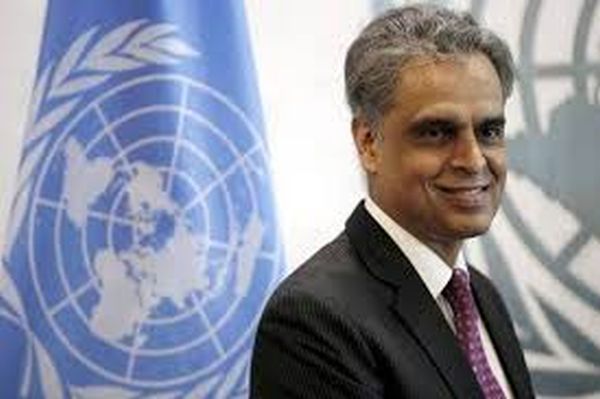
India’s Permanent Representative to the UN Ambassador Syed Akbaruddin’s remarks came during a UN General Assembly general debate yesterday on ‘The Responsibility to Protect and the Prevention of Genocide, War Crimes, Ethnic Cleansing and Crimes against Humanity’.
“While Responsibility to Protect, at its core, has an appeal as a ‘noble cause’, its usage has only been selective in the context of a wider geo-strategic balance of power among competing players or groups,” he said.
Akbaruddin said there are many critical questions that need to be addressed if this noble cause is to be pursued in an impartial manner.
“How can we ensure commonly accepted legal definitions of the crimes that we are discussing? What will qualify as a trigger for action by the international community?
“Which body should be competent enough to take such a decision? What happens if such a body is grossly unrepresentative of the wider international community and contemporary global realities? What happens if the record of such a body in addressing common challenges, and consequently its legitimacy is in serious question?,” he said in his remarks.
Akbaruddin asserted India’s view that the current system of collective international security that is sought to be enforced through the UN Security Council “cannot isolate the implementation of a concept such as the Responsibility to Protect from double standards, selectivity, arbitrariness and misuse for political gains.”
He said the requirements essential to implement Responsibility to Protect (R2P) such as a just cause, right intention, last resort, proportional means, reasonable prospects and the right authority to take a decision remain elusive and contested.
The responsibility to protect, widely known as R2P, refers to the obligation of States toward their populations and toward all populations at risk of genocide and other mass war crimes.
After years of discussion in the wake of the atrocities committed Bosnia and Rwanda during the1990s, UN Member States committed to the principle by including R2P in the outcome document of the 2005 high-level UN World Summit in New York.
Akbaruddin said India’s consistent position is that the responsibility to protect its population is one of the foremost responsibilities of every State and the right to life is one of the rights from which no derogation is permitted.
He however added that the ability of the international community to take appropriate collective action if a State, manifestly fails to fulfill its Responsibility to Protect its population, is still ridden with serious gaps that need to be reflected upon.
“The quest for a more just global order should not take place in a manner that will undermine international order itself.
“Resort to force by other States, acting on behalf of the international community through intervention, as a legitimate means for enforcing rights in the face of a State’s perceived inability to fulfill its responsibilities in this regard is contrary to the internationalist impulse of our age,” he said.
He pointed out that experience shows that the implementation of the notion of Responsibility to Protect so as to prevent, or stop major internal abuses within a State has been used to frame or justify interventions by external powers in several instances.
“These include some instances where the Security Council failed to agree to intervene…and in other instances by interpretation of mandates in a manner not envisaged by all actors. The results have almost always been mixed and very unsatisfactory at best.
“At worst, many such interventions have left entire regions destabilized and have been perceived, often rightly, to have been undertaken to further the strategic interests of certain powers,” he said.