By: Hilal Ahmad Tantray
The village Walraman is located in district Baramulla, about 13 kilometers away from the district headquarter. There’s no written evidence explaining why it’s called Walraman, but there are some legends about it. According to an elderly resident, the name might have come from ‘Wular’ because there used to be a stream connected to Wular Lake. Some senior residents here believe it has Hindu origins. In the past, Hindus lived here, and one was named ‘Raman,’ possibly giving the village its name.
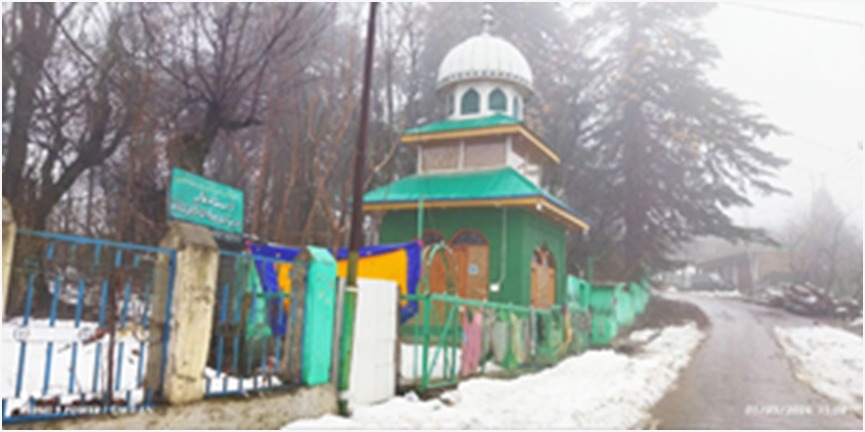
Kashmir is also known as “pirwaer”, meaning “the valley of saints.” Spirituality deeply influences Kashmir’s soil. The valley is dotted with numerous Sufi shrines. In our village, there’s a sacred spot called the shrine of Syed FakhruddinBukhari (RA), locally known as ‘SeadSoab,’ who came from Central Asia, and stayed at this place for some time, and is said to have later shifted to other places due to shortage of water.
This shrine attracts many visitors, especially on Friday mornings, seeking blessings and praying for their wishes. Some people bring food like bread, wheat, and rice, offering it to the birds near the shrine, wishing for the wellbeing of humanity. Those facing health issues come here for divine intervention and pray for recovery. The communal rituals at the shrine foster unity and shared hopes among villagers.
When an individual is severely unwell, a customary practice involves pledging or vowing at a shrine on behalf of the afflicted person, seeking their wellbeing. This commitment entails contributing animals, such as sheep, goats, and hens, and occasionally other items. The cooked food resulting from these offerings is subsequently shared within the community.
In certain instances, individuals perform a ritualistic slaughter of these animals and the meat divided among peoples, known as “thapithapi” in Kashmiri. This practice is deeply rooted in the belief system that such actions will contribute to the recovery of the ailing individual.
The conviction is that by making these offerings and performing ritualistic acts, a spiritual connection is established, channeling positive energy towards the sick person’s wellbeing. The shared communal experience reinforces the collective belief in the healing power of these traditions which are located in Quran and Hadith and no Shirk is involved. The prayers are actually held at such places but wishes are always asked Allah almighty.
Moreover, this belief system extends to a specific ritual involving the preparation of ‘Taeher,’ a mixture of rice, turmeric, and mustard oil. Crafted when someone experiences fear in a dream, ‘Taeher’ is offered at the shrine, further emphasizing the interconnectedness of spiritual practices with the conviction that these rituals can influence the course of an individual’s health. Despite its traditional nature, this belief system persists, highlighting the enduring faith in the efficacy of these customs for the betterment of those facing health challenges.
Another interesting thing is that “Bhandar” which means assemble of peoples, Kashmiri people call it ‘Bhandar’. Whenever there are any natural calamities like heavy rains or drought in the village, the village’s prominent member, like Masjid committee/Darsgha committee locally known as “Zeath,” collect items like money, rice, etc. ‘Khatam-e-Quran are than recited here and the food prepared to be offered to by passers here around the shrine.
The shrine is also visited by devotees on significant days like ‘Laylatul-Qadr’, ‘Shab-e-Barat’, and ‘Eid’ etc. On these special days, people gather to engage in morning Fajr prayers. Additionally, a unique tradition involves each family bringing food to this place, fostering a sense of communal sharing and unity, whether it’s during Eid-ul-Fitr or Eid-ul-Adha also happens here only. After the prayers, individuals partake in meals together, creating a meaningful and shared experience among the community.
One more interesting fact is that, if someone is getting married during the rainy season, they bring a stone from this shrine, place and put into the fading flames, mud hearth locally known as Dambur (Daan), so that it doesn’t rain on the wedding day. On the wedding day, when preparing the meal, the first plate (Batttreem) is placed on this shrine, and each variety of meat is placed on this plate, decorating it as a special plate on the shrine.
In the context provided, when someone secures a job in a household, a ritual is performed by tying a piece of green cloth, known as ‘Deach’, at a particular shrine. This act is a symbolic expression of gratitude or seeking blessings for the newfound employment. Similarly, if someone brings a car to the village, a customary offering or act of devotion, referred to as ‘Niyaz’, is performed. This could involve making a donation or providing something of value as a gesture of appreciation or celebration for the arrival of the vehicle.
These practices blend cultural and religious elements, reflecting traditions associated with expressing joy or seeking divine favor in response to significant events like job opportunities or the acquisition of a new asset.
If someone household’s cow gives a calf, they collect its milk for 5-7 days, improve its condition, and then divide the Cheese locally known as “Tchaman” among the neighbours. Then, they take some milk, rice, and bread to this shrine site, mix them, and offer it. They also light some candles, locally call it “Tchounge”
The writer is Ph.DResearch Scholar, Department of History and Culture, JamiaMilliaIslamia, New Delhi.
Email: hilalmohiuddin614@gmail.com