By: Ram Nath Kovind
At 5 am this morning, I went for an early morning walk with my grandchildren to the Shimla Water Catchment and Wildlife Sanctuary. This is just outside Mashobra, where I have been staying for the past five days. The Sanctuary is so close and yet so far from the noise of the city. It was conceived as a forest, as a repository of flora and fauna, and as a major water source for Shimla.
I was left enchanted. The birds I spied on, the magic of their calls, the magnificence of the little charming animals and the greenery, the proud deodar and oak trees, the laughter of little children — this was Mashobra’s very own paradise. I was experiencing nature at its most divine. I was also experiencing nature at its most caring. The Sanctuary nurtures Shimla and its people. It cares for us as only Mother Nature can. Nature loves us and we love it back.
Sometimes even a simple visit provides food for thought. Many ideas passed my mind. If nature nurtures us, what do we do to nurture it? What do we do? What can we do? What must we do to ensure that nature is available, as a resource and as a friend, to future generations? This led to another stream of thought: Are we mindful of our responsibilities for our future generations? For our children?
In a few weeks, on October 2, we begin the commemoration of the 150th birth anniversary of Mahatma Gandhi. This is a national celebration. So will be, in 2022, the 75th anniversary of our Independence. No doubt there will be meaningful initiatives that will form part of these landmark moments. Yet, as a society, we need to think in the longer term. What will India be like at 100 — in 2047? What sort of India will mark Gandhiji’s bicentenary in 2069?
We don’t know the answers. But what we do today — the social, intellectual, ethical and ecological investments that today’s generation makes — will help determine the answers. It is we who will determine the capacities of those who will build India in the next 25 to 50 years. It is we who will determine whether the rivers and mountains and forests, with us for millennia, will still be available in all their glory for succeeding generations.
There is so much that has been achieved. And there is so much that remains to be done. As a society develops, its goals become precise. In Himachal Pradesh, there is pride in having achieved substantial access to schools for girls and boys. Other states too have made strides in school enrolment. The next target is not school enrolment but educational attainment.
Our children reach classrooms, but how much do they learn? How do we equip them for the Fourth Industrial Age? These are questions that trouble every parent and grandparent. Similarly, like schools have become widespread, can health-care too not become a basic that we provide all our people? These are searching issues. We need to resolve them for every Indian. Irrespective of region or religion, whether from a farming family or an industrial township.
Here, too, nature has a message for us. The Wildlife Sanctuary I visited does not distinguish between one and the other. It provides water to all. Its trees provide shade to all. Its clean air nourishes all. Fraternity and compassion are written into nature’s DNA. Whatever else we do as a society, that sense of compassion and fraternity, of civility and mutual dignity, cannot be removed from our hopes and dreams for India.
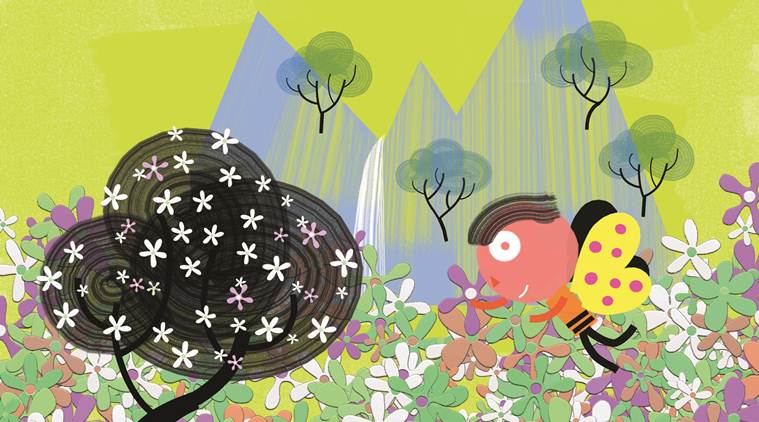
Nature does not compartmentalise. Its instinct is integrative and holistic. Nature promotes mutualism. The flower nourishes the bee. The river waters quench the thirst of all living beings. And trees provide a welcoming home to so many birds and animals. There is a rhythm to this togetherness. And there is an almost cosmic bond that allows every living being, small and big, silent and loud, to live in harmony, to flourish and to thrive. Human beings can learn from this.
India is nature’s favourite child. Let us, let each one of us, make that rhythm and that togetherness — and that quest for every individual to be able to fulfil his or her dream and destiny — a national movement. We owe it to India and we owe it to every Indian. We owe it to our today; and much more, we owe it to our tomorrow.
Courtesy Indian Express (The writer is President of India)