Leh: Leaders of the Leh Apex Body today said that holding elections alone can not address the issues confronting Ladakh, as the greater demand was for representative governance and a system in which elected representatives have a greater role in decision-making. They also raised concerns about missing names in from voter lists, delimitation and changing of polling booths.
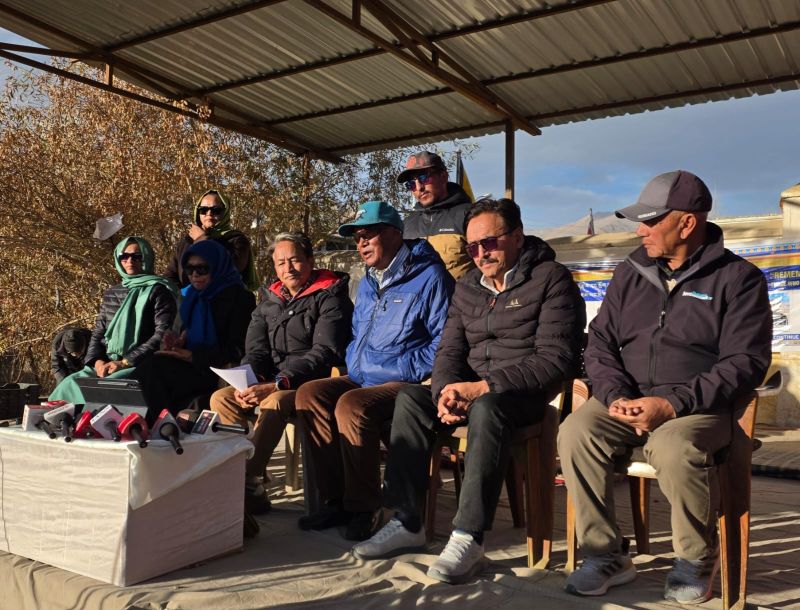
Addressing a press conference at the ongoing protest site in Leh, attended by religious leaders and representatives of various civil society groups, innovator and activist Sonam Wangchuk and Apex Body chairman Chhering Dorjey Lakruk said the Ladakhi peoples movement seeks ‘meaningful democratic representation for the people of Ladakh.’
The leaders addressed the media as voting was held for panchayat and municipal bodies across the Union Territory. Pertinently, elections to the Ladakh Autonomous Hill Development Council (LAHDC), Leh, are scheduled next month.
Lakruk said holding elections alone could not address the issues that have prompted sustained protests and negotiations with the Centre. He argued that Ladakh’s larger demand was for representative governance and a system in which elected representatives have a greater role in decision-making.
He questioned the timing of the Hill Council elections, saying, conducting polls during the peak winter season could affect voter participation as many residents move outside the region because of harsh weather conditions.
Commenting on the ongoing local body elections, Wangchuk alleged that complaints had emerged from several areas regarding omissions from electoral rolls. He claimed that a number of eligible voters, particularly young people, had found their names missing from voter lists, preventing them from exercising their franchise.
While the administration has projected healthy voter turnout, Wangchuk said that reports from various villages pointed to voter-list related grievances and dissatisfaction with aspects of the electoral process.
He further alleged that some villages had witnessed poll boycotts and said a clearer picture would emerge once reports from polling stations across the region were compiled.
According to Wangchuk, concerns over delimitation and constituency boundaries were among the reasons behind the discontent in some areas.
He alleged that despite public consultations, issues raised by residents were not adequately reflected in the final delimitation exercise.
He claimed that some villages had been shifted to different constituencies, while in certain cases polling stations had also been relocated, creating inconvenience for voters. In his own village, he said, the polling booth had been moved to another village, making it more difficult for residents to cast their votes.
He argued that the aspirations of the region extended beyond electoral exercises and centred on the restoration of representative institutions.
Referring to previous engagements with the Centre, he said discussions had included proposals for a democratic governance structure with an elected Assembly and greater accountability of the bureaucracy to elected representatives.
Climate activist also questioned the government’s decision to proceed with the upcoming Hill Council elections before addressing wider governance concerns being raised by the Apex Body and the Kargil Democratic Alliance (KDA), which have been engaging with the Centre on matters relating to constitutional and democratic safeguards.