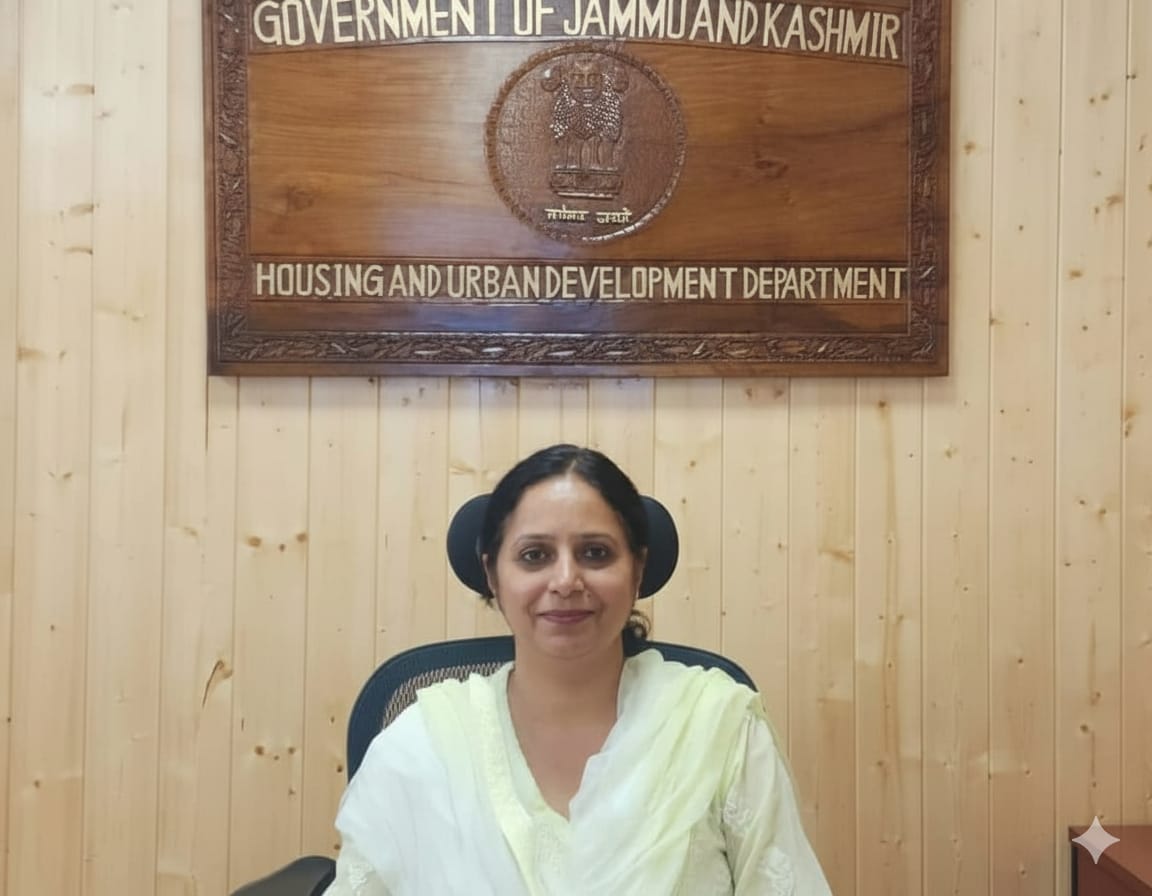
JAMMU, Nov 6: Commissioner Secretary, Housing and Urban Development Department, Mandeep Kaur, on Friday chaired a high-level multi-departmental task force meeting to review the scientific disposal and utilisation of Refuse Derived Fuel (RDF) generated by Urban Local Bodies (ULBs) across Jammu and Kashmir.
The meeting also reviewed challenges faced by ULBs in managing RDF at waste processing facilities and issues related to the bioremediation of legacy waste.
Kaur stressed coordinated and time-bound action by concerned departments, directing them to ensure compliance with the requirements under the Solid Waste Management Rules, 2026, in view of the Supreme Court’s observations in Civil Appeal No. 6174/2023.
She called for exploring avenues for the scientific disposal and productive utilisation of RDF and asked task force members to identify and engage industrial units in the Union Territory that could use it as an alternative fuel.
The Industries and Commerce Department was directed to provide a comprehensive list of cement industries and paper mills operating in J&K to facilitate their participation in a fresh Expression of Interest (EOI) to be floated by the Mission Directorate, Swachh Bharat Mission (Urban) 2.0, for identifying suitable RDF utilisation partners.
The Commissioner Secretary also asked ULBs to expedite on-site waste segregation and ensure segregation at source. She said the upcoming Integrated Solid Waste Management projects would strengthen waste processing infrastructure and help produce better-quality RDF through improved segregation.
During the meeting, Mission Director, Swachh Bharat Mission (Urban) 2.0, Ayushi Sudan, briefed participants on action taken following the decisions of the task force’s first meeting.
Chairman, Central Pollution Control Board (CPCB), J&K, Vasu Dev Yadav, shared the status of registration of Bulk Waste Generators on the CPCB portal and outlined the progress made.
Waseem Trumboo of Trumboo Cement Industries, an external member of the task force, expressed his industry’s willingness to utilise RDF generated by ULBs in J&K. He informed the meeting that the industry was adopting German technology and developing a facility with an RDF intake capacity of 1,000 tonnes per day.
The proposed facility, he said, could cater to RDF requirements not only in Jammu and Kashmir but also in other states and Union Territories.
The meeting was attended by the Member Secretary, J&K Pollution Control Committee; Mission Director, SBM (U)-2.0; Commissioner, Srinagar Municipal Corporation; Director, Urban Local Bodies, Jammu; Director Planning, Industries and Commerce Department, and other officials.