Srinagar: Government school teachers in Jammu and Kashmir have raised concerns over the implementation of Holistic Progress Cards (HPC), alleging inadequate training, digital infrastructure gaps and pressure to complete online entries, with students and parents often unable to participate independently.
Teachers said the exercise, introduced under the National Education Policy (NEP) 2020 to assess students’ overall development beyond examination marks, was increasingly becoming a form-filling exercise, with educators handling tasks intended for multiple stakeholders.
“What was meant to be a 360-degree assessment has become an exercise in which teachers are expected to do almost everything themselves,” a government school teacher said, requesting anonymity.
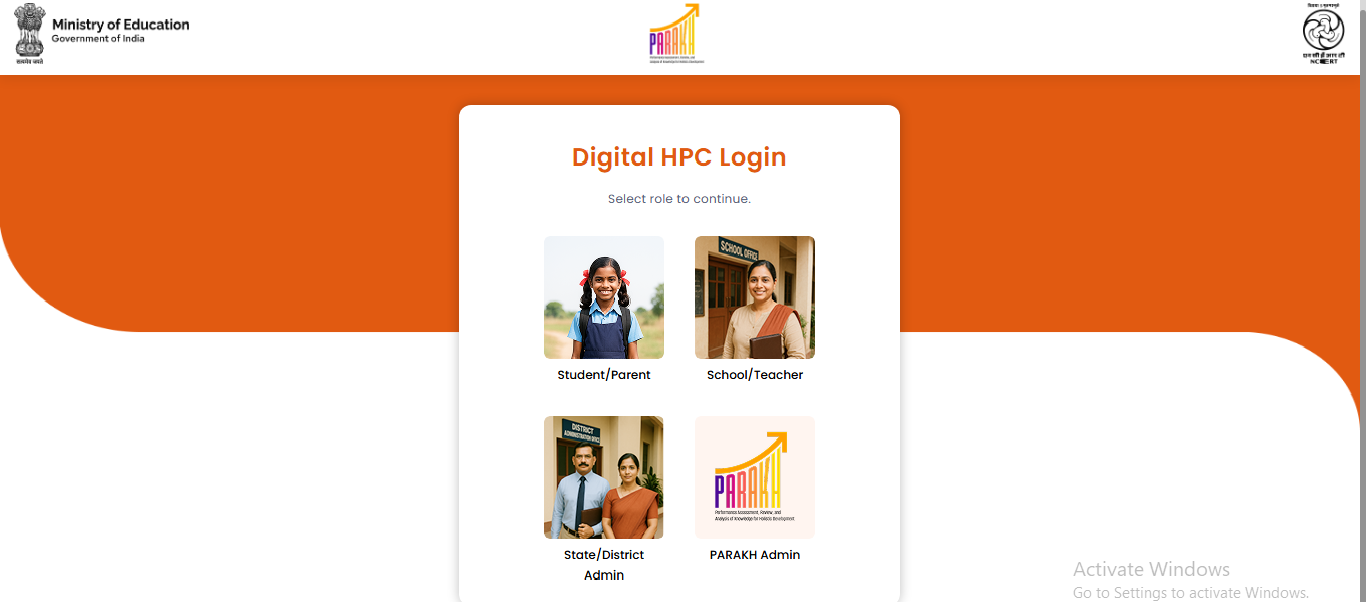
The HPC framework, developed under the National Assessment Centre-PARAKH within the National Council of Educational Research and Training (NCERT), envisages the participation of teachers, students and parents in assessing a child’s competencies, interests, aspirations and overall development.
However, teachers alleged that limited access to smartphones, unreliable internet connectivity and low digital literacy among some families were making independent participation difficult. They claimed that educators were often required to operate multiple accounts and complete sections intended for school administrators, students and parents.
Teachers also questioned how they could accurately record students’ aspirations, hobbies and personal interests or provide parental feedback without consulting the children and their families.
“How can a teacher write what a child wants to become, what hobbies the child enjoys or what goals the child has set for the future without asking the child?” a middle school head said.
Some teachers claimed they had shared personal email addresses and used their own devices to help students access the platform, particularly where schools were falling behind on completion targets.
They also alleged that hands-on training had been inadequate in several schools, with some field-level trainers relying on YouTube videos rather than practical demonstrations of the platform and its assessment requirements.
“Showing a video is not the same as training a teacher,” an educator said, calling for practical guidance on assessment criteria, data entry and the roles of students and parents.
The pressure to meet deadlines has added to the concerns. A primary school teacher said she stayed awake until 3 am to complete HPC entries, fearing that her school would be marked as a defaulter for failing to meet the prescribed targets.
Educators also questioned the feasibility of completing progress cards reportedly spanning 26 to 30 pages within a few weeks, particularly after annual examinations had concluded.
They said a meaningful assessment of creativity, communication, collaboration, problem-solving and other competencies requires observations gathered throughout the academic year, warning that hurried retrospective entries could undermine the framework’s purpose.
Teachers said they were not opposed to digital assessment but wanted the implementation process to account for differences in infrastructure and digital literacy among schools and households.
They called for practical training for teachers and school administrators, digital literacy sessions for parents and students, reliable internet connectivity, access to suitable devices and adequate time to collect authentic information about students’ progress.
They also urged the authorities to distinguish between the completion of online entries and the quality of assessment, stressing that parental feedback and student self-assessment should reflect the views of the intended participants rather than entries made by teachers on their behalf.