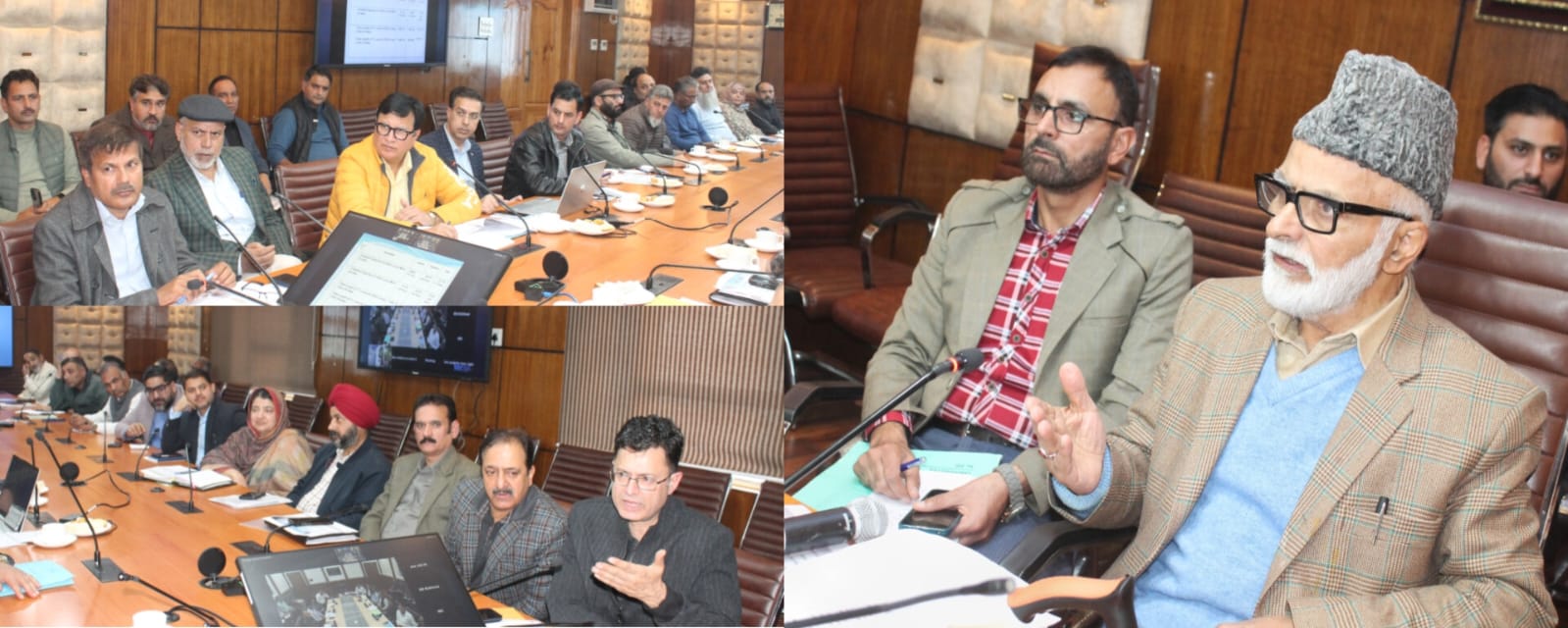
SRINAGAR: Minister for Power Development Department (PDD) Ali Mohammad Sagar on Friday reviewed the power sector’s preparedness for winter, directing officials to ensure adequate stocks of essential equipment, strengthen field-level response mechanisms and prioritise uninterrupted electricity supply to essential services.
Chairing a review meeting at the Civil Secretariat here, Sagar took stock of power availability, ongoing infrastructure projects, generation and procurement arrangements, transmission and distribution networks and the department’s financial performance.
Additional Chief Secretary, PDD, Ashwani Kumar, managing directors of various power corporations, chief engineers and other senior officers attended the meeting. Officers based in Jammu participated virtually.
Reviewing winter preparedness, the minister directed officials to maintain adequate stocks of transformers, cables, conductors and other essential equipment at strategically identified locations, particularly in snow-bound, hilly, far-flung and remote areas.
He also called for regular inspections of vulnerable infrastructure, identification of potential bottlenecks and deployment of sufficient technical manpower and machinery to ensure speedy restoration of electricity during adverse weather conditions.
Sagar directed officials to accord priority to uninterrupted power supply to hospitals, healthcare centres, drinking water installations, educational institutions and other essential public utilities, particularly during heavy snowfall.
The meeting also discussed the proposed procurement of around 200 MW of electricity from Uttar Pradesh through power exchange arrangements to bridge the demand-supply gap during peak winter demand. The minister stressed the need for advance assessment of requirements and timely procurement planning.
Reviewing the implementation of the Revamped Distribution Sector Scheme (RDSS), Sagar directed officials to expedite works aimed at strengthening the distribution network, replacing overloaded transformers, upgrading feeder infrastructure and reducing technical and commercial losses.
The status of smart meter installation across Jammu and Kashmir was also reviewed, with the minister stressing that technological interventions should improve billing accuracy, transparency and consumer services.
He also reviewed transmission lines, grid stations, capacity enhancement and maintenance works, directing officials to identify infrastructure gaps and remove bottlenecks to improve the reliability of the transmission network.
On the financial front, Sagar reviewed billing efficiency, revenue collection and measures to reduce Aggregate Technical and Commercial (AT&C) losses. He called for improved metering, timely billing and financial discipline while ensuring transparency and safeguarding the interests of genuine consumers.
The minister also reviewed the implementation of the electricity amnesty scheme and called for simplified procedures, wider public outreach and timely disposal of cases to ensure that eligible consumers could avail its benefits.
Directing officials to adopt a consumer-friendly approach, he stressed the need for prompt resolution of complaints related to unscheduled power cuts, faulty transformers, damaged distribution lines, low voltage and delayed restoration of electricity.
The long-pending issues concerning Power Development Department workers engaged under the PDL and CLW categories also came up for discussion. Sagar directed the authorities to examine their cases under applicable government policies and eligibility conditions and prepare an appropriate roadmap for job security, rehabilitation and regularisation wherever permissible under the rules.
Reviewing major ongoing and proposed power projects, the minister stressed timely execution and better coordination among the department’s various wings.
He also directed field officers to maintain regular interaction with MLAs, elected public representatives and village heads, irrespective of political affiliations, to address local power-related issues.
Sagar called for exploring renewable energy, solar power adoption and energy conservation measures, while stressing that departmental performance should be assessed primarily on improvements in the reliability, accessibility and quality of electricity services rather than project expenditure or completion figures alone.