Srinagar: The Jammu and Kashmir government has notified the Common Duct Policy 2026, which will support planned urban growth and digital connectivity in the Union Territory.
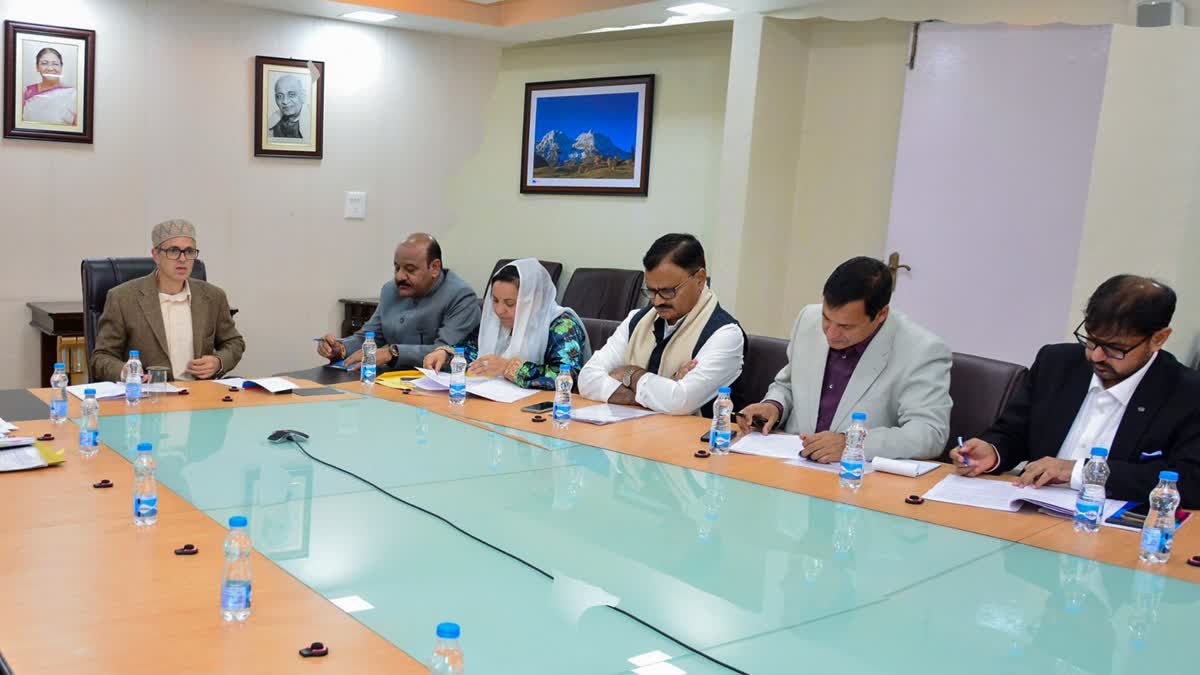
“Following approval by the Council of Ministers, the Government has notified the Jammu and Kashmir Common Duct Policy 2026, establishing a framework for shared utility corridors for power, water, telecom, gas and digital networks,” Chief Minister Omar Abdullah posted on his official X handle on Monday.
He said it is a major step towards modern urban infrastructure, efficient utility management and cleaner cityscapes in Jammu & Kashmir.
“The policy mandates duct integration in new roads and provides for phased retrofitting, single-window Right of Way clearances, cost-sharing arrangements and digital asset mapping through the Call Before You Dig platform,” he said.
These measures will help prevent repeated road digging, protect public infrastructure, reduce utility operation and maintenance costs, curb visual clutter and support planned urban growth and digital connectivity across J&K, he added.
The policy mandates integration of common ducts in the planning and construction of new roads, while also providing for phased retrofitting of existing infrastructure. It introduces a coordinated framework for Right of Way (RoW) clearances through a single-window mechanism and provides for cost-sharing arrangements among utility service providers.
The policy also provides for digital asset mapping and real-time fault detection through Smart IoT and GIS-based systems, supported by the “Call Before You Dig” platform. This will enable agencies and utility providers to identify underground infrastructure before undertaking excavation, reducing the risk of damage and service disruption.
Chief Minister Omar Abdullah said the policy would help move J&K towards a more coordinated and future-ready approach to urban infrastructure development.
The Common Duct Policy is aimed at preventing repeated road cutting for laying and repairing utility networks, thereby protecting public road infrastructure and reducing inconvenience to commuters.
The shared infrastructure model will also help optimise operational and maintenance costs for utility providers, enable faster fault detection and repairs through dedicated inspection chambers, and reduce the visual clutter caused by overhead utility networks.
The policy is expected to support planned urban expansion, improve the resilience of utility infrastructure and facilitate the growth of digital connectivity across Jammu and Kashmir.