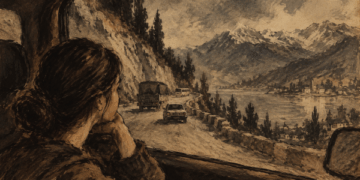

You know what keeps us stuck, what steals most of our time, what disappoints us, saddens us, or makes us angry? It is almost always the things that are not in our control. More precisely, it is the distance between us and the things we want to set right. And when we cannot bridge that distance, emotions step in to fill the gap. They carry us through a sense of possibility, allowing us to remain connected to what we cannot reach, change, restore, or make whole again.
The things that are within our control rarely demand the same attention. They do not need to be pursued through endless logic, reasoning, or emotion. They simply exist within our reach, waiting to be acted upon. Our minds are not occupied by them because there is no distance to overcome and no gap to close.
But if we come to understand this, why do we still find ourselves wanting to control things that cannot be controlled or changed?
Perhaps because we cannot be blamed for wanting that control in the first place. Many of those things once seemed within our reach. They once gave us a sense of certainty, stability, relief, or the feeling that things were moving in the direction we wanted. We became accustomed to what they provided and to the comfort that came with believing we could influence their outcome.
So, when that sense of control is taken away, the relief that accompanied it disappears as well.
What remains is a gap between where we are and where we wish things were. And until that gap is filled, or the need itself fades away, it is only natural to feel unsettled. We continue reaching toward what is no longer ours to change, not necessarily because it can still be controlled, but because part of us still longs to set it right.
The discomfort, then, does not come merely from the thing itself. It comes from the distance between ourselves and the reality we wish existed. Emotions occupy that distance. They keep us connected to possibilities that action can no longer reach, until either the gap closes or the desire that created it gradually loses its hold on us.
P.S. Most explanations stop at saying, “You are suffering because you are attached,” or “You need to let go.” I think there is another way of looking at it. Perhaps emotions are not simply the consequence of attachment. Perhaps they are what fill the gap when reality and desire can no longer meet. They keep us company in the distance between what is and what we wish could be.