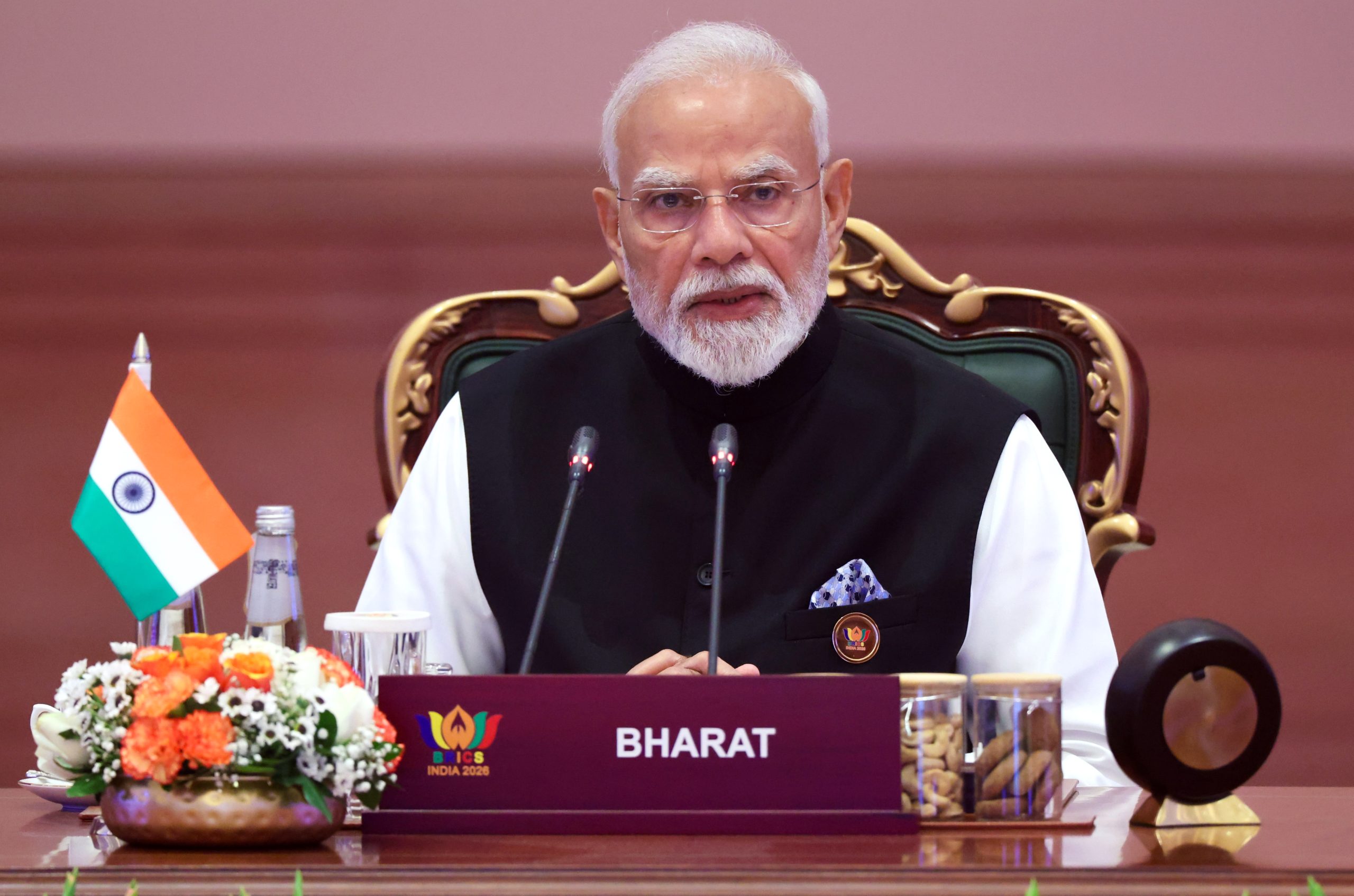
New Delhi: Prime Minister Narendra Modi on Sunday said the 2016 surgical strikes were India’s decisive response to the pain of terror attacks and presented a new example of the country’s counter-terrorism policy.
Asserting that India follows a policy of zero tolerance against terrorism, he said in his monthly broadcast ‘Mann Ki Baat’ that the country has made it clear that terrorism will be dealt with strongly and decisively.
He said over the past decade — from the Balakot air strike to Operation Sindoor — India has repeatedly sent a clear message that if terrorists dare to cast an evil eye on the country, they will be met with a befitting response.
Referring to the 2016 surgical strikes, Modi said the world was astonished to see the manner in which India’s brave soldiers crossed the Line of Control (LoC) to take action against terrorism.
“A major historic achievement of India is set to mark its 10th anniversary in just a day – this achievement is the surgical strikes. Ten years ago, on September 28-29, 2016, the Indian Army carried out surgical strikes on terrorist hideouts in Pakistan,” he said.
The prime minister said the surgical strikes were the country’s decisive response to the long-standing pain India had endured due to terrorist attacks.
“The surgical strike boldly demonstrated to the entire world a new example of India’s counter-terrorism policy,” he said.
The surgical strikes were carried out by Indian forces on terror camps across the LoC after terrorists attacked an army camp at Uri in Jammu and Kashmir, leaving 18 soldiers dead.
Modi said India has long suffered wounds inflicted by terrorist attacks and recalled that there was a time when serial blasts had become a common occurrence in the country.
He said it was in this very month of September, specifically on September 13, 2008, that many innocent lives were lost in the serial blasts in Delhi.
“Just a few weeks later, the massive 26/11 attack took place in Mumbai. In the past too, there used to be demands for action against Pakistan following every terror attack, but such calls were often not given due attention; time to pass by was simply awaited,” he said.
The prime minister asserted that India pursues a zero-tolerance policy against terrorism, and everyone is witnessing the results of that.
Modi’s reference to Pakistan’s involvement in cross-border terrorism comes two days after Pakistan Prime Minister Shehbaz Sharif used the UN General Assembly podium to rake up the Kashmir issue in his address at the world organisation.
Sharif raised the Kashmir issue, saying to ensure South Asia never reaches that precipice of the conflict of 2025 again, a just and fair solution to the Kashmir issue is required.
India has repeatedly rejected Pakistan’s assertions on Kashmir made at the UNGA forum as well as on other UN platforms, saying Jammu and Kashmir has been, is, and will always remain an integral and inalienable part of India.
India had launched Operation Sindoor on May 7 last year, targeting terror infrastructure in Pakistan and Pakistan-occupied Kashmir in retaliation for the April 22, 2025 Pahalgam attack that had killed 26 civilians.
In his radio broadcast, the prime minister noted that this year also marks 25 years since the 9/11 terrorist attacks and among the innocent lives lost at the World Trade Centre in the US, the highest number of victims, after Americans, were Indians.
“I recall that after becoming prime minister in 2014, when I visited the US, I had reached New York to pay homage to those innocent citizens. Today, once again, I extend my condolences to the bereaved families on behalf of crores of Indian citizens,” he said.
In his address, the prime minister also touched upon the fight against drugs and said millions of young people across the country have recently taken a significant resolve against substance abuse and drugs.
He said the youth have vowed to stay away from drugs themselves and have also taken up the responsibility of spreading this message to others – all under the ‘Nasha Mukt Yuva Abhiyan’.
The prime minister said there is one aspect of this campaign – the youth are propagating the message against drugs in their own language and in their own way.
“I had urged young people in Mann Ki Baat as well, to join this campaign using their creativity, and I am delighted that thousands of youth have stepped forward in response to this call,” he said.