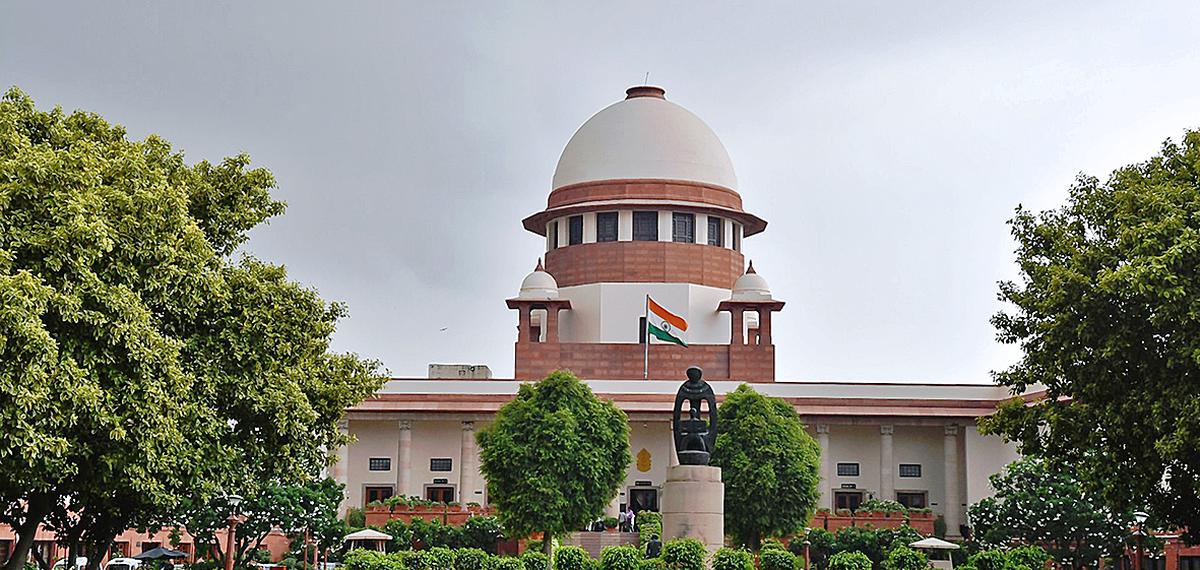
New Delhi: The Supreme Court on Monday took suo motu cognisance of news reports about crimes against minor girls and women across Delhi-NCR, observing that such cases underline a systematic failure on the part of law enforcement authorities.
The top court took cognisance of alleged gang rape of a 17-year-old girl at Aastha Kunj Park in Delhi, alleged gang rape and murder of a teenage girl in the Swaroop Nagar area of Delhi and alleged sexual assault of a minor girl inside a moving sleeper bus which the law enforcement agencies allegedly failed to intercept while it traversed a distance of over 47 km from Greater Noida to Delhi.
A bench of Justices J B Pardiwala and K Vinod Chandran said one cannot help but draw painful parallels to the 2012 Nirbhaya case, calling into question whether systemic law enforcement mechanisms have made any meaningful progress in the decade since then.
The court said these incidents, considered alongside other recent reports of sexual offences across Delhi-NCR, starkly underline a systemic failure on the part of law enforcement and civil administrative authorities to guarantee basic public safety.
“The right to live with dignity, free from the fear of violence, is an intrinsic facet of the fundamental guarantee of life and personal liberty enshrined under Article 21 of the Constitution. Public spaces, including parks, roads, buses, metro stations, subways, foot bridges, etc. cannot be permitted to become zones of high risk due to grossly inadequate illumination, poor surveillance, lax patrolling, or other preventable administrative deficiencies,” the bench said.
The top court said statements made by public authorities and elected representatives expressing concern over these incidents are understandable.
“However, expressions of concern, devoid of accountability, fall short of answering the larger institutional question. Expressing solidarity is not the solution to this social evil.
“What is required is a measurable response, with responsibility and accountability fixed upon the authorities entrusted with prevention of crime, maintenance of public order and protection of vulnerable persons,” the bench said.
The apex court said that public spaces suffering from inadequate illumination, deficient surveillance, or a lack of visible police patrolling and prompt interventional response mechanisms inevitably expose every citizen to heightened security risks.
“Where basic measures of public safety remain compromised, no individual, irrespective of age, gender, or sexual identity can navigate public spaces with a sense of security.
“The primary obligation of the State and its instrumentalities is to maintain public spaces that are safe, accessible, and secure for all, while remaining particularly attentive to the heightened risks faced by children, women and other sexual minorities,” the bench said.
The top court sought a comprehensive status report on the measures presently undertaken to ensure adequate safety and security arrangements in public places, including parks, roads, public transport facilities, markets, educational institutions and other areas frequented by women and children.
The report shall indicate whether such arrangements remain equally effective during peak hours, late evening hours and early morning hours, when public spaces may have reduced visibility and footfall, it said.
The bench sought a report on the manner in which the National Database on Sexual Offenders is presently being utilised by the Delhi Police.
“We would require the authorities to indicate whether the database is being regularly accessed for antecedent verification and identification of repeat or habitual sexual offenders; the number of instances in which it has been utilised in investigations in Delhi during the preceding five years; and whether any system exists for translating information available through the database into lawful preventive measures,” the bench said.
On September 21 evening, three men — Asif, Hemant and his brother Manish — allegedly posed as police personnel and took turns to rape the 17-year-old girl inside the Aastha Kunj Park near the Kalkaji Mandir.
In another incident, a 16-year-old girl, who boarded a sleeper bus in Greater Noida, was allegedly gang-raped by its conductor and driver and abandoned near Kashmere Gate, more than 40 km away in Old Delhi, on August 4. The two accused have been arrested.
In the third incident, a 17-year-old girl was allegedly gang-raped and stabbed to death in Delhi’s Swaroop Nagar.