

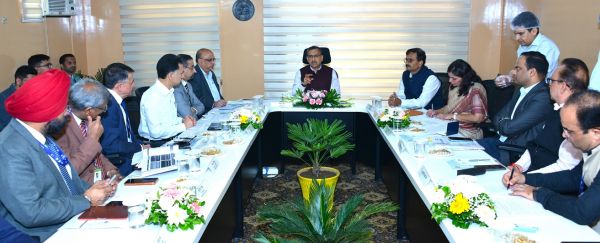
SRINAGAR: Reserve Bank of India (RBI) Deputy Governor Rohit Jain on Friday reviewed the banking sector’s performance in Jammu and Kashmir and urged banks to strengthen credit delivery, expand financial inclusion and accelerate adoption of the Unified Lending Interface (ULI).
Jain chaired a meeting with zonal heads of major banks operating in the Union Territory and discussed issues related to banking infrastructure, credit flow, priority sector lending and digital banking services.
In his remarks, the Deputy Governor highlighted the role of banks in supporting economic activity and promoting financial inclusion in Jammu and Kashmir. He stressed the need for adequate banking infrastructure, improved credit outreach and greater focus on underserved sections of society.
Jain also called for coordinated efforts by banks to meet the evolving credit requirements of the Union Territory and emphasised the importance of customer service and effective grievance redressal mechanisms.
Highlighting the increasing digitalisation of banking services, he urged banks to remain vigilant against digital frauds and strengthen customer awareness and protection measures.
The Deputy Governor also encouraged banks to process more loans through the Unified Lending Interface, saying the platform has the potential to transform credit delivery in a manner similar to the impact of the Unified Payments Interface (UPI) on digital payments.
During the meeting, the RBI Regional Director for Jammu presented an overview of Jammu and Kashmir’s financial landscape, outlining opportunities in sectors such as agriculture, micro, small and medium enterprises (MSMEs), tourism, handicrafts and services.
Representatives of major banks also presented details of their operations in the Union Territory, including banking network expansion, credit-deposit ratios, credit flow, priority sector lending, progress in onboarding customers to ULI, re-KYC coverage and efforts to settle unclaimed deposits. They also briefed the RBI on special initiatives undertaken by their respective institutions in Jammu and Kashmir.

