SRINAGAR: Sher-e-Kashmir University of Agricultural Sciences and Technology of Kashmir (SKUAST-Kashmir) on Monday signed a Memorandum of Understanding (MoU) with the Bio-Enzyme Entrepreneurs Academy of India, Bengaluru, to promote bio-enzyme entrepreneurship and support waste-to-wealth initiatives in Jammu and Kashmir.
The MoU was signed during the inauguration of a week-long Certificate Course on “Bio-Enzyme Entrepreneurship” at the Vice Chancellor’s Secretariat, Shalimar Campus. The programme has been organised by the SKUAST-K Innovation and Incubation Entrepreneurship Centre (SKIIE) in collaboration with the Academy.
According to the university, the training programme aims to equip students, farmers and rural entrepreneurs with skills in bio-enzyme production, value addition and marketing, with a focus on developing sustainable micro-enterprises.
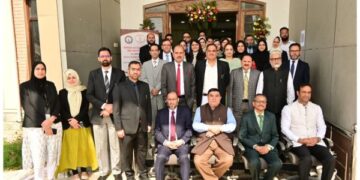
The inaugural function was attended by senior university officials, academicians, scientists, entrepreneurs and trainee participants. Among those present were Bio-Enzyme Entrepreneurs Academy of India President Priti Rao, Director Extension Prof Raihana Habib Kanth, Director Education Prof M Altaf Bhat and Registrar Prof Azmat Alam Khan.
Addressing the gathering, the Vice-Chancellor highlighted the potential of converting agricultural and kitchen waste into eco-friendly products and said such initiatives could contribute to entrepreneurship and self-employment opportunities.
Priti Rao briefed participants on bio-enzyme-based enterprises and the technical and market support available through the Academy.
During the event, a booklet titled A Genuine Startup Dosage: Hazrat Sheikh ul Alam (RA) Entrepreneurship Model, authored by Naveed Hamid, CEO of the SKIIE Centre, was released. Startup products of M/s XYVA Naturals Pvt Ltd and the SKUAST-K SAFART Passport, developed by B.Tech Biotechnology student Muaolim and conceptualised by Naveed Hamid, were also launched.
The training programme will cover bio-enzyme preparation, quality control, packaging, branding, business planning and marketing. Participants will also undertake visits to landfills, waste disposal sites and fruit mandis as part of the practical component of the course.
The inaugural session concluded with a pledge ceremony in which participants committed themselves to responsible and sustainable entrepreneurial practices.