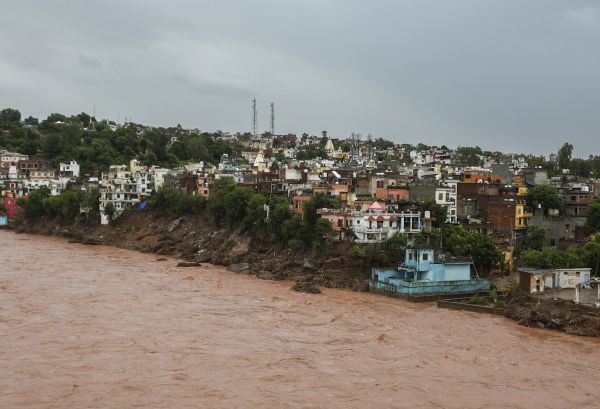
Srinagar: The Meteorological Centre Srinagar has warned that brief spells of intense rainfall could trigger flash floods, mudslides and landslides at isolated locations across Jammu and Kashmir over the next two days.
According to the weather office, the Union Territory is likely to witness generally hot and humid conditions on September 1, with light to moderate rain and thundershowers expected at many places. Brief periods of heavy rainfall are likely, particularly in parts of the Jammu division during the early morning and late afternoon or evening hours.
The MeT department advised people to remain cautious, stating that intense localised showers may lead to flash floods, mudslides and landslides between August 31 and September 2.
The weather office has forecast generally dry weather from September 2 to 10, although brief spells of rain and thundershowers may occur at isolated to scattered places, mainly during the early morning and afternoon hours.
Meanwhile, weather data showed that Jammu was the hottest place in the Union Territory on Monday, recording a maximum temperature of 33.4°C, while Gulmarg was the coolest among the major stations with a maximum temperature of 19.9°C.
In Kashmir division, Srinagar recorded a maximum temperature of 28.9°C and a minimum of 16°C. Qazigund recorded 27.1°C and 18°C, Pahalgam 24.3°C and 11.8°C, Kupwara 30.2°C and 16.7°C, while Kokernag recorded 26.8°C and 14.3°C.
In Jammu division, Banihal recorded 28.5°C and 15.9°C, Batote 26.4°C and 19.9°C, Katra 30.5°C and 23.4°C, and Bhaderwah 29°C and 18.6°C.
Rajouri recorded the highest rainfall in the past 24 hours, receiving 16.5 mm of precipitation.
The weather office advised farmers to continue harvesting and other agricultural activities while remaining vigilant during periods of heavy rainfall.
J&K records no heatwave days in August despite soaring temperatures elsewhere
Jammu and Kashmir recorded zero heatwave days during August, even as several parts of the country experienced prolonged spells of extreme heat, with intermittent rainfall and cloud cover helping keep temperatures in check across the Union Territory.
Officials of the Meteorological Department said repeated spells of rain and thunderstorms throughout August prevented temperatures from remaining elevated for extended periods, thereby averting heatwave conditions.
According to meteorological officials, several areas of the Kashmir Valley received light to moderate rainfall at regular intervals, while parts of the Jammu region, including Reasi, Udhampur and Jammu districts, witnessed episodes of heavy rain.
They said the rainfall, coupled with persistent cloud cover, reduced solar heating during the day and interrupted the development of prolonged hot conditions.
Although temperatures increased during the latter part of August, officials said the weather remained largely hot and humid rather than evolving into a sustained heatwave. Srinagar recorded a monthly maximum temperature of around 33.5 degrees Celsius, with humidity contributing to discomfort levels.
Officials noted that brief but intense showers, occurring mainly during morning and afternoon hours, repeatedly brought down temperatures and prevented any prolonged build-up of heat.
They said the situation underlined the role of rainfall distribution and cloud cover in influencing local weather conditions, adding that heatwave conditions generally require sustained periods of unusually high maximum temperatures, which were repeatedly disrupted by moisture and rainfall over the region.
The Meteorological Department has forecast additional spells of rain and thundershowers in parts of Jammu and Kashmir during the beginning of September, with isolated intense showers also expected at some places.
While the absence of heatwave conditions provided relief from extreme temperatures, authorities have advised residents to remain alert to weather-related risks associated with heavy rainfall, including flash floods, mudslides and landslides in vulnerable areas.