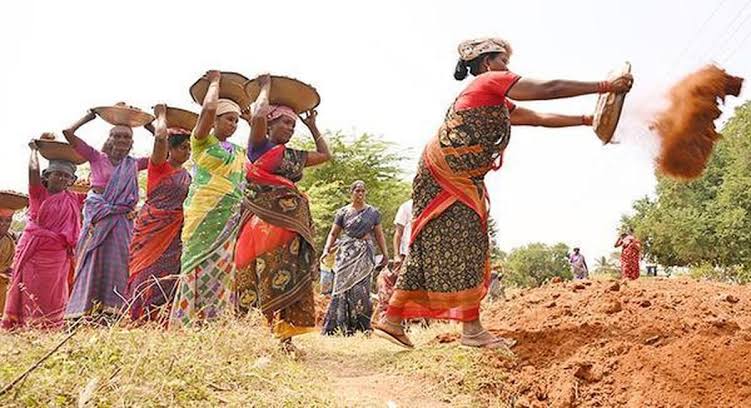
Srinagar, June 24: The Jammu and Kashmir administration has notified the Jammu Kashmir Viksit Bharat–Guarantee for Rozgar and Ajeevika Mission (Gramin) [VB-G RAM-G] Scheme, 2026, which will replace the Mahatma Gandhi National Rural Employment Guarantee Act (MGNREGA) programme in the Union Territory from July 1.
The scheme was notified by Lieutenant Governor Manoj Sinha under the provisions of the Viksit Bharat–Guarantee for Rozgar and Ajeevika Mission (Gramin) Act, 2025, and will be implemented across all notified rural areas of Jammu and Kashmir.
Under the new framework, every eligible rural household willing to undertake unskilled manual work will be entitled to 125 days of wage employment annually, an increase from the 100-day guarantee available under MGNREGA. Employment is to be provided within 15 days of demand, failing which beneficiaries will be entitled to unemployment allowance.
The scheme also provides for weekly or fortnightly wage payments, with compensation in cases of delays.
A key feature of the programme is a mandatory 60-day suspension of public works during peak sowing and harvesting seasons to ensure adequate labour availability for agricultural activities. The scheme simultaneously focuses on the creation of durable community assets and livelihood-supporting infrastructure.
According to the notification, works undertaken under the programme will prioritise four sectors — water security, core rural infrastructure, livelihood enhancement, and climate and disaster resilience. Planning will be carried out through Viksit Gram Panchayat Plans (VGPPs) using GIS-based tools and PM Gati Shakti data layers to improve coordination and avoid duplication of projects.
The scheme also includes provisions for vulnerable groups, including single women, persons with disabilities, senior citizens, members of Particularly Vulnerable Tribal Groups (PVTGs), released bonded labourers and transgender persons through dedicated Gramin Rozgar Guarantee Cards. At least one-third of the beneficiaries under the programme will be women.
The new programme incorporates a technology-driven monitoring system featuring biometric and facial authentication-based attendance, GPS-enabled project monitoring, geofencing, AI-assisted analytics, real-time dashboards, electronic muster rolls and mandatory public disclosure of project details at worksites. The use of contractors and labour-displacing machinery has been prohibited to preserve the employment-generation objective of the scheme.
Gram Panchayats will remain the primary implementing agencies responsible for registration of households, receipt of work applications, issuance of guarantee cards and execution of approved works. Oversight mechanisms have been established at the Union Territory, district, block and panchayat levels.
The scheme will be funded under a 90:10 cost-sharing arrangement between the Central Government and the Union Territory administration. Administrative allocations have also been enhanced to strengthen staffing, monitoring, grievance redressal and accountability mechanisms.
Officials said the scheme includes mandatory social audits, independent evaluations and a time-bound grievance redress system aimed at ensuring transparency and accountability in implementation.