Bikaner: Union Home Minister Amit Shah on Tuesday said that the government is in the process of installing anti-drone systems within the next six months as part of increased vigilance to curb the smuggling of narcotics and weapons through drones.
However, he stressed that since drones land in the Indian territory, close coordination with the local police and civil administration is essential to identify those receiving such consignments and to neutralise the threats effectively.
A multi-layered “four-point security grid” involving the Border Security Force (BSF), armed forces, the local administration and citizens is essential to ensure comprehensive border security, he added.
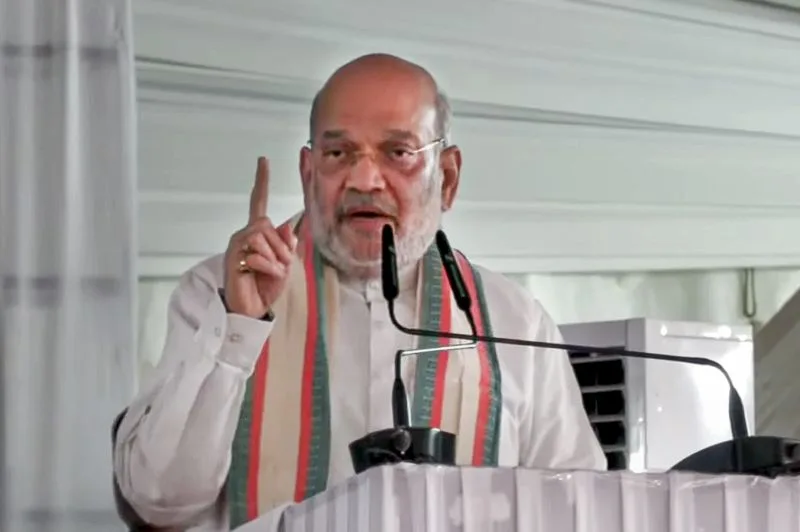
“It is our responsibility to remain strongly vigilant to curb the smuggling of narcotics and weapons through drones and other modern equipment. The government is taking steps to install anti-drone systems within the next six months,” Shah said while addressing BSF personnel at the Sanchu border outpost in Rajasthan’s Bikaner district.
The Union minister said strong coordination among security forces, civil authorities and alert citizens can create a robust security framework along the borders.
“Unless this four-dimensional coordination is achieved, the vision of a fully secure border cannot be realised,” he said.
He added that while monitoring threats originating across the border remains crucial, equal attention must be paid to internal elements aiding such threats within the country. He said strict legal action should be taken against those involved.
Referring to ongoing efforts, the official said a series of meetings is being held with state governments and local administrations in border regions, including Bihar, Gujarat, Tripura and West Bengal, to strengthen coordination and implement the “four-point security grid”.
Shah praised the BSF for its role during Operation Sindoor, saying the force not only guarded the border firmly but also boosted the morale of the people living in frontier districts.
Shah paid tribute to more than 2,000 BSF personnel who have laid down their lives since the force was raised.
He said BSF jawans have served in extreme conditions ranging from deserts and dense forests to snow-covered regions with extreme climate conditions, displaying courage, discipline and the spirit of supreme sacrifice.
“The sacrifice of these personnel is a debt on 140 crore Indians and the nation is proud of them,” Shah said.
The home minister also inaugurated women’s barracks at the outpost and said women personnel had proved their capabilities by performing beyond expectations in border security duties.
He said infrastructure for women personnel was being expanded and facilities at all border posts would be strengthened by 2030.
Referring to the 1965 India-Pakistan war, Shah said the Sanchu outpost holds historical significance as security personnel had successfully defended it despite heavy attacks by Pakistani forces.
He also highlighted steps being taken to improve border infrastructure in Rajasthan, including road construction, new fencing designs and water pipeline connectivity to 180 border posts.
He said that the Centre expanded the BSF’s operational jurisdiction from 15 km to 50 km along international borders to strengthen internal security amid evolving threats.
He said the decision, taken a few years ago, was aimed at addressing new-age security challenges, including the misuse of technology by anti-national elements.
“Securing the borders alone is not enough to ensure national security. There is also a need to focus on regional security in coordination with state governments,” he said.
He noted that the BSF has been tasked with alerting civil authorities, including district collectors and police superintendents, about suspicious activities such as illegal constructions and unusual demographic changes in villages within 50 km of the border.
Shah said that since the Prime Minister Narendra Modi assumed office in 2014, India’s security landscape has undergone a significant transformation with a strong focus on military modernisation and border security.
He said the government has prioritised modernising the armed forces and strengthening border-guarding agencies like the BSF to ensure comprehensive national security.
Highlighting the Centre’s approach, he said India has adopted a firm policy of giving a “befitting and ruthless response” to terrorist activities.
However, he stressed that the objective should be to build such a strong security system that adversaries do not even dare to attempt infiltration or attacks.
He said that initiatives like the Vibrant Village Programme and the proposed “four-point security grid” aim to strengthen border infrastructure and enhance coordination among forces, administration and local communities.