• About us
  • Contact us
  • Our team
  • Terms of Service
Friday, November 13, 2026
Kashmir Images - Latest News Update
Epaper
  • TOP NEWS
  • CITY & TOWNS
  • LOCAL
  • BUSINESS
  • NATION
  • WORLD
  • SPORTS
  • OPINION
    • EDITORIAL
    • ON HERITAGE
    • CREATIVE BEATS
    • INTERALIA
    • WIDE ANGLE
    • OTHER VIEW
    • ART SPACE
  • Photo Gallery
  • CARTOON
  • EPAPER
No Result
View All Result
Kashmir Images - Latest News Update
No Result
View All Result
Home BUSINESS

India seeks preferential market access in US for domestic goods: Piyush Goyal

Press Trust of india by Press Trust of india
April 21, 2026
in BUSINESS
A A
0
Piyush Goyal proposes higher pay, rank for railway GMs
FacebookTwitterWhatsapp

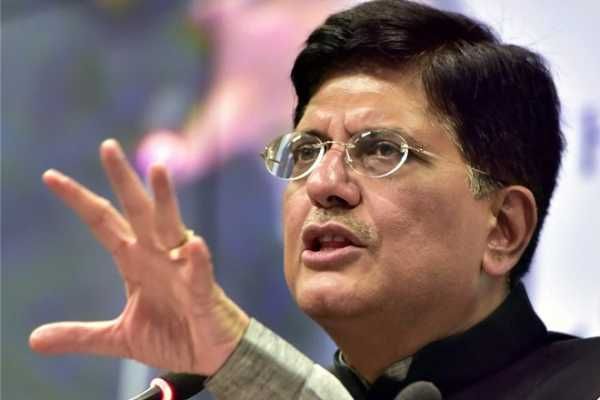
New Delhi: A team of Indian officials, currently in Washington for talks on the first phase of the bilateral trade agreement, will discuss aspects related to preferential market access for domestic goods in the US, Commerce and Industry Minister Piyush Goyal said on Monday.

“We have almost finalised the free trade agreement, the first tranche of the bilateral trade agreement with them.

More News

Indian economy has been ‘shining star’ in otherwise ‘gloomy world’: NITI Aayog VC

Retail inflation breaches RBI’s upper tolerance band at 6.09%; rate hike likely next month

Earlier PM said ‘sab changa si’, now it is ‘sab mehnga si’: Cong taunts govt over price rise

Load More

“We are trying to … work out what would be the mechanism by which India can get a preferential market access in the US market compared to our competitors,” he told reporters here.

The Indian team, he said, will discuss these aspects while they are in Washington.

About a dozen officers from India are in Washington for three-day trade talks with the US authorities. As the tariff landscape has changed in the US, both sides may like to relook at the framework of the agreement, the text of which was released on February 7.

Following the US Supreme Court’s decision against the sweeping tariffs imposed by President Donald Trump on a number of countries, the Trump administration imposed a 10 per cent tariff on all countries from February 24 for 150 days.

According to that framework, the US had agreed to reduce tariffs on India to 18 per cent, from 50 per cent. It had removed the 25 per cent tariffs on Indian goods for buying Russian oil and was to cut the remaining 25 per cent to 18 per cent under the pact.  But on February 20, the US Supreme Court ruled against Trump’s reciprocal tariffs, which were imposed under the 1977 International Emergency Economic Powers Act (IEEPA).

After that, the President announced the imposition of 10 per cent tariffs on all countries for 150 days, starting February 24.

In light of these changes, a meeting between the chief negotiators of India and the US scheduled for February was postponed. Now, they are meeting in Washington from April 20, 2026.

Under the agreed framework, India proposed to eliminate or reduce tariffs on all US industrial goods and a wide range of US food and agricultural products, including dried distillers’ grains (DDGs), red sorghum for animal feed, tree nuts, fresh and processed fruit, soybean oil, wine and spirits, and additional products.  India had also expressed its intentions to purchase USD 500 billion of US energy products, aircraft and aircraft parts, precious metals, technology products, and coking coal over the next five years.

Further, when India finalised the deal, it enjoyed a comparative advantage over its competitor countries. Now, with all US trading partners facing a uniform 10 per cent tariff, the pact requires recalibration.

As the circumstances have changed, every country is engaging with the US to see what the nature of its trade agreements with America is.

China has overtaken the US to emerge as India’s largest trading partner in 2025-26. The US was India’s largest trading partner for four consecutive years till 2024-25.

The country’s outbound shipments to the US grew marginally 0.92 per cent to USD 87.3 billion during the last fiscal year, while imports increased 15.95 per cent to USD 52.9 billion. The trade surplus declined to USD 34.4 billion in 2025-26 from USD 40.89 billion in 2024-25.

Previous Post

CIC seeks clarity on contract workers’ wages, questions industry promotion dept

Next Post

West Asia crisis poses risks to India’s trade and macroeconomic stability: NITI Aayog report

Press Trust of india

Press Trust of india

Related Posts

Indian economy has been ‘shining star’ in otherwise ‘gloomy world’: NITI Aayog VC

Indian economy has been ‘shining star’ in otherwise ‘gloomy world’: NITI Aayog VC
November 12, 2026

New Delhi: The Indian economy has been the "shining star" in an otherwise "gloomy world", as the country has maintained...

Read moreDetails

Retail inflation breaches RBI’s upper tolerance band at 6.09%; rate hike likely next month

Wholesale inflation hits three-month high of 0.53% in March
November 12, 2026

New Delhi: Retail inflation surged to 6.09 per cent in October, breaching the Reserve Bank's upper tolerance limit for the...

Read moreDetails

Earlier PM said ‘sab changa si’, now it is ‘sab mehnga si’: Cong taunts govt over price rise

PM leaving no stone unturned to save ‘flailing image’: Cong slams UGC’s ‘selfie points’ directive
November 12, 2026

New Delhi: The Congress on Thursday targeted the Modi government over rising prices, and said the public wants inflation to...

Read moreDetails

World leaders urge stronger and faster action at UN climate talks over inadequate response

World leaders urge stronger and faster action at UN climate talks over inadequate response
November 11, 2026

Antalya (Turkiye):  World leaders began formal talks at the United Nations climate conference in Turkiye on Wednesday, seeking agreement on...

Read moreDetails

India’s renewable energy expansion averts $100 bn in fuel imports, savings seen at $240 bn by 2030

‘J&K leading the charge in electricity sector reforms’
November 11, 2026

New Delhi: India's rapid expansion of renewable energy has helped the country avoid more than USD 100 billion (about Rs...

Read moreDetails

Govts investing heavily in bioeconomy; India best example of demand, supply growing together: WEF

Global recession likely in 2023; India may benefit from diversification of supply chains: WEF survey
November 10, 2026

New Delhi: Governments across the world are investing heavily in bioeconomy development and India provides the clearest example of demand...

Read moreDetails
Next Post
NITI Aayog pitches for enactment of National Medical Commission Bill

West Asia crisis poses risks to India's trade and macroeconomic stability: NITI Aayog report

  • About us
  • Contact us
  • Our team
  • Terms of Service
E-Mailus: kashmirimages123@gmail.com

© 2025 Kashmir Images - Designed by GITS.

No Result
View All Result
  • TOP NEWS
  • CITY & TOWNS
  • LOCAL
  • BUSINESS
  • NATION
  • WORLD
  • SPORTS
  • OPINION
    • EDITORIAL
    • ON HERITAGE
    • CREATIVE BEATS
    • INTERALIA
    • WIDE ANGLE
    • OTHER VIEW
    • ART SPACE
  • Photo Gallery
  • CARTOON
  • EPAPER

© 2025 Kashmir Images - Designed by GITS.