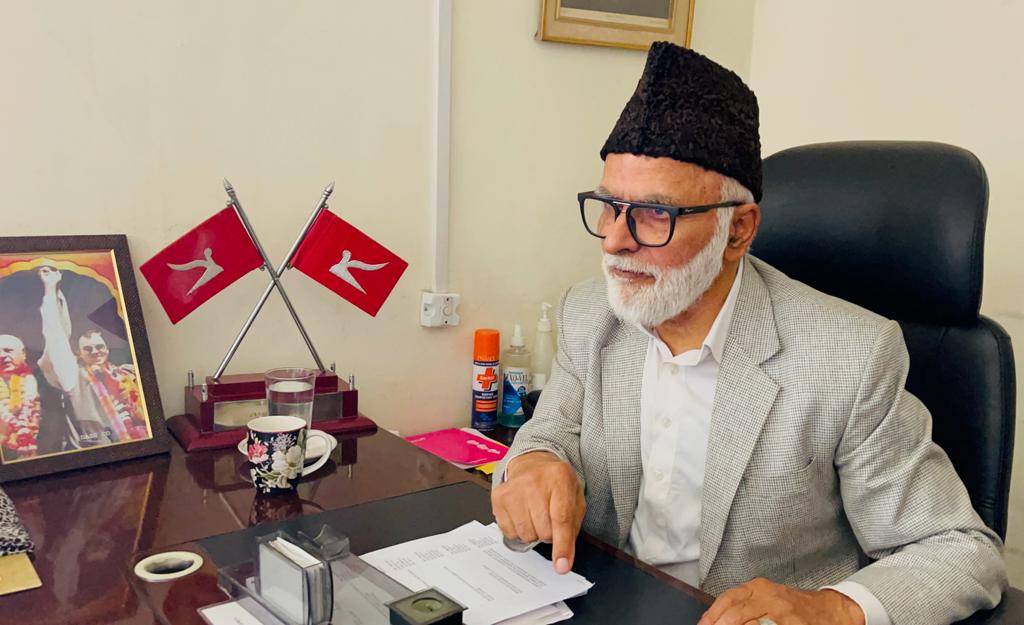
Srinagar: The Jammu & Kashmir National Conference General Secretary Haji Ali Muhammad Sagar, Thursday, asserted that the party remains unwavering in its commitment to serve every section of society, even within the constraints of the existing limited administrative framework.
In a statement from the party headquarters, Nawa-e-Subha, Sagar said that despite its restricted powers, the NC government has consistently worked to address the concerns and aspirations of people across regions and communities. “Our commitment is not defined by the powers we hold, but by the trust people have reposed in us. We are duty-bound to deliver, even within these limitations,” he said.
However, he made it clear that the restoration of full statehood is crucial for unlocking the true potential of governance in Jammu and Kashmir. “An elected government with full statehood will have the necessary authority, flexibility, and institutional strength to accelerate development, ensure accountability, and deliver justice more effectively. The pace and scale of progress will be significantly enhanced,” Sagar emphasized.
Referring to repeated assurances, Sagar reminded that both the Prime Minister and the Home Minister have publicly committed inside and outside Parliament to restoring statehood to Jammu and Kashmir. “These assurances are on record and have raised expectations among the people. People did their bit by participating in Lok Sabha and Legislative assembly elections, it’s for the Union govt now to deliver on their promises. It is time that these commitments are translated into reality without further delay,” he stated.
He added that the restoration of statehood is not merely a political demand but a democratic necessity. “The people of Jammu and Kashmir deserve a government that is fully empowered to respond to their needs. Half-measures cannot substitute full democratic rights,” he said.
Reiterating the party’s resolve, Sagar said the party will continue to raise the voice of the people and push for the restoration of statehood while ensuring that governance, even within constraints, remains people-centric, inclusive, and responsive.