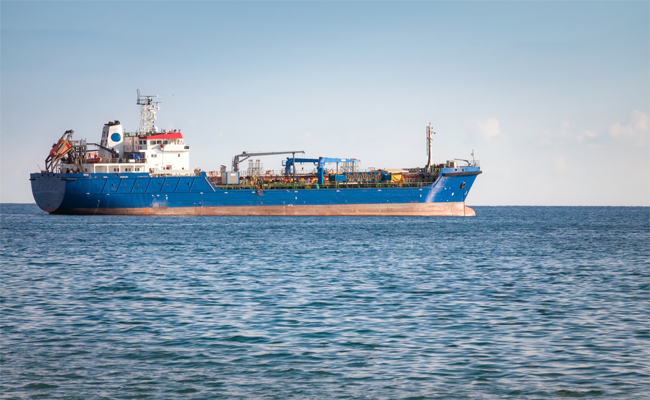
New Delhi: A second Indian-flagged LPG tanker reached the country early Tuesday after safely sailing from the war-hit Strait of Hormuz, and efforts are on to ensure the safe passage of the remaining 22 Indian vessels still stranded in the conflict zone.
The LPG tanker, Nanda Devi, reached Kandla port in Gujarat at around 2.30 am this morning, said Rajesh Kumar Sinha, Special Secretary in the Ministry of Ports, Shipping and Waterways.
On Monday, the first ship, Shivalik, reached Mundra port in Gujarat.
The two ships are carrying about 92,712 tonnes of LPG – equivalent to a day’s requirement of cooking gas in the country.
“The two have started discharge (of LPG). Right now, Nanda Devi is doing a ship-to-ship transfer – from mother ship to daughter ship,” he said at a media briefing.
Sinha said all Indian seafarers in the Persian Gulf region are safe and no shipping incidents involving Indian vessels have been reported in the past 24 hours.
Two LPG carriers started their journey on March 13 and crossed the Strait of Hormuz early on March 14.
This takes the number of Indian-flagged vessels or ships to have safely navigated through the war zone to four.
Currently, 22 Indian-flagged vessels carrying 611 seafarers remain in the western Gulf, with the Directorate General of Shipping (DG Shipping) monitoring operations closely in coordination with ship owners, agencies and Indian missions, he said.
The Strait of Hormuz, the narrow waterway that connects the Persian Gulf to the open ocean, has effectively been shut following the US and Israel attack on Iran and Tehran’s sweeping retaliation.
Originally, there were 28 Indian-flagged vessels – 24 on the west side of the strait and 4 on the east side – when the war broke out. As of now, 22 vessels remain on the west side and two on the east side.
From the vessels on the east side, the crude oil tanker Jag Laadki, which sailed safely from the UAE’s Fujairah port despite an attack on the terminal, is scheduled to reach India on Tuesday, carrying about 80,800 tonnes of Murban crude. All 22 Indian seafarers onboard are reported safe. Another tanker, Jag Prakash, carrying gasoline from Oman to Africa, has safely crossed the strait and is en route to Tanzania.
Indian authorities are in constant touch with all the relevant stakeholders in the region to secure the safe passage of the remaining ships, officials said.
Of the 22 remaining Indian-flagged vessels on the west side of the Strait of Hormuz, six are LPG carriers, one is a liquefied natural gas (LNG) tanker, four are crude oil tankers, one is transporting chemical products, three are container ships, and two are bulk carriers. Additionally, one vessel is a dredger, another is empty with no cargo, and three are in dry dock undergoing routine maintenance.
Sinha said Shipping Minister Sarbananda Sonowal had a video interaction with the crew of the two LPG tankers.
The intent was to thank them and praise their yeoman service they rendered, he said. “They were all in their uniforms and looked healthy and cheerful.”
In a post on X, Sonowal also talked of the interaction.
“Interacted with the brave crew of Indian-flagged LPG Carriers Shivalik and Nanda Devi, after reaching Indian shores,” he said. “Operating through the Persian Gulf and the strategically significant Strait of Hormuz, their conduct underscores the importance of vigilance, coordination and responsibility in ensuring safe passage amid evolving global dynamics.”
Sinha said there are about 3.18 lakh Indian seafarers, 90 per cent of them employed on foreign-flagged vessels, signifying their calibre.
On measures being taken, he said major Indian ports, including Jawaharlal Nehru Port Authority, are offering concessions on anchorage, berth hire, storage, and temporary transhipment storage to ensure smooth operations.
India imports about 88 per cent of its crude oil, 50 per cent of natural gas, and 60 per cent of LPG.
Before the war broke out, more than half of the crude oil that India imported came from countries like Saudi Arabia, Iraq and the UAE, which use the strait for shipping. As much as 85-95 per cent of LPG and 30 per cent of the gas came through the strait. While the disruption in crude oil has been partially offset through alternative sources, such as Russia, West Africa, the US and Latin America, gas and LPG supplies to industrial and commercial users have been curtailed.