

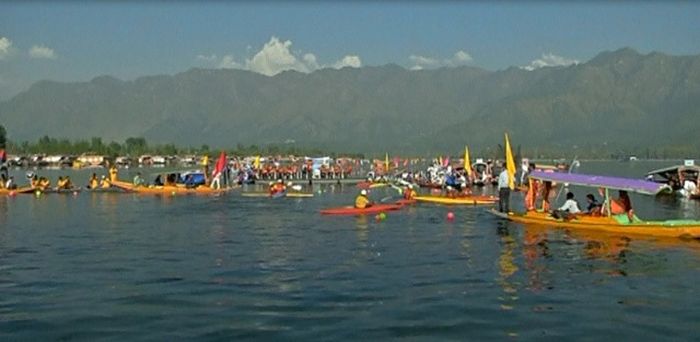
Dal Lake, often described as the “Jewel of Srinagar,” is more than a picturesque destination, it is a living ecosystem, an economic lifeline, and a symbol of Kashmir’s natural heritage. For centuries, it has reflected the surrounding mountains, housed floating gardens, and supported thousands of families who depend on its waters for livelihood. Yet today, Dal Lake faces serious environmental degradation. Concerns about water pollution, shrinking boundaries, and recent reports of unusual blue colour changes have intensified public debate.
While discussions about sudden “coolant blue” transformations circulate on social media, the deeper and more pressing issue is the long-term ecological decline of the lake. Understanding the truth requires separating verified environmental realities from dramatic visual impressions. The lake’s problems are complex, scientific, and cumulative-not merely the result of a single moment or isolated incident. Dal Lake has long been central to the cultural and economic life of Srinagar.
Houseboats anchored along its shores attract tourists from across the world. Shikara rides have become an enduring image of Kashmir’s identity. Local communities cultivate floating vegetable gardens known as “raad,” which represent a unique agricultural tradition. Because of this close connection between people and water, any visible change in the lake whether pollution, weed growth, or unusual colour-creates deep emotional concern. The lake is not only geography; it is memory, livelihood, and heritage.
Environmental degradation in Dal Lake did not begin recently. It is the result of decades of cumulative stress caused by urbanization, population growth, and insufficient environmental management. One of the most serious contributors to pollution is untreated or partially treated sewage entering the lake. As Srinagar expanded, residential areas developed around the lake without adequate sewage infrastructure. Wastewater containing nutrients, detergents, and organic matter flows into the lake through drains and channels. These nutrients-especially nitrogen and phosphorus-disturb the natural balance of the ecosystem.
When nutrient levels rise, a process called eutrophication occurs. Eutrophication stimulates rapid growth of algae and aquatic weeds. This leads to reduced dissolved oxygen in water, fish mortality, decreased water clarity and altered water colour. In many cases, eutrophication gives water a greenish or murky appearance. However, depending on the type of algae and light reflection, the colour may appear bluish in certain conditions.
Thus, colour change alone does not automatically indicate industrial chemical contamination. It may reflect biological processes within the lake. Plastic bottles, packaging materials, and organic waste often find their way into the lake. While clean-up drives occur periodically, waste accumulation remains a persistent issue. Solid waste not only affects aesthetics but also releases harmful substances as it decomposes.
Over the decades, Dal Lake’s area has reduced due to sedimentation and encroachments. Construction, land filling, and human settlement have altered the natural boundaries of the lake. Reduced water spread intensifies pollution concentration because the same amount of waste enters a smaller volume of water. Rising temperatures and changing rainfall patterns influence aquatic ecosystems. Warmer water holds less dissolved oxygen and encourages algal growth. Seasonal changes can also affect water colour and clarity. Recently, claims have circulated that Dal Lake’s water has turned bright blue. Before drawing conclusions, it is important to understand why water bodies may appear blue under certain conditions reflection of Sky, clear water reflects blue sky strongly.
Sunlight Angle: Morning and afternoon light alter colour perception.
Water Depth: Shallow and clear sections may appear brighter.
Algal Blooms: Certain algae can produce bluish tints.
Camera Filters: Social media editing enhances saturation.
Industrial contamination that turns water artificially blue would usually leave measurable chemical traces and likely cause immediate ecological harm. Such events typically trigger official warnings and environmental testing. While Dal Lake undoubtedly suffers from pollution, there is no widely confirmed scientific report establishing that a coolant or industrial chemical spill is responsible for a dramatic blue transformation across the lake. The more accurate explanation lies in chronic ecological stress rather than sudden catastrophe.
Environmental degradation affects more than water colour-it disrupts life within the lake. Fish species decline when oxygen levels drop. Aquatic plants grow excessively, blocking sunlight and affecting natural balance. Migratory birds that once frequented the lake may reduce their visits if habitat conditions worsen. Loss of biodiversity weakens the ecosystem’s resilience, making it harder to recover from environmental stress. Tourism is one of the primary sources of income for families around Dal Lake.
Shikara operators, houseboat owners, handicraft sellers, and local vendors depend on a healthy lake environment. If pollution worsens or if viral claims damage the lake’s reputation, tourism may decline. This creates economic hardship and further complicates conservation efforts. Environmental protection cannot rely solely on authorities. Residents, tourists, and business owners share responsibility. Citizens can avoid dumping waste and to use eco-friendly products, support clean-up campaigns, spread verified information instead of rumours, demand transparent water quality data, public cooperation strengthens environmental governance. In the digital era, images travel faster than scientific reports. A single video can create widespread panic.
While raising awareness about environmental issues is important, exaggeration can mislead the public. Accurate information builds trust and sensationalism may attract attention but does not solve ecological problems. Dal Lake’s condition deserves serious discussion grounded in science, not speculation. Government should conduct research on this issue which is necessary regarding the protection and conservation of our cultural heritage.
The writer is a Lecturer Gov. Higher Education Department J&K zahid.irfan32@gmail.com

