

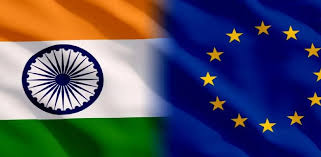
India stepped onto the world stage in a way the world could not ignore. At the 16th India-EU Summit, the India European Union Free Trade Agreement (FTA) was officially concluded, a historic moment, decades in the making, born of vision, determination, and Prime Minister Narendra Modi’s bold economic leadership. Together, India and the European Union, the world’s 4th and 2nd largest economies command nearly 25% of global GDP. When these two economic giants came together to conclude the India-EU Free Trade Agreement, it was not just another trade pact, it became the mother of all trade deals, both in scale and strategic significance. The journey to the India-EU FTA highlights a stark contrast in governance. From trade access to just 19 countries before 2014 to 56 countries today, with the India-EU FTA alone unlocking 27 high-value markets , it is reflection of clear, outcome-driven governance.
The global textile and apparel market today stands at more than USD 1.1 trillion, reflecting the scale and dynamism of world demand. Global imports have more than doubled from USD 366.8 billion in 2001 to nearly USD 800 billion in 2024, underscoring sustained expansion in international trade. Within this landscape, India has steadily strengthened its position. Overall textile exports have risen USD 10 billion to nearly USD 40 billion, marking a significant rise in India’s global trade presence. Domestically, the momentum is equally strong. India’s textile market has expanded from USD 138 billion to USD 190 billion in 2025, driven by rising consumer demand and greater purchasing power. This growth has been supported by structural reforms and policy initiatives that have modernised production, strengthened value chains, and improved global competitiveness. It is against this backdrop that the India-EU FTA assumes historic significance. The agreement opens access to nearly 2 billion consumers across the entire USD 24 trillion EU market. By granting preferential access to over 99% of Indian exports by value and eliminating tariffs of 10-12% on nearly USD 33 billion worth of goods, the FTA materially enhances India’s cost competitiveness in one of the world’s most premium markets.
Over the last two years, we have systematically prepared and advanced a new market diversification strategy, anchored in data on GDP, demand trends, population scale, and per capita income. That strategic groundwork is now yielding clear results. In 2025, despite global headwinds, Indian textiles registered positive export growth in over 100 countries, marking a decisive expansion of our global footprint. Under this targeted approach, exports rose sharply – 77% in Argentina, 45% in Paraguay, and 30% in Egypt. The surge has been garment-led, supported by a decade-long expansion of manufacturing capacity. Over the past ten years, more than 2 crore sewing machines have been added to India’s production ecosystem, substantially strengthening output, enhancing productivity, and generating employment. This expansion is reinforced by strong policy backing. The Union Budget 2026-27 places textiles at the core of India’s growth strategy through mega textile parks, integrated value chains, sustainability initiatives, and skilling under Samarth 2.0. Complementing this, Textiles Export Facilitation Centres (TEFCs) in key clusters will provide exporters with market intelligence, FTA guidance, regulatory support, and end-to-end facilitation on a single platform.
India’s textile exports are on a firm upward trajectory, increasing from ₹2.5 lakh crore in 2019-20 to ₹3.5 lakh crore in 2024-25 a 28% rise in five years. The next phase must now focus on acceleration, centred on exporters themselves. First, exporters must deepen penetration in existing FTA markets. These markets present immediate opportunities where a focused, cluster-aligned strategy can unlock an additional 20-25% export growth. Second, systematically identify product gaps in partner countries, high-volume imports where India has limited or no competitive presence. For example, the UK is a significant importer of socks, yet Indian exporters are not among its leading suppliers, such gaps represent clear and actionable opportunities. Third, the exporter base must expand. Established exporters should mentor and integrate new exporters from every textile cluster into global trade. Notably, much of the recent growth across 100 countries has been driven by new exporters entering international markets. The government is actively enabling this expansion.
With a target of USD 100 billion in exports by 2030, India’s textile strategy reflects scale, speed, and global ambition. The India-EU FTA strengthens this momentum. More than a trade deal, it is a strategic partnership set to expand engagement from USD 179 billion to USD 350 billion by 2030. India is no longer just part of global trade, it is shaping it.
Courtesy PIB Srinagar
(The author is the Union Minister of Textiles. The views expressed are personal)



