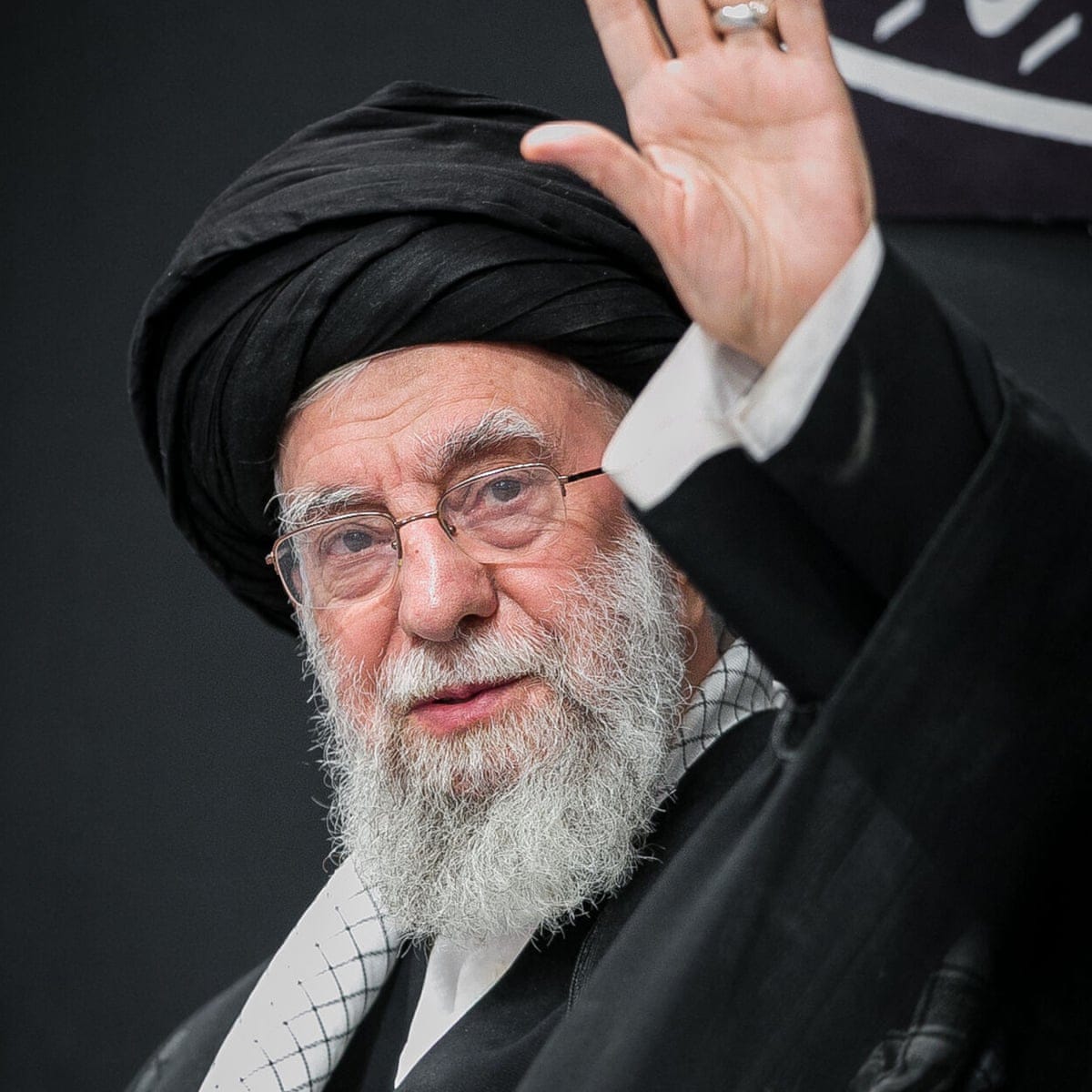
Ayatollah Ali Khamenei (1939–2026), the second Supreme Leader of Iran, was killed on February 28, 2026, during coordinated US and Israeli airstrikes on Tehran. His death was confirmed by the Iranian state media on March 1, 2026, following an initial announcement by US President Donald Trump.
Khamenei was killed at his office in a joint operation known as “Operation Epic Fury”. Several other high-ranking officials, including the commander of the Islamic Revolutionary Guard Corps (IRGC) and the defence minister, were also killed.
Iran has declared 40 days of state mourning and seven public holidays. There is no designated successor of Ayatollah Ali Khamenei. Under the Iranian constitution, a council consisting of the President, the Head of the Judiciary, and a member of the Guardian Council will temporarily assume leadership duties.
Ayatollah Ali Khamenei served as the Supreme Leader of the Islamic Republic of Iran for over 36 years, from 1989 until 2026, making him the longest-serving head of a state in the Middle East.
Born in 1939 in Mashhad, he was a key figure in the 1979 Islamic Revolution and served as President of Iran from 1981 to 1989. A theologian, he was defined by his deep-seated hostility toward the West, particularly the United States and Israel, and his unwavering commitment to the theocratic system established by his predecessor, Ayatollah Khomeini.
The 36-year rule of Ayatollah Ali Khamenei built Iran into a powerful anti-US force, spreading its military sway across the Middle East, while using an iron fist to crush repeated unrest at home.
At first dismissed as weak and indecisive, Khamenei seemed an unlikely choice for supreme leader after the death of the charismatic Ayatollah Ruhollah Khomeini, who founded the Islamic Republic of Iran. But Khamenei’s rise to the pinnacle of the country’s power structure afforded him a tight grip over the nation’s affairs.
Khamenei long denied that Iran’s nuclear programme was aimed at producing an atomic weapon, as the West contended. In 2015 he cautiously supported a nuclear deal between world powers and the government of pragmatist President Hassan Rouhani that curbed the country’s nuclear programme in return for sanctions relief. The hard-won accord resulted in a partial lifting of Iran’s economic and political isolation.
Khamenei’s hostility toward the US was undimmed, intensifying in 2018 when Trump’s first administration withdrew from the nuclear agreement and reimposed sanctions to choke Iran’s oil and shipping industries. The Ayatollah criticised Washington throughout his rule, continuing to deploy barbs after the start of Donald Trump’s second term as US president in 2025.
Following the US withdrawal from the nuclear talks, Khamenei sided with hardline supporters who criticised Rouhani’s policy of appeasement towards the West.
As Trump pressed Iran to agree to a new nuclear deal in 2025, Khamenei condemned “the rude and arrogant leaders of America”. “Who are you to decide whether Iran should have enrichment?” he asked.
Khamenei often denounced “the Great Satan” in speeches, reassuring hardliners for whom anti-U.S. sentiment was at the heart of the 1979 revolution, which forced the last shah of Iran into exile.
Ali Khamenei was born in Mashhad, northeast Iran, in April 1939. His religious commitment was clear when he became a cleric at the age of 11. He studied in Iraq and in Qom, Iran’s religious capital.
His father, a religious scholar of ethnic Azeri descent, was a traditionalist cleric opposed to mixing religion and politics. In contrast, his son embraced the Islamist revolutionary cause.
In 1963, Khamenei served the first of many terms in prison when at 24 he was detained for political activities. Later that year he was imprisoned for 10 days in Mashhad, where he underwent severe torture, according to his official biography.
After the shah’s fall, Khamenei took up several posts in the Islamic Republic. As deputy minister of defence, he became close to the military and was a key figure in the 1980-88 war with neighbouring Iraq, which claimed an estimated total of one million lives.
A skilled orator, he was appointed by Khomeini as a Friday prayer leader in Tehran. There were questions about his rapid, unprecedented rise. He won the presidency with Khomeini’s support – the first cleric in the post – and was a surprise choice as Khomeini’s successor, given that he lacked both Khomeini’s popular appeal and superior clerical credentials.
His ties to the powerful Guards paid off in 2009. That year, the force crushed protests after President Mahmoud Ahmadinejad won re-election amid opposition accusations of vote fraud. He also presided over a vast financial empire through Setad, an organisation founded by Khomeini but expanded hugely under Khamenei, with assets worth tens of billions of dollars.
Khamenei expanded Iranian influence in the region, empowering Shi’ite militias in Iraq and Lebanon, and propping up then-President Bashar al-Assad by deploying thousands of soldiers to Syria.
He spent billions over four decades on these allies – the “Axis of Resistance”, which also included Hamas, the Palestinian Islamist group, and Yemen’s Houthis – to oppose Israeli and US power in the Middle East.
But in 2024 Khamenei saw these alliances unravel, and Iran’s regional influence shrivel, with the ousting of Assad and a series of defeats inflicted by Israel on Hezbollah in Lebanon and on Hamas in Gaza, including the killing of their leaders.
Under Khamenei’s rule, Iran and Israel fought a shadow war for years, with Israel assassinating Tehran’s nuclear scientists and Revolutionary Guard commanders.
It exploded into the open during Israel’s war on Hamas in Gaza from 2023. In April 2024, Iran fired hundreds of missiles and drones at Israel after it bombed Tehran’s embassy compound in Damascus. Israel struck Iranian soil in response.
But that was only a prelude to June 2025, when Israel’s military unleashed hundreds of fighter jets to strike Iranian nuclear and military targets as well as senior personnel. The surprise attack provoked a barrage of missiles in both directions, transforming simmering conflict into all-out war. The US joined the air offensive on Iran, which lasted 12 days.
The U.S. and Israel had warned they would strike again if Iran pressed ahead with its nuclear and ballistic missile programmes and, on Saturday, they launched the most ambitious attack on Iranian targets in decades.
On the diplomatic front, Khamenei rejected any normalisation of ties with the United States. He argued that Washington had backed hardline groups like Islamic State to inflame a sectarian war in the region.
Like all Iranian officials, Khamenei denied any intent to develop nuclear weapons and went so far as to issue an Islamic ruling, or fatwa, in the mid-1990s on “production and usage” of nuclear weapons, saying: “It is against our Islamic thoughts.”
He also supported a fatwa issued by Khomeini in 1989, which called on Muslims to kill the Indian-born author Salman Rushdie after the publication of his novel “The Satanic Verses”.
The late Ayatollah leaves an Islamic Republic wrestling with uncertainty amid the attacks from Israel and the United States, as well as growing dissent at home, especially among younger generations.
Asad Mirza is a senior journalist based in Delhi. asad.mirza.nd@gmail.com