• About us
  • Contact us
  • Our team
  • Terms of Service
Sunday, November 8, 2026
Kashmir Images - Latest News Update
Epaper
  • TOP NEWS
  • CITY & TOWNS
  • LOCAL
  • BUSINESS
  • NATION
  • WORLD
  • SPORTS
  • OPINION
    • EDITORIAL
    • ON HERITAGE
    • CREATIVE BEATS
    • INTERALIA
    • WIDE ANGLE
    • OTHER VIEW
    • ART SPACE
  • Photo Gallery
  • CARTOON
  • EPAPER
No Result
View All Result
Kashmir Images - Latest News Update
No Result
View All Result
Home TOP NEWS

Security agencies bust massive ‘mule account’ network in J&K; fear misuse by terror groups

Press Trust of india by Press Trust of india
February 16, 2026
in TOP NEWS
A A
0
Twitter also sold data to Cambridge Analytica researcher: report
FacebookTwitterWhatsapp

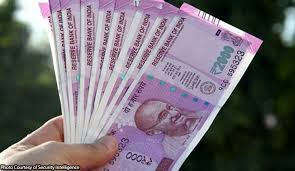
New Delhi/Srinagar:  Security agencies have busted an ever-growing ecosystem of “mule accounts” in Jammu and Kashmir that serves as the financial backbone of global scam networks, with officials fearing that the funds routed through these accounts could be used for separatist and anti-national activities.

The officials said more than 8,000 mule accounts operating in the region have been identified and frozen over a period of three years, exposing a sophisticated network of money laundering.

More News

J&K government notifies Private Universities Rules

LG, CM greet people on Diwali

5% annual increment for eligible NHM contractual employees

Load More

They described these accounts as the “weakest yet most crucial link” in the cybercrime chain, as without them, the conversion of stolen money into untraceable cryptocurrency would be impossible.

Central security agencies have asked the Jammu and Kashmir Police and other law enforcement agencies to hold consultations with banks to curb the mushrooming of ‘mule accounts’ and identify middlemen, commonly referred to as “mulers”, who facilitate such financial frauds, they said.

Officials suspect that after the National Investigation Agency’s 2017 crackdown on the flow of illicit money into Jammu and Kashmir, anti-national elements may have shifted to a newer model of “digital hawala”, wherein commissions earned by mule account holders or mulers may be used for activities against the country.

A muler is typically not the person who contacts victims or sends fake links. Instead, their role is covert but critical — arranging and maintaining a steady supply of mule accounts that scammers use to receive and transfer stolen money without revealing their own identities.

These mule accounts often belong to ordinary people lured with promises of “easy commission” and assured minimal risk. They are persuaded to hand over full control of their bank accounts, including net banking credentials, under the pretext that the accounts will be used briefly as “parking accounts”.

A single scammer is often supplied with 10 to 30 mule accounts at a time, and in many cases, bank accounts are opened in the name of fictitious companies, enabling large transactions of up to Rs 40 lakh in a single day without immediately raising alarms.

Officials said the money trail is deliberately messy, with the scammed money rapidly shifted through several accounts and broken into smaller transactions to avoid detection.

Central security agencies and other law enforcement organisations have emphasised that while mule account holders may not design the scams or speak to the victims, they are active facilitators of money laundering. By sharing credentials and accepting commissions, they knowingly provide the “financial infrastructure” for transnational crime.

“The entire scam ecosystem depends on these accounts. Without a destination for the money, the scam fails at the first step. Those renting out their accounts are not just victims of circumstance; they are the engines of the crime,” a senior official said.

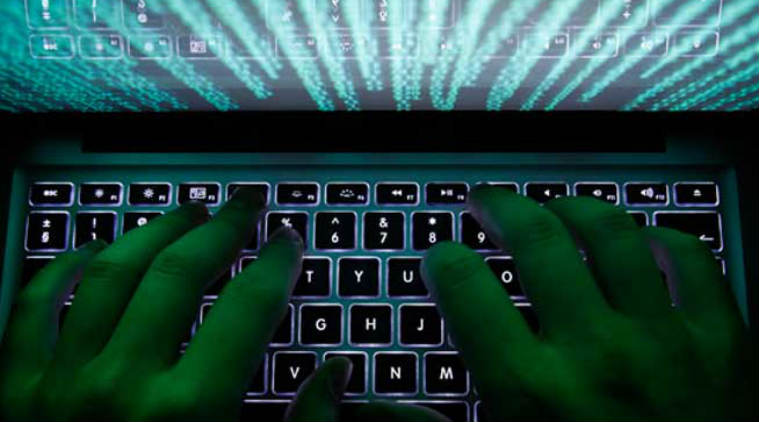
A detailed study done by the central security agencies has identified people in countries like China, Malaysia, Myanmar, and Cambodia directing people in the union territory to create private crypto wallets, which are often set up using a Virtual Private Network (VPN) to avoid detection and require no Know Your Customer (KYC) or identity verification.

The Jammu and Kashmir Police has already suspended the use of VPNs in the valley as it is a handy tool for the terrorists as well as separatists to avoid detection.
Previous Post

J&K plans policy to harness medicinal wealth, bioeconomy potential

Next Post

‘White-Collar’ terror probe: Doctors formed terror group ‘Ansar Interim’ for J&K, hinterland attacks

Press Trust of india

Press Trust of india

Related Posts

J&K government notifies Private Universities Rules

AC extends Amnesty Scheme-2022 for domestic consumers of electricity till March 2025
November 8, 2026

CM says new framework to attract reputed institutions Jammu: The Jammu and Kashmir government has notified the Private Universities Rules,...

Read moreDetails

LG, CM greet people on Diwali

LG Sinha, CM Abdullah, Minister Sakeena Masood greet people on Gurupurab
November 8, 2026

Jammu: Lieutenant Governor Manoj Sinha and Chief Minister Omar Abdullah have greeted the people on the eve of Diwali. In...

Read moreDetails

5% annual increment for eligible NHM contractual employees

US adds India to currency watch list with China
November 8, 2026

JAMMU: The Jammu and Kashmir government on Saturday sanctioned a 5 per cent annual increment for eligible contractual employees working...

Read moreDetails

Met predicts rain, snowfall from Nov 12

Rain, snow and thunderstorms in J&K till April 20; ‘Dry weather expected from April 22’
November 8, 2026

Srinagar: The weatherman on Saturday said that Jammu and Kashmir is likely to witness a spell of rain and snowfall...

Read moreDetails

Dy CM Choudhary seeks end to rumours over discontent among NC MLAs

₹54.49 crore Hazratbal hospital project reviewed as work resumes
November 8, 2026

Jammu: Deputy Chief Minister Surinder Choudhary on Saturday sought to end the ongoing rumours of discontent among a group of...

Read moreDetails

Over 1,000 anti-cancer medicine brands to see price cuts from November 9

Govt caps trade margins on 137 anti-cancer drugs at 30%; retail prices likely to fall 70%
November 8, 2026

NPPA says consumers are expected to save Rs 3,502 crore annually NEW DELHI: Prices of more than 1,000 anti-cancer medicine...

Read moreDetails
Next Post
Govt promotes 27 DySsP to Incharge Superintendents of Police

'White-Collar' terror probe: Doctors formed terror group 'Ansar Interim' for J&K, hinterland attacks

  • About us
  • Contact us
  • Our team
  • Terms of Service
E-Mailus: kashmirimages123@gmail.com

© 2025 Kashmir Images - Designed by GITS.

No Result
View All Result
  • TOP NEWS
  • CITY & TOWNS
  • LOCAL
  • BUSINESS
  • NATION
  • WORLD
  • SPORTS
  • OPINION
    • EDITORIAL
    • ON HERITAGE
    • CREATIVE BEATS
    • INTERALIA
    • WIDE ANGLE
    • OTHER VIEW
    • ART SPACE
  • Photo Gallery
  • CARTOON
  • EPAPER

© 2025 Kashmir Images - Designed by GITS.