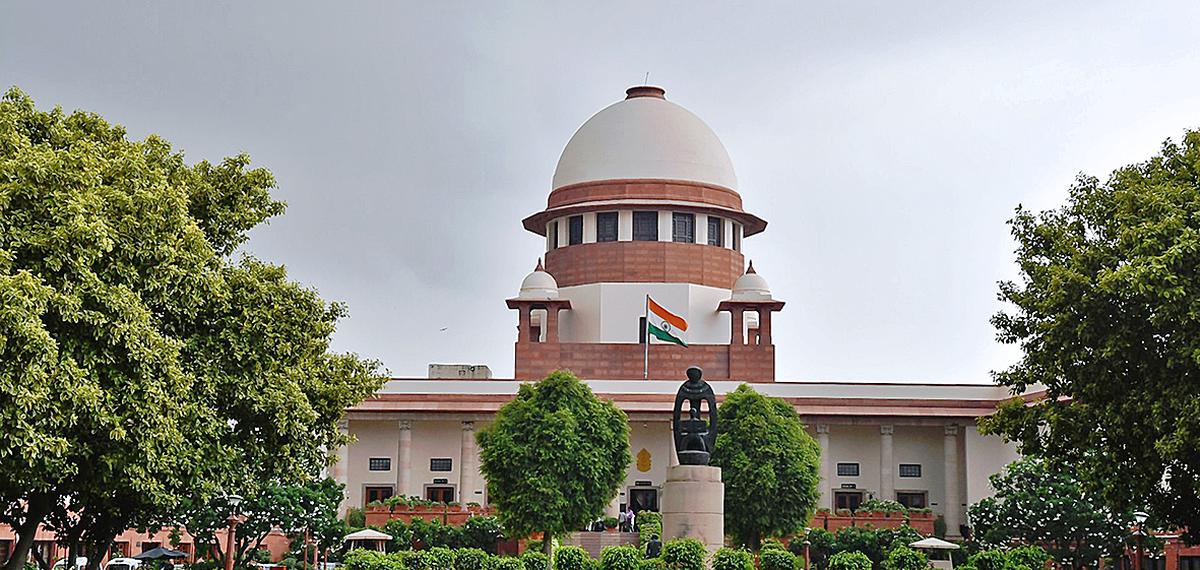
New Delhi: The Supreme Court on Monday said the government must make aware, compensate and try to protect vulnerable people who have lost their hard-earned money in cyber scams.
A bench of Justices B V Nagarathna and Ujjal Bhuyan made the remarks while granting bail to one Paramjit Kharb, accused of creating mule bank accounts and selling those to alleged cyber criminals for parking money extorted from online-scam victims.
Justice Nagarathna told Additional Solicitor General S D Sanjay that the government and police must take steps to compensate and protect the vulnerable victims, especially elderly persons, who have lost their hard-earned money in such scams.
“You must educate the people. Play out the recordings on TV and radio on how these cyber criminals conduct themselves. They target mostly elderly and they should be made aware of the modus operandi. They have lost not lakhs but crores of hard-earned money,” the bench said.
Sanjay said these cyber criminals are very confident and smart and that he himself had almost fallen victim to them once. The ASG told the bench that the government has come out with the “Sanchar Saathi” app where people can report about any cybercrime or stolen mobile phones or stolen identity.
Justice Nagarathna said, “Show the people how these scamsters operate and how these frauds are carried out. You educate the people that this is the nature of talks which will come to you, so you ignore it. Give cyber-security education to the public, legal awareness and other things. Awareness is the key.”
The judge further said that vulnerable people, single women, elderly couples may not know about all this and the government must boost their confidence by training them to deal with these situations.
The bench granted bail to Kharb, who was in custody since March 2024, after noting that other co-accused in the case have been granted the relief.
It directed him to deposit his passport, if any, before the trial court and report at the jurisdictional police station on the first Monday of every month.
“It is directed that the appellant shall extend complete cooperation in the ensuing trial. The appellant shall not misuse his liberty and shall not in any way influence the witnesses or tamper with the material on record. Any infraction of the conditions may entail cancellation of the bail granted to the appellant,” the court said.
Sanjay vehemently opposed the bail plea, saying the accused was booked in a number of states for cybercrimes and was part of a larger network of cyber criminals who dupe innocent citizens.
Appearing in the matter on behalf of the Delhi government, the ASG further said that Kharb’s role in the instant case is significant and that he has not disclosed the fact that there are other criminal cases against him.
He said if bail is granted to him, it may frustrate the investigation in other cases as well as the trial in the future.
Kharb’s counsel submitted that five of the nine co-accused have been granted the relief of regular bail and there is no challenge to the said order but the appellant has been in jail since March 17, 2024.
He contended that charges are yet to be framed and there are 26 witnesses to be examined.
The lawyer further contended that on the principle of parity, the accused may be released on bail, particularly having regard to his long incarceration and the inevitable delay in the conclusion of the trial.
Kharb had challenged a November 3 last year order of the Delhi High Court, denying him bail in the matter.
He was booked in 2024 by the Delhi police’s Special Cell for offences under the Indian Penal Code and Information Technology Act.
The top court is already hearing a suo-motu (on its own) case on digital arrest, after an elderly couple from Haryana wrote to the chief justice of India about how they were defrauded by cyber criminals.
The court has directed the Central Bureau of Investigation (CBI) to probe digital-arrest cases and related cyber-fraud activities across the country and issued a slew of directions to curb the growing menace.
On February 9, the court described the siphoning off of more than Rs 54,000 crore by digital fraudsters as absolute “robbery or dacoity” and asked the Centre to draft a standard operating procedure in consultation with stakeholders like the Reserve Bank of India (RBI), banks and the Department of Telecommunications to deal with such cases.
Digital arrest is a growing form of cybercrime, in which fraudsters pose as law-enforcement officers, court officials or personnel from government agencies to intimidate victims through audio and video calls. They hold the victims hostage and put pressure on them to pay money.